



South-south trade shift to benefit ports
Marking a shift away from traditional Asia-Europe shipping lanes, trade routes in the southern hemisphere are fast becoming drivers of traffic for well placed ports.
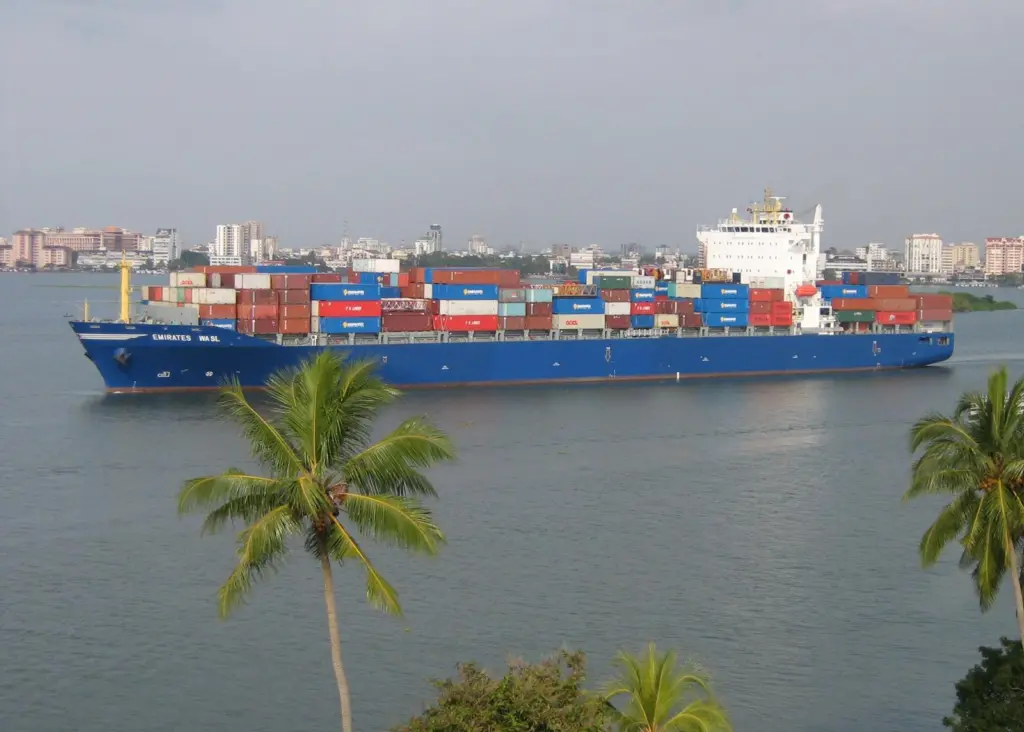
“The emerging markets – areas like India, Saudi Arabia, UAE and Brazil – are about to join the top ten trading routes which will put the south-south trade route as one of the most important in the world,” Majed Zambaraji, chief executive RAK Logistics, told TOC Middle East delegates.
Mr Zambaraji explained that population growth in southern countries had already led to a shift in trade patterns from a northbound aspect to a southbound aspect. “This is a new evolution,” he said. “By 2030, China will have a predominance of starting destinations and over the next decade the Middle East region will be positioned as one of the top 20 global trade lanes of the world which has never happened in the past.”
He described the US$40bn invested in Middle East port capacity as a “vote of faith” in the development potential of the region.
“I personally think that this south-south discussion and this emerging trends discussion is a transformative revolution in terms of how the industry is moving.”
Madhav Kurup, chief executive (Middle East and North Africa) of Hellmann Worldwide Logistics, added that Dubai has benefitted “tremendously” from south-south trade. However, he cautioned that the Emirate’s heavy dependence on transhipment could become a problem as the south-south trades further develop.
“The 50% transhipment could move anywhere else in the Gulf if another port can prove itself efficient and suitable. If and when some of the outside ports become more efficient, some of this cargo could move,” said Mr Kurup. “But, of course, these evolutions take time, often decades,” he added.
Related Articles
 PORT & TERMINAL NEWS
 PORT & TERMINAL NEWS
 PORT & TERMINAL NEWS