![PortStrategy[GreenPort]](https://www.portstrategy.com/wp-content/uploads/2026/09/PortStrategyGreenPort.svg)





New planning canvas in prospect
It is a new year, with a new Congress, and new sets of battles to be fought.
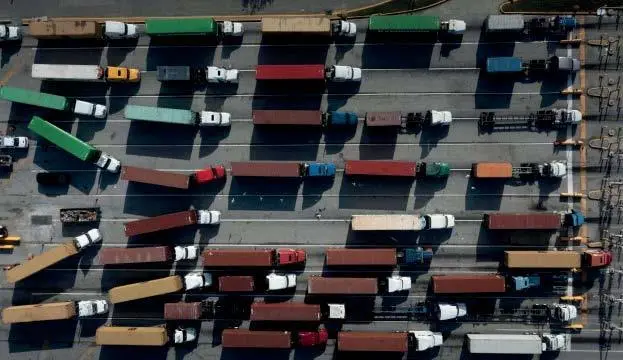
Looking ahead, with my always cloudy and cracked crystal ball, I see that “supply chains” have smoothed out. Ports, perhaps, will be retreating from the media landscape – with pictures of anchored vessels making “top of the fold” front pages (web or print) and even network TV hiring harbour launches in order to bring the situation to their primetime newscasts.
The past three years were unprecedented – with 2020’s pandemic putting a damper on cargo flows, the overheated trade recovery in 2021 into early 2022, and the subsequent easing as things returned to “normal” (however you define it).
The Biden administration, whether you support it or oppose it (in my case- I stay mum), needs to congratulated for bringing “infrastructure” (the “I-word”) to the fore; something the previous administration talked about, but failed to pull the trigger on. It goes without saying that seaports are central to the “I-word” and, for the coming year, I see new forms of cooperation between the ports and all manner of stakeholders – though the infrastructure development picture holds significant potential to look different from how it has historically.
In the maritime world, two big “D-words” have been digitalisation and decarbonization. We are in the midst of a freight tech boom funded, in part, by private equity which was attracted at least partially by those aforementioned TV views of ships and boxes stacked up at drayage yards. At the same time, the push for ESG (Environmental, Social Governance) continues; my particular focus has been on the “E” aspects – fuel saving and reduced emissions of carbon (and other substances, as well).
Regulations concerning carbon intensity that are now beginning to impact international shipping will reward some players and penalise others. The new ratings for shipowners are influenced by trading patterns , things like the length of voyages, numbers of port calls – it’s inherently complicated. Of course, ship designs and naval architecture (efficient engines, smooth hull forms, etc.) will continue to evolve.
To a growing extent, the new regulations will drive the flows of cargo – and infrastructure investment for cargo (and for passengers). They will be influenced, more and more, by environmental considerations. With the increased ability to measure operational elements (to get a better measurement angle on actual emissions), planners will be operating with a much different canvas.
Related Articles
 INSIGHT & OPINION
 INSIGHT & OPINION
 PORT & TERMINAL NEWS