



Depth perceptions
US East Coast ports are going deep, but its not all about the depth of water on offer, explains Martin Rushmere
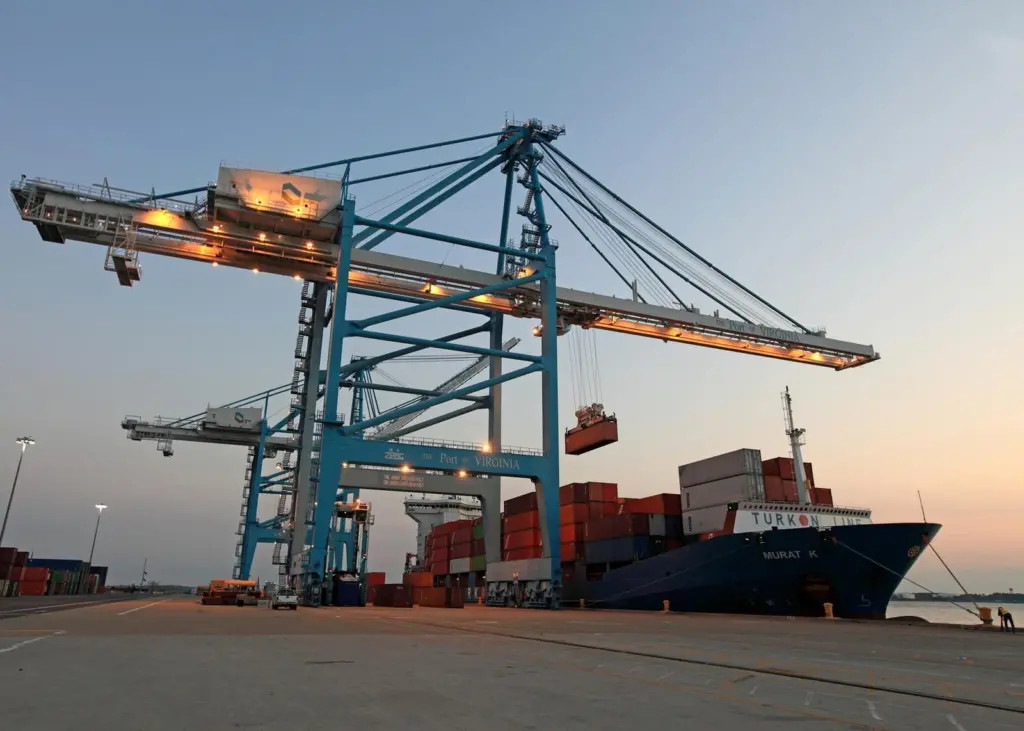
With Norfolk, Virginia the latest US port to receive unofficial approval from the Army Corps of Engineers to dredge the main channel from 50 feet to 55 feet, East Coast ports are literally in a race to the bottom. The puzzle lies in finding just how deep the bottom is.
Seven ports are competing in the 50-55 foot range to the point that the question now being asked is whether they are overextending themselves. The answer is cloudy, with analysts and the ports themselves saying there is no choice. Two other growth opportunities are occupying the minds of port planners: transloading and transhipment, plus port alliances, a growing trend to reduce costs. But along with these is the realisation that current talk of a long-term 10% shift in traffic from West to East Coast ports because of the widened Panama Canal is misguided.
Consultant Dr Asaf Ashar, research professor with the National Ports & Waterways Initiative at the University of New Orleans, says that vessel sizes through the post-2016 canal will be the same as those now going through Suez. “So there will be no shift in traffic simply because of the larger vessels, although there might be a temporary change.
“My sense is that most of the diversion from the intermodal route to the all-water ones has already taken place following the deployment of post-panamax ships on the all-water Suez route and the labour unrest in the Pacific ports. Hence, I do not expect 10% – which amounts to a lot of traffic – diversion from the intermodal to all-water Panama route following the Panama Canal expansion. I think that the expansion’s main impact will be an ‘intra’ all-water shift, a re-routing of some all water Suez services to all-water Panama, along with consolidation of the existing all-water Panama services. Closer to home, I do expect more all-water Panama and Asian traffic on the US Gulf Coast because of its proximity to the Panama and remoteness from Suez.”
Mind the gap
Dr Ashar says that some projections take “a simplistic approach; there are many other factors affecting changes in routings that are not being considered”.
One of these is the lack of market choice for lines going through Panama. “Apart from the US, the markets are small and so the choice is limited, whereas the option of double dipping is available through Suez. Lines can pick up and drop off cargo at multiple ports, which gives great flexibility and more options to planners.”
Geography is also being forgotten, says Dr Ashar. “Going through Suez means that New York is the first port of call on the East Coast, but the last call through Panama.”
A strong proponent of, and an authority on, the benefits of establishing transhipment ports worldwide, he says that the Jones Act precludes any similar operations on the US East Coast. “The costs are just too high, with cargo having to be put on American crewed, built and owned ships.
“Transhipment makes sense from a system-cost perspective, i.e., when the costs of ships and ports are combined. In reality, all US ports, regardless of size and location, vie to become hub ports – as long as most of the investment is covered by US taxpayers. In addition, these ports would not “ignore” transloading opportunities.” In the US, the term transloading is used for transferring cargo from a marine container to a domestic one.
Traffic shift
Dr Ashar’s view on the traffic shift is shared by Jonathan Montbach, vice president of corporate finance at Seabury Maritime consultants. “From what I have seen, there was a temporary shift to the East Coast, but traffic seems to have returned to the West Coast.”
However, he is more hopeful of Jones Act restrictions being overcome if transhipment ports are set up. “For goods produced abroad, they don’t originate in the US and could be moved to foreign-owned ships. I see this as being accepted by the authorities.”
Mr Montbach says the success of transloading depends largely on rail access; “and the rail companies are the ones that decide on this. In the densely populated urban areas rail expansion is tricky and more difficult.” Florida ports are staking their claims loudly and pressing for more rail access to become the choice locally, regionally and to some extent nationally.
Mr Montbach says a couple of Seabury clients have been looking at a mix of transloading and transhipment. “Delays at ports such as New York/New Jersey are creating problems. They are finding it difficult anyway to handle 7,000 teu vessels and the customs department is adding to delays.”
But he notes that port authorities are “amenable” to the possibility. “With smaller vessels, maxing out at 3,000 teu, we show them that their costs can be reduced and there can be more calls. So they are open to looking at shaving the rates.’
Overall handling costs to shipping lines are staying stable, he says, at $200-$250 a box.
Come together
Meanwhile, port alliances along the lines of Seattle and Tacoma’s are creating a stir. In a report, Fitch credit ratings agency commented: “Some ports may be able to avoid competitive disadvantages by engaging in regional partnerships. The Ports of LA and Long Beach have long participated in joint marketing to highlight the attractiveness of the overall San Pedro Bay gateway. Regional co-operation between ports in close proximity (including the Ports of Savannah and Charleston and Port of Fort Lauderdale and PortMiami) is potentially beneficial. However, there are likely many political and operational hurdles to pursuing such co-operation.”
Says Dr Ashar:”They are a very good idea and the trend will continue. But the accent should be on operational co-operation, gate efficiency and so on.” The South Carolina Ports Authority has confirmed that it is working with Savannah on an alliance with Charleston.
“Ports with the right combination of location and infrastructure are best positioned to benefit from volume and revenue growth going forward,” said Fitch. “Ports with modern infrastructure but not located in geographically attractive areas could fall behind during these transitions, perhaps just as much as ports with inadequate water depth and landside infrastructure.”
Jasper project brings ports together
South Carolina Ports Authority says it is “working with Georgia” to construct the Jasper Ocean Terminal, and the new container terminal is a primary focus of the Joint Project Office work plan for the 2016 fiscal year.
“The terminal is an ongoing, long-term planning project and serves as just one example of regionally co-located ports working together toward a common goal,” said the authority. “This joint development will likely drive the long-term need for closer commercial co-operation between the ports, especially in light of the significant capital investment required for ports to be competitive.”
South Carolina’s forecasts for the financial year from July to the end of June are for an 4.5% increase in container volume to 1.15m teu.
The intermediate planning forecast is for the authority “to continue to grow above the market average” and “become a top five US container port by the end of the decade. We were ranked number nine based on calendar year 2014 volumes.
“As related to transhipment – SCPA is a top 10 US container port, and our sizable volumes justify direct ship calls. In addition, we are currently the deepest harbour in the Southeast and will soon be the deepest on the East Coast, when our deepening project to 52 feet is realised by the end of the decade. However, we do receive cargo that has been transloaded in trade lanes where that function is needed.
SCPA is actively increasing its transloading capacity, both on-terminal and in private, near-port investments. Discretionary products, including agriculture from the Midwest and plastics from the Gulf, are a key driver of SCPA’s volume growth and increased need for transload services.
“The Suez Canal has enabled the deployment of post-panamax vessels between the Asia-US East Coast trades,” says the authority, “supporting growth in the size of ships calling the US East Coast. SC Ports Authority currently receives 11 post-panamax vessels each week, due in part to shippers’ ability to utilise the Suez Canal to reach Southeastern ports. We expect the Suez Canal, in addition to the upcoming Panama Canal expansion, to provide a viable opportunity for big ships to call the East Coast for years to come.“
Related Articles
 PORT & TERMINAL NEWS
 PORT & TERMINAL NEWS
 OPERATIONS