



Fears for Baltimore on Trump trade policy
Concerns have been raised about the impact of US President Donald Trump’s trade policy on the US’ Port of Baltimore.
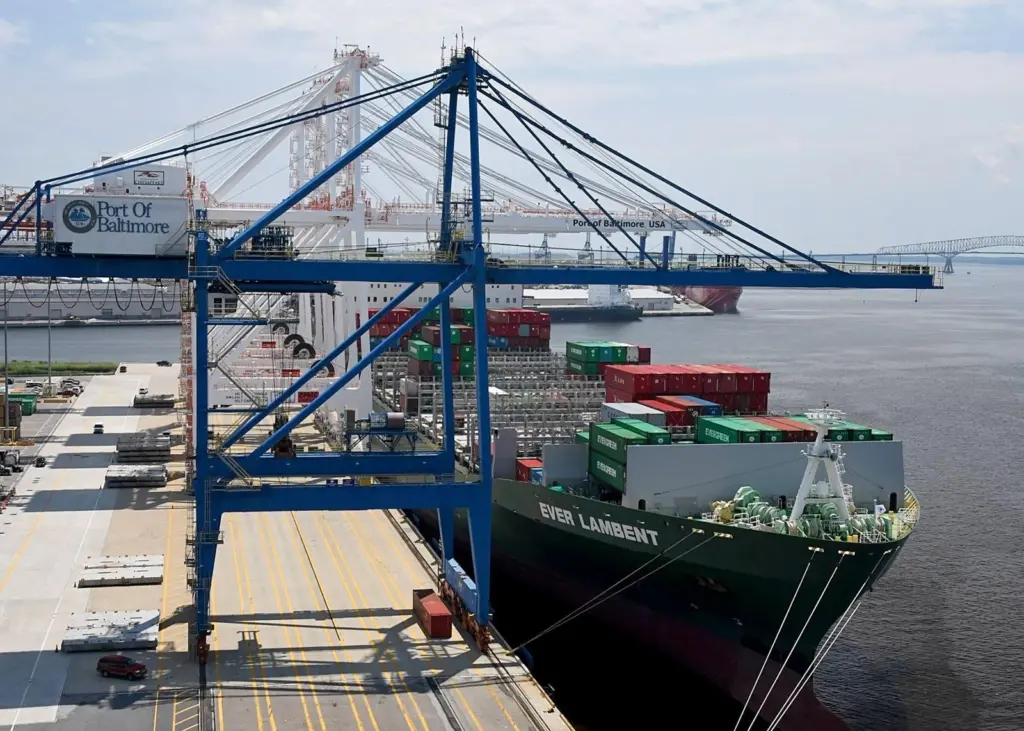
According to The Baltimore Sun, United States House of Representatives member for the state of Maryland’s 2nd congressional district Dutch Ruppersberger (who represents the dock) fears that President Trump’s rhetoric and actions could slow down business at the port.
The newspaper also reported that a freight forwarder and customs broker at the facility has already witnessed consequences of the leader’s steel, aluminium and other product tariffs on port trade, additionally saying that a chief economist noted the port will feel the effect if world trade takes a hit.
Commenting on President Trump’s actions and rhetoric, Congressman Ruppersberger reportedly said: “It’s like he’s playing a game of chicken with the global economy.”
Meanwhile, the cost of the improvement project for the John S. Connor Inc. warehouse at the port has increased since the President raised a levy on imported steel in March.
“The impact now is not huge, but there’s a lot of concern about where this is going,” said organisation president Lee Connor, a customs broker and freight forwarder.
Daraius Irani, chief economist at Towson University’s Regional Economic Studies Institute, explained: “The next quarter will be really telling, because the tariffs will be in full effect at that point.
“Because the port is just a facilitator of exports and imports, anything that impacts world trade is going to impact the port.”
The economist also argued that should President Trump move ahead with tariffs on Mercedes and other European automakers, the Port of Baltimore would be impacted.
Though the dock observed a record 21.6m tonnes of trade for $28bn during H1 this year, analysts have reportedly said that both the President’s tariffs and retaliatory actions by China and other trade partners will be a drag on that growth in the future.
This drag could increase if the tit-for-tat behaviour turns into a full trade war, they claimed.
Economist and Sage Policy Group chief executive Anirban Basu argued that the port is “not facing anything catastrophic” but warned that this does not mean the facility is completely insulated, with a point of vulnerability, if Sino-American trade relations keep deteriorating, potentially being the strong growth in containerised cargo to and from Asia on Panamax vessels.
However, Maryland Port Administration spokesman Richard Scher said that Baltimore only handles around 2% of the US’ steel imports, and while it handles around one-sixth of US aluminium imports, it is too early to comment on the tariffs’ effect.
He also said that the port had not observed a decrease in its panamax trade.
Related Articles
 PORT & TERMINAL NEWS
 PORT & TERMINAL NEWS
 OPERATIONS