![PortStrategy[GreenPort]](https://www.portstrategy.com/wp-content/uploads/2026/09/PortStrategyGreenPort.svg)





ROLLERCOASTER RIDE IN CALIFORNIA
The three container ports in California endured a challenging 2020. AJ Keyes looks at how they performed and priorities for 2021.
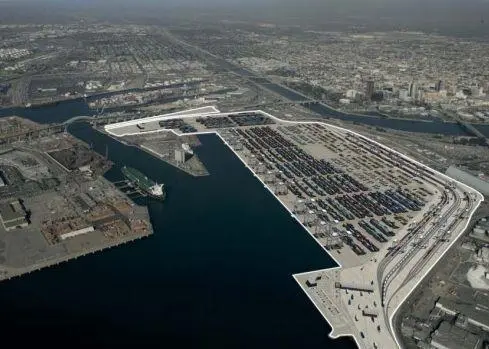
“Our terminals and dockworkers are moving an incredible amount of cargo as the San Pedro Bay ports continue to receive an unusually high number of container ship calls. We’re working closely with our stakeholders and customers to fi nd solutions,” explained Mario Cordero, Executive Director, Port of Long Beach, when asked to summarise the position at the port at the end of 2020.
However, he is quick to add the clear focus for the port otherwise in 2021. “Going forward, our mission will be business recovery and market share growth. This was our focus prior to COVID-19 and it will continue to be our focus as we recover from this pandemic.”
ROLLERCOASTER RIDE
Gene Seroka, Executive Director, Port of Los Angeles says in his 2021 State of the Port of Los Angeles annual address that 2020 reflected, “Unprecedented times.” Seroka expands on the challenges endured in 2020. “It was a year of great difficulty and for the container business it was the most erratic seen,” he explains, adding, “Everybody took a hit, from the lines through to the package vans. There were great hardships for many businesses.”
This is a view that resonated across the industry. “Without doubt, 2020 represented a rollercoaster ride for ports in California. The impacts of the COVID-19 pandemic saw volumes drop, only for them to then rebound strongly and cause serious congestion and the supply-chain to creak under the pressure,” highlights Dean Davison, Technical Director, WSP.
The numbers agree with this assertion, with port throughput highly erratic as Seroka at Los Angeles confirms. “For year-to-date May 2020, we were down by -19 per cent, but a consumer buying surge in the second half of 2020 saw volume up by 50 per cent over the first half of 2019.”
This view is endorsed by the Port of Long Beach. “The COVID-19 pandemic drove down consumer demand for goods during the first half of 2020, leading to a -6.9 per cent decline in cargo compared to the same period a year earlier,” says Cordero, before highlighting how the second half of 2020 was a “different story” with a Q4 throughput record and demand up by 23 per cent compared to Q3 2019.
Bryan Brandes, Maritime Director, Port of Oakland confirms a similar development in North California too. “The Port’s growing import volume in 2020 is a trend that began in June and it remains to be seen how long this trend will continue.”
The key trend in the second half of 2020 was surging imports from Asia, resulting in congestion, especially across the San Pedro port terminal complex. It meant that Los Angeles clawed back almost all losses from H1 2020 to record 9.2 million TEU for the full year of 2020, confirming a subsequent drop of -1.5 million TEU compared to 2019.
Oakland confirms a similar result, with 2020 total container activity of 2.4 million TEU being a -1.6 per cent decrease from the 2019 figure of 2.5 million TEU. With a more balanced import-export trade, the port was able to offset weaker import demand with its export activity.
Long Beach, however, saw a more positive outcome in terms of container throughput. “The Port ended 2020, its busiest year on record, with 8,113,315 TEU moved, an increase of 6.3 per cent from 2019.” The port did experience fewer cancelled sailings than at Los Angeles during 2020 and this was undoubtedly a contributing factor to its full year results.
QUEUING SHIPS REMAIN
The import surge and vessels arriving from Asia in the second half of 2020 has not been without problems. At the beginning of December, there were ships having to lay-up and await access to the San Pedro complex.
Davison explains further. “Local reports in Southern California in the second week of December 2020 confirmed there were up to 25 container ships waiting off of the coast of Southern California, with delays (at that time) of up to one week for the vessels to gain access to berths.”
Local reports in Southern California reported that this figure had risen to between 32 and 37 by the end of the second week of January. In mid-January, informed sources reported that the shipping lines within THE Alliance and OCEAN Alliance were expecting the port congestion to “last until at least February 2020” with 35 ships still waiting at anchor at the end of week one, 2021.
The shipping lines also said that labour shortages were an issue. “Terminals are working with limited labour force numbers, and split shifts due mainly to COVID-19…with labour shortages affecting all terminals, and turnaround-time for truckers, as well as inter-terminal transfers.”
Hapag-Lloyd provides a similar update, citing what it calls a “lack of terminal space”. The ocean carrier says, “All terminals [at Los Angeles/Long Beach] continue to be congested due to the spike in import volumes and [this] is expected to last until February.”
It is no surprise, therefore, that major shipping lines imposed congestion surcharges (in place from early December 2020), with additional costs of US$350 per container for 20ft, 40ft and 40ft HC units, applicable to all US inland point shipments, with provision of carrier haulage, pre-carriage or on-carriage door service over port rail ramp locations.
Davison explains why there is no relief on the horizon. “Traditionally, shipping lines do cancel sailings during the Chinese New Year period to reflect lower Chinese exports. However, as this is not going to happen in 2021, it will not give the terminals a chance to clear some of the congestion and waiting vessels. So the pressure will remain on ports (and supply-chain partners) with imports arriving and the lack of empties returning to Asia will continue.”
So, it is important to know what the ports are doing to improve the position. Cordero explains how the Port of Long Beach has initiatives in place. “We opened STOR (Short Term Overflow Resource), a temporary storage area for empty containers and a staging yard for full containers on vacant land in the Port. Our terminal operators and beneficial cargo owners are making good use of the temporary STOR facility, which gives our retail partners greater control and flexibility of delivering containers to distribution centres and transload yards.”
This is not the only initiative underway at Long Beach. “We are collaborating with our marine terminal operators to increase the number of truck moves that pair an export container delivery with an import container pickup appointment during the same visit. The Port and its container cargo terminal operators are working directly with truck drivers and customers to improve the appointment system and maximize the number of these dual transactions. Dual transactions will balance inbound and outbound cargo flow, and thus improve efficiency within the supply chain. Our goal is to ensure at least 50 per cent of the Port’s deliveries are dual transactions, but some Long Beach marine terminal operators are already achieving more than 70 per cent day,” says Cordero.
This is an activity that Seroka confirms is a key target for Los Angeles in 2021 too. “Drayage is inefficient, we see a lack of dual transactions. While we want faster truck turnarounds, we do not want trucks leaving the port empty after dropping a box.”
MOVING INTO 2021
In terms of the key challenges as 2021 progresses, Cordero is very clear. “Our immediate challenge is to distribute the vaccine to the men and women who work on the waterfront. This is vital to ensuring operations continue during the pandemic, as we do expect to be fully engaged in economic recovery throughout this year.”
In his State of the Port 2021 address, Seroka describes 2020 as being a time to be “responsible, resourceful and resilient” but says there is a need to “work smarter” in 2021. He outlines specific actions to expand data tools and enable “smarter planning decisions for all stakeholders” of the port. This is welcome news to one shipping line using the port (who wished to remain nameless) who felt that more needs to be done to resolve the current issues and better support their activities.
There is no doubt that ports in California remain committed to investing, despite the COVID-19 pandemic. “We expect over the next two-to-three years to continue to attract more customers and to improve our service and facilities. Due to be completed in 2021, Middle Harbor combines two aging shipping terminals into one of the world’s most technologically advanced and greenest container terminals. The 304-acre facility operated by Long Beach Container Terminal will at full build-out have the capacity to process 3.3 million TEUs annually. Construction of the US$1.493 billion Middle Harbor Terminal Replacement Project began in 2011,” notes Cordero.
Seroka agrees. “Capacity is the key to competitiveness,” he said. However, he also challenged the US government as well. “There must be a more balanced investment in infrastructure. Federal investment in the West Coast trails other areas.”
LAST WORD
The clear short-term objective of all container ports in California must be a return to stability, plus reducing the number of ships queuing, getting boxes out of terminals into the supply-chain, while balancing these containers leaving with boxes (especially empties) returning for export to Asia.
The first step is to increase dual-loads. Moving forward, the need for greater use of IT for better data flow and operations optimisation is clear and accepted by the ports, but the consideration to speed up introduction of automation and environmentally-friendly equipment will require the participation of all stakeholders.
Related Articles
 EXPANSION & DEVELOPMENT
 EXPANSION & DEVELOPMENT
 PORT & TERMINAL NEWS