![PortStrategy[GreenPort]](https://www.portstrategy.com/wp-content/uploads/2026/09/PortStrategyGreenPort.svg)




TRANSLOADING TAKES OFF
High-quality transloading facilities are a key requirement to support container port demand in North America. AJ Keyes assesses the implications of new funding for this infrastructure at Prince Rupert.
Shaun Stevenson, President and CEO, Prince Rupert Port Authority, describes the securing of funding from the government of British Columbia to improve and expand infrastructure at the Ridley Island Export Logistics Platform as a “pivotal project.”
On the basis of the port being able to enhance and improve transloading facilities to support import and export cargo operations, then he is absolutely correct.
WHAT IS TRANSLOADING?
Transloading is the process of transferring cargo between different modes of transport – typically from an ISO-rated international container to a domestic transport unit. A transload facility is the conduit linking say a 53ft domestic truck trailer or unit with a 40ft-45ft international shipping container.
So, for exports, the goods arrive in the domestic 53ft unit and are then packaged into the marine container, with the process in reverse for imports. As international shipping continues to grow and scale up, many ports are increasingly acting as transloading hubs and this is a major driver in the supply chains of western Canada.
For this activity, the Port of Prince Rupert is to receive C$25 million (US$19.5 million) from the government of British Columbia to increase the port’s transloading capacity from 75,000TEU to 400,000 TEU per annum. The project includes new and updated rail tracks and dedicated roads to and from the Fairview Container Terminal as well as new cargo-handling equipment.
SAVINGS FOR BENEFICIAL CARGO OWNERS
The importance of transloading to Prince Rupert (and other ports) cannot be underestimated. According to the Transload Distribution Association of North America (TDANA), an established organisation consisting of up to 6,000 industry participants, “all major commodity groups are involved in the transloading process”. This includes agriculture, forest products, building material, machinery/mining, chemicals, raw materials, food and consumer products.
This is a position recognised by Transport Canada, the federal authority responsible for transportation policies and programmes. “Two 53ft domestic containers contain the same freight as three 40ft containers,” the body stated in a recent study entitled, “Pacific Coast Container Terminal Study (14837E)”.
The study further quantifies what this means to beneficial cargo owners: “Although importers pay more for transloading, they save about 30 per cent on the rail freight overall,” it notes. For Prince Rupert, exports of forest products is clearly one of the major cargo groupings that the new capacity will be targeting.
This is endorsed by Transport Canada: “Many of the 37 pulp and paper mills in British Columbia, Alberta and Saskatchewan ship bales and rolls by box car to warehouses in the Vancouver area,” the study notes, reflecting the fact that the challenge for Prince Rupert covers cargo redirection and market share issues.
Based on available data from ports, Transport Canada, TTX Corp, TDANA and WSP, the level of transloading is estimated to be considerably higher in US ports than it is in British Columbia. For example, the proportion of containers shipped via transloading is now almost 40 per cent through Seattle-Tacoma but under 15 per cent via the Pacific Gateway ports of Prince Rupert and Vancouver. This reality highlights the importance of bulks and neo-bulks to the North West region generally.
Even allowing for the fact that Seattle-Tacoma serves the US domestic trades to/from Alaska/Hawaii, which generates demand for the process, there is still scope for expansion in this sector for the Canadian ports.
BENEFITTING FROM THE RIGHT STRATEGY
With the availability of relatively low-cost land and labour, Prince Rupert represents a good option for transloading. However, it is imperative that the port continues to further increase its capacity and services because such investment is ongoing in Vancouver and the port is benefitting commensurately.
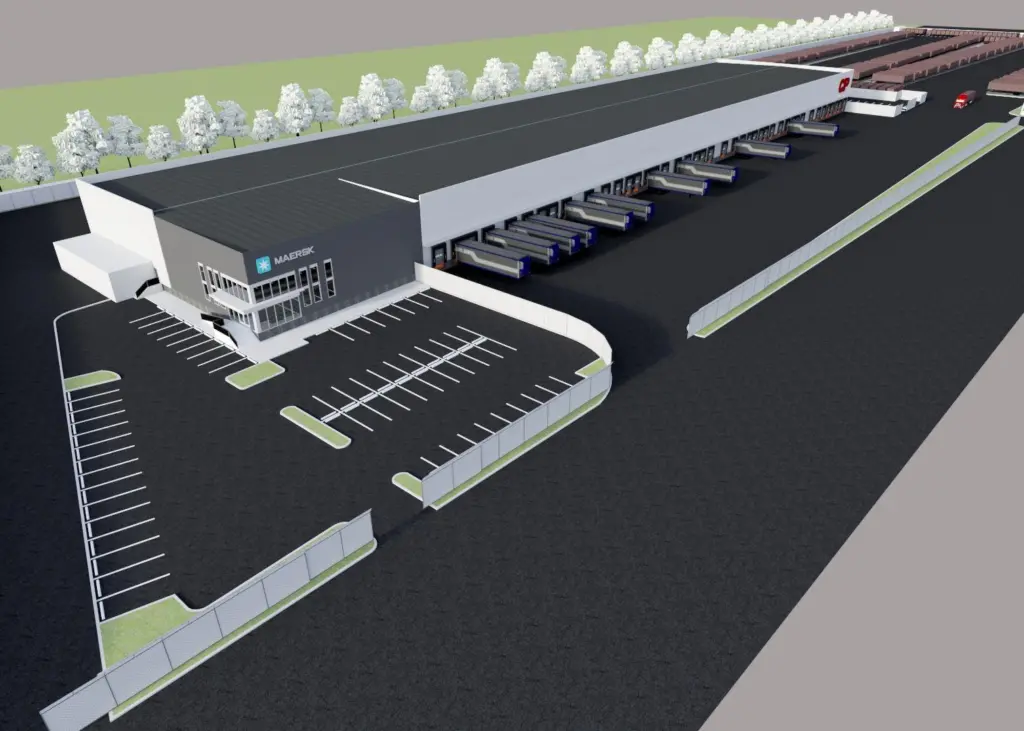
In Q3 2020, Canadian Pacific Railroad (CPR) confirmed that it had signed a new deal with AP Moller Maersk in which the railroad operator will move the shipping line’s containers through Vancouver (and Montreal) with effect from the start of March 2021. This announcement followed confirmation that the two companies are building and operating a transload and distribution facility through CPR’s existing Vancouver terminal.
When outlining the arrangement, Keith Creel, President and CEO, CPR, referenced the importance of providing shippers with more control of their cargo via transloading from ocean containers into 53-ft domestic trailers and, ultimately, faster transits.
He concluded that the new deal involves “a strong relationship developing” with Maersk Line. Prince Rupert needs to be in a position whereby it can look to target, for example, export cargoes being shipped from British Columbia – localised commodities like forest products but also agricultural cargoes that are being shipped to Asia.
However, the port can only do this with additional transloading capacity while at the same time there is a need to ensure all stakeholders in the logistics process participate effectively.
BY NUMBERS – POSITION OF THE PACIFIC GATEWAY PORTS
In 2020, Prince Rupert’s loaded export containers totalled 193,640TEU (just 16.9 per cent of total throughput), which compares to 643,575TEU of loaded imports (or 56.4 per cent of the total). Empty units make up the remainder.
It is important to note that Prince Rupert is primarily an intermodal port, with around 85-90 per cent of loaded imports moving immediately to rail for transport to key markets such as the US Midwest and Central Canada.
Accordingly, the demand for transloading of imports is less. However, the position for loaded exports is where significant potential exists, especially if the make-up of trade in Prince Rupert is compared to the port’s fellow Pacific Gateway port, Vancouver.
In 2020, the Port of Vancouver handled almost 1.80 million TEU of loaded import containers (a 63.3 per cent share) and over 1.04 million TEU of loaded export units (representing 36.7 per cent of the overall port total).
INCENTIVES FOR PRINCE RUPERT
It is clear that other ports are enjoying higher loaded export volumes than in Prince Rupert, with the greater availability of transloading facilities an influential factor. However, if Prince Rupert continues to expand its capacity to offer this service then it will put additional competitive pressure on the Port of Vancouver.
While transloading in Vancouver has achieved roughly the same overall degree of penetration as Prince Rupert its numbers in volume terms and in conjunction with export activity are much greater. There is clear potential at Prince Rupert to increase the export loads and the additional transloading capacity is an important step in realising this objective.
It is also important to take account of the wider picture. The recent surge of Asian imports into the West Coast of North America has caused congestion at most ports and across supply chain networks. This is resulting in a shortage of international shipping containers due to the additional time it is taking for the containers to leave the port terminals (as a result of congestion).
A further impact is the time it takes to get the empty containers back for shipment to Asia for the next load. So, in addition to targeting more export loads, the ability to utilise more domestic 53-ft units (especially closer to the port of entry/exit) could, potentially, help ease periods of congestion, which currently are manifest in North America.
Related Articles
 EXPANSION & DEVELOPMENT
 EXPANSION & DEVELOPMENT
 PORT & TERMINAL NEWS