



US west coast battles cargo backlog
US west coast ports are working hard to clear months of backlogged cargo as a result of the extensive labour dispute, but it could be three months before there’s a clearing, and even longer before operations are back to ‘normal’.
Following the agreement between the Pacific Maritime Association (PMA) and International Longshore and Warehouse Union (ILWU), it’s the first time in a long time the west coast ports have seen cargo flow improve.
As of Friday 6 March, there were around 25 container ships anchored outside the ports of Long Beach and Los Angeles waiting to berth, and the number is fluctuating, with around 14 more expected over the weekend.
“So, we have a way to go,” Lee Peterson, spokesperson for POLB, told Port Strategy. “The tentative agreement on the dockworker labour contract has definitely increased the amount of cargo moving through the ports. Both ports estimate it will take about three months to clear out the backlog and get back to normal – which is no container ships waiting in the harbour, and no additional delays on containers moving through.”
At POLA, full labour shifts are in place to clear the backlog, which is expected to slow in the coming days “due to the Lunar Year”, Phillip Sanfield, a spokesperson for the port told PS. “We plan to take advantage of that slowdown to work the backlog of ships. We expect it will take two to three months before we resume to a sense of normalcy,” Mr Sanfield added.
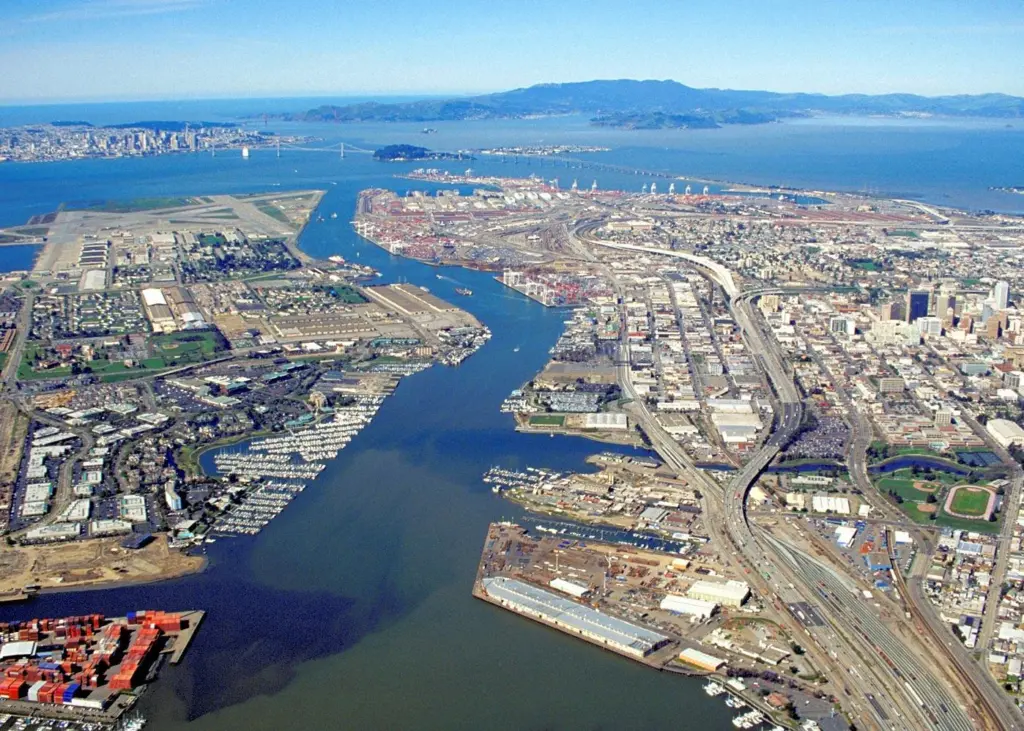
At Oakland, port officials have also reported an improvement in productivity and cargo flow, with just five ships anchored in San Francisco Bay awaiting berths – down from a high of 20 vessels in mid-February. The port says it expects the vessel logjam to disappear within 10 days, but vessels could continue to arrive late after lengthy delays at Southern California ports for a month or so.
Despite the pick-up in operations, it’s been suggested that clearing the backlog and getting back on track won’t be as easy as it seems for the west coast since many shippers have switched to the Asia-east coast route via Suez, despite it being twice the price.
Neil Davidson, senior analyst at Drewry, told PS going forwards, US west coast ports could find it difficult to regain confidence and compete with the low prices of alternative routes as problems that were there before the ILWU-PMA dispute will still be issues afterwards, like provision of chassis, lack of truckers, intermodal capacity issues and of course the volume peaks caused by bigger ships.
In response to this, POLA told PS it’s working hard to regain the trust of customers that have already re-routed cargo. “The Port of Los Angeles is among just a handful of ports in North America that can handle the biggest ships now calling here and it has unparalleled transit times, infrastructure, warehousing, and we continue to invest more than US$1m for the future.”
In addition, the ports have already implemented a gray chassis pool and last week, a POLA customer opened around 20 acres of a near dock yard for a ‘peel off’ or ‘free flow’ cargo operation – a new programme being carried out in conjunction with stevedoring company The Pasha Group, harbour trucking firm Total Transportation Services Inc. (TTSI), several marine container terminal operators and a core group of major retailers.
Under ‘Peel Off’, import containers loaded with goods belonging to high-volume shippers are stacked together in a block upon arrival at the port. The terminals expedite TTSI trucks through their gates to retrieve the containers and deliver them to the near-dock yard less than a mile away where they are sorted. The same trucks loop back to the terminals for the next inbound container. The trucks keep boxes moving by delivering outbound containers on the return leg.
ILWU workers handle all gate and terminal operations at the ‘Peel Off’ yard, including on-site chassis inspection, maintenance and repair.
Cargo owners can move their containers through the yard in less than 48 hours and make those trips at night during off-peak traffic hours, while TTSI has leased 250 chassis to ensure containers are on wheels.
“So we are quickly finding solutions to the congestion issues and plan to develop more in the weeks and months ahead. We’re confident that we will succeed,” Mr Sanfield concluded.
Related Articles
 PORT & TERMINAL NEWS
 PORT & TERMINAL NEWS
 OPERATIONS