


Overcoming congestion
APMT Callao has recently lost breakbulk cargo, principally due to congestion factors, but with new investment implemented is confident that it is back on track. Rob Ward reports
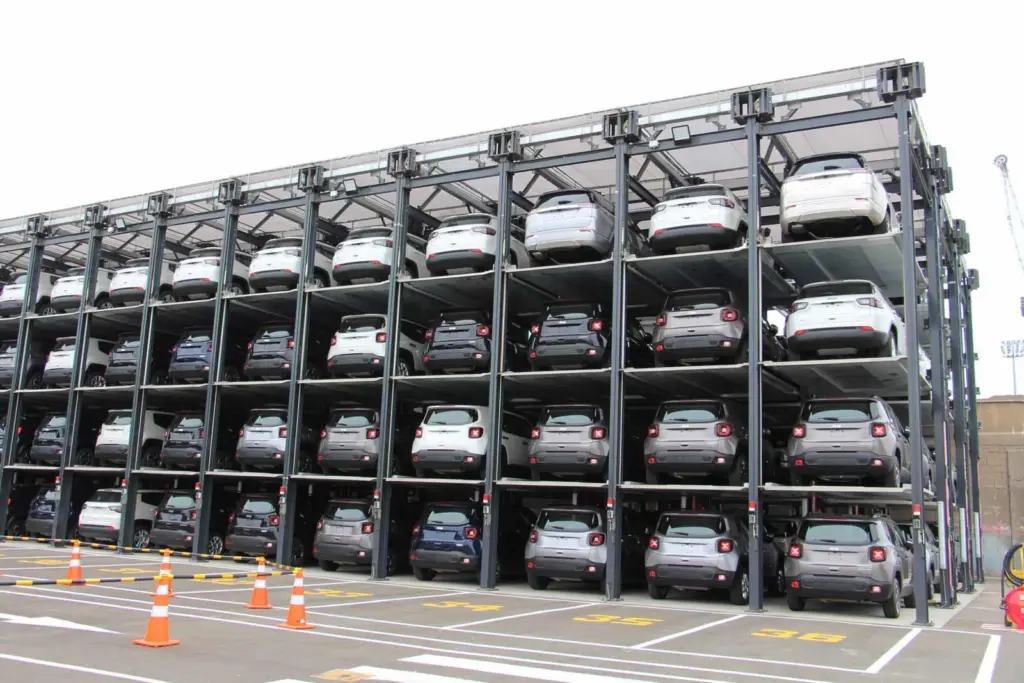
APM Terminal Callao’s management recognises that in its role as Peru’s leading general cargo terminal operator – it handles around 80 per cent of Peru’s breakbulk and solid bulk volumes – it has had a tough two years. But it is now convinced that the congestion problems which have made life difficult for it are now over.
This year volumes are down and so too is the congestion, with new equipment also easing the pain. Callao watchers say the multitude of different cargoes handled by APMT Callao hinders progress with consistently achieving high efficiency levels.
Ro-ro registered 166,688 vehicles during first six months of this year, down from 186,672 for the first half of last year and break-bulk was 838,565m tonnes (down more than 60 per cent from the 1.4m tonnes for the same period of 2022. The full year figure for last year was 2.48m tonnes for break bulk, down from 2.82m tonnes in 2021, and 400,704m tonnes for ro-ro, up from 392,198 but some of the ups and downs are due to inventories rising and falling caused by Covid Fall-out as well as to congestion, and throughput is returning to pre-Covid levels.
With the Lima-Callao conurbation hosting 11.35m of Peru’s 30m population it is hardly surprising that the port of Callao dominates the country’s throughput.
Although its’ plans to invest and upgrade have been somewhat stymied in recent years executives at the terminal are still investing and might even be ready to go for an early renewal of their existing 30-year concession (12 years gone so far).
Javier Vidal, the Chief Operating Officer for APMT Callao, says that he is well aware of criticisms about congestion and breakbulk cargoes fleeing Callao (See preceding article) but laid the blame mostly at the door of “difficult Covid and post Covid factors”.
“Globally the entire logistics chain had been suffering a lot and we were no exception,” Vidal tells Port Strategy. “Our concession includes the commitment to be open 24/7 and we kept that up throughout Covid, leading to a lot of pressure on our employees when many were off work, suffering from Covid. This reduced our capacity as did the well-known box shortages and logistics problems worldwide.
“Also this problem of lack of containers globally saw a lot of cargo move from boxes to breakbulk so more volume/weight went into breakbulk and that consumed a lot of extra space.
“It was very strange as it is not common, in recent years, to see wood, tiles and the like in breakbulk and the strangest thing of all was seeing diapers, from Proctor and Gamble and other brands, being shipped in palettes.”
CONGESTION AND INVESTMENT
Vidal admits that there were some weeks where vessels were waiting in the channel for between 10 and 12 days and “some importers decided to move to Paracas to alleviate the congestion in Callao”.
He also acknowledges that the terminal had, indeed, been concentrating much more on developing the container side of the operations because that emphasis had been written into the original concession contract.
“Our concession from the government stated that most investments must go into containers as the government at that time thought that most cargo was moving into containers,” Vidal underlined. “However, after eight years we have realised that not all cargoes will go to containers, and some, maybe, never will.”
To deal with the changes, the APMT Callao executive presented “an alternative plan to the government, suggesting there should be more investment into General Cargo facilities.”
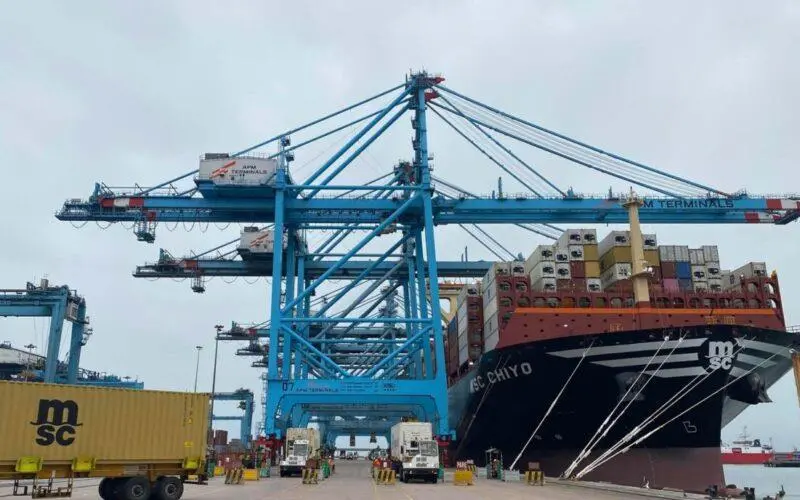
“And then last year we signed a new Addendum with the government and we promised immediately to spend US$70m on upgrades,” enthused Vidal. “With a new continuous ship unloader, we have created 60,000 tonnes of bulk capacity for free flow cargoes, such as grain, and that has improved productivity by 40 per cent with a handling rate of 1300 t per hour.”
To further help deal with sudden surges in cargo APMT Callao has added four new Liebherr MHC 550s, three new E RTGs (it now has15), as well as more Terex cranes. Also on the container side it bought a new super post panamax ship-to-shore unit from ZPMC and has installed 500 new reefer plugs (giving it 1800 in total).
Under the concession APMT also has to handle liquid and solid bulk cargoes, plus ro-ro at its 14 piers for general cargo.
For their part the government has told Callao port users, and APMT Callao, that they will soon trigger a concession for a large parking space for trucks, just five kilometres from the two key terminals: DP World and APMT.
NEW COMPETITION
Also, looming on the horizon for APMT Peru is new competition from Chancay, which is scheduled to open for business next year, and with some general cargo earmarked for that “future hub port” for Chinese carrier Cosco and possibly other operators. APMT Callao will face competition from north and south.
“Chancay will be a Gateway operation for sure,” observed Vidal, “but it will have some general cargo too, but this will be good for Peru when there are three big operators in Lima [referring also to DP World on the container side]. I believe rivalry and competition is good for everyone.”
Related Articles
 OPERATIONS
 OPERATIONS
 OPERATIONS