



Paranagua prospects look bright
Concerted action on infrastructure investment promises to open the door to an increasingly bright future for the port of Paranagua. Rob Ward maps out the plans and other positives.
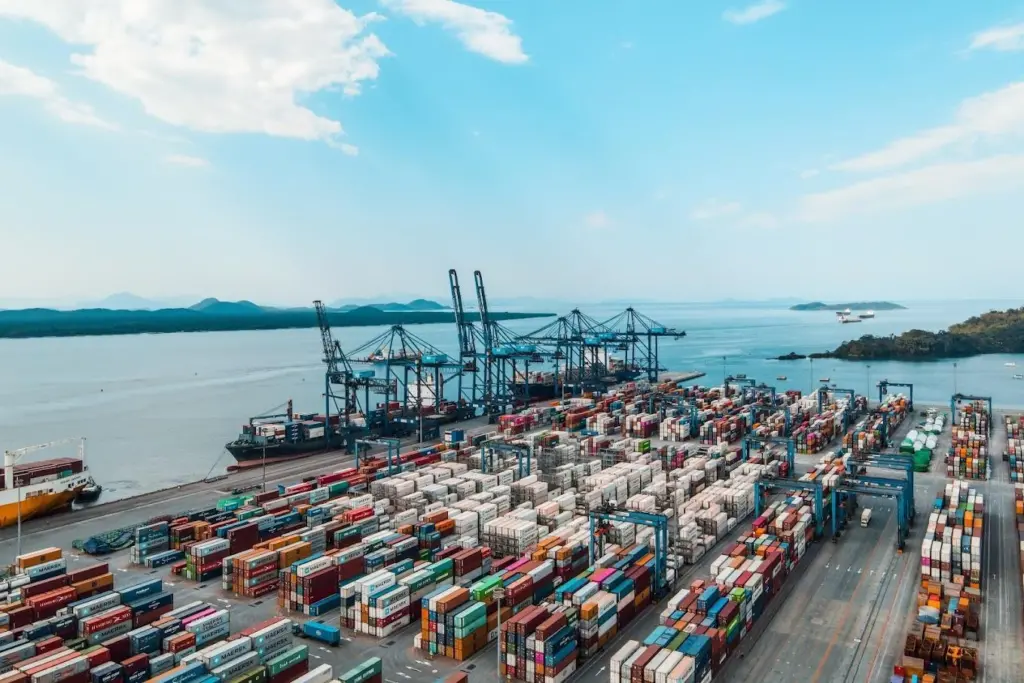
All the logistics and investment stars seem to be moving into alignment and making it likely that Brazil’s Terminal de Conteineres de Paranagua (TCP) will break even more throughput and efficiency records this year (see box story) as well as close in on its objective of becoming a key “Logistics Hub” for the region.
The state government of Parana, backed up by Brasilia and private financing, will oversee investment of up to Reais61 billion (US$12.4 billion) over the next few years that will “vastly improve rail and road links” from the state capital Curitiba (3000 feet above sea level), down to the ports of Paranagua and Antonina. It is also intended to facilitate improved connections to the border with Paraguay, as well as to the state of Sao Paulo and the landlocked states of Mato Grosso and Mato Grosso do Sul. TCP is also now the beneficiary of two new cabotage services, commencing activities after an absence of nearly three years.
The Carlos Massa “Ratinho” Junior, Governor of Parana state, has announced a swathe of infrastructure investments and more than Reais3BN has already been committed as part of his plan to make Parana and Paranagua the “logistics hub for South America”, and thereby boost local industries, which include forest products, soya, automotive and various reefer exports.
Working with the port authority, Portos do Parana, and shipper organisations such as Fecoopar and Fiep, the state government has already started spending on much needed improvements and maintenance for the main Highway, the BR 272, especially the 90km stretch from Curitiba down to Paranagua.
TCP, along with other Paranagua port operators, will be one of the main beneficiaries of these multi-billion-dollar improvements as will shippers in Parana, adjacent states and, especially, Paraguay. More than US$5 billion will also be spent on upgrading rail links between the port and the rest of the Brazilian network: via the Ferroeste network.
HELPING HAND
In recent years, TCP has already been benefitting from the fact that Santos, South America’s largest port for container movement (with 4.75 million TEU handled last year, of which 2.45 million TEU comprised imports and the rest exports), is often “heavily congested”, and more and more shippers have been using the China Merchant Port Holdings, or CMPort, owned terminal, to move their boxes.
“One of the factors that shippers really like about TCP is that it has a lot of spare capacity,” underlines one Sao Paulo-based ports and shipping consultant. “With Santos creaking at the seams, the fact that TCP has 2.5 million TEU of annual capacity and has not yet hit 1.5 million TEU yet is a major Pull Factor.”
TCP saw 1.25 million TEU pass through its berths last year, up 7 per cent over the 1.183 million TEU handled in 2022. This year it expects about the same despite forecasts of “difficult economic and trading conditions”.
“Last year we saw transshipment increase a lot owing to the heavy rains in Santa Catarina [the nearest state, to the south of Parana, which includes the ports of Itapoa, Navegantes and Itajai] during the beginning of last year which saw terminals there close for several days,” explains Giovanni Guidolim, Commercial, Logistics and Customer Services Manager, TCP. “And,” he emphasises, “we expect transshipment to grow even further this year as a result of the introduction of the two cabotage services.”
Since January, Log-In Logistica (MSC’s Brazilian flag coastal operation) has begun calling at TCP with its Amazon Express Service (labelled SEA which employs 2650TEU vessels). This the first time in more than two years, and this month [February] also sees the start-up of a brand new cabotage joint venture – branded as Norcoast – operated by Brazilian breakbulk and solid bulk operator, Norsul Navegacao, along with global carrier Hapag-Lloyd. Deploying four 3500TEU ships it is the first entry into South American waters of a cabotage service from the German company, following in the wake of rival global carriers like MSC (Log-In Logistica), Alianca Navegacao (Maersk/Hamburg Sud), and Mercosul Line (bought by CMA CGM from Maersk Line seven years ago). Mercosul Line, as well as Log-In, both halted their cabotage services to TCP in October 2021.
Guidolim points out that TCP has the greatest number of deep-sea liner services out of all the individual terminals in Brazil: Some 16 in total, with 20 regular calls, which is even more than the Big Two – BTP and Santos Brasil’s Tecon Santos terminals – in Santos. For this reason, the lack of cabotage services has been hurting TCP in recent years because many shipping lines and shippers require transhipment options. A new deep-sea service – the ZGT service from ZIM – is starting up early this year bringing the number of such services up to 16.
The TCP executive would not be drawn as to why the cabotage services disappeared a few years ago, but the Sao Paulo consultant, a regular and reliable source for Port Strategy, notes:
“Basically, MSC and Maersk have been focusing their feedering on their own backed terminals – Portonave for MSC and Itapoa for Maersk and BTP, in Santos, for both of them. This has led to neutral, White Flag terminals, like TCP and DP World in Santos, plus un-affiliated carriers, such as Hapag Lloyd, ONE and Cosco, having to make do without so many transshipment options, especially to Paranagua, and this despite it becoming increasingly attractive in recent years.
“This very clever move from Hapag Lloyd,” he elaborates, “will plug most of the transshipment gaps along the Brazilian coastline, give a welcome boost to ‘neutral’ terminals like TCP, Wilson, Sons and Santos Brasil, DP World, etc as well as give even more options to shippers and will, I am sure, eventually drive down freight costs.”
Another reason for growing throughput at TCP has been a strong commercial push that has taken cargoes from the port of Santos; some 200 nautical miles to the northeast (and 275 miles by road), from Paranagua; especially from those shippers located in the western sectors of the state of Sao Paulo.
PLETHORA OF PROJECTS
Getting back to the road, rail and port investments, Governor Ratinho’s office and Portos do Parana, are working on a plethora of multi-million dollar projects to boost the state’s infrastructure – which is not among the worst in Brazil – to help along the “logistics hub ambitions” of its governor.
Although the frequently occurring “heavy rains” in South Brazil – some caused by the El Nino Effect in the Pacific – in recent years have not led to TCP closing its gates, the main Highway, the BR 277, connecting to the port was closed for a period (for a few weeks from early 2023) and even after it was re-opened was reduced to just one lane in either direction, for half of last year.
“We are back to two lanes now and the new road concessions have been awarded so works will start very soon, hopefully in April,” explains Guidolim. “The new concessionaire will improve access to the port by by-passing the city of Paranagua, and there are stipulations too about improved maintenance of the highways. It looks very positive.”
Paranagua has been a common gateway for both dry bulk (especially grains), breakbulk and containerised cargoes to land-locked Paraguay and the “Integration Ring” of roads has been bolstered by the “Integration Bridge”(connecting Foz do Iguacu, in Brazil, with Cidade Del Este, in Paraguay). This has been built by the Itaipu Dam bi-national hydro-electric company primarily for trucks and freight – at a cost of US$73.23 million – and will greatly facilitate even more boxes moving to/from Paraguay for TCP.
Guidolim sees the billions being spent on Parana infrastructure and the bridge to Paraguay as being of a “huge benefit” both to TCP and the Paranagua port community in general as Paraguay is a “huge market”, and shippers are increasingly using the “Paranagua Gateway”, rather than the longer haul, via river to Buenos Aires.
“We have increased our business so much with Paraguay in recent years,” he adds. “In 2014 we handled just 40 containers per month for Paraguay, and today it is always between 400 and 500 per month. It’s a huge business for us.
“All these developments added together are positive not just for us but for the entire Paranagua port community and for the city as a whole. It will improve the traffic flows for everybody, for the state of Parana and Brazil as a whole; not just for containers but also for breakbulk.”
Related Articles
 OPERATIONS
 OPERATIONS
 OPERATIONS