![PortStrategy[GreenPort]](https://www.portstrategy.com/wp-content/uploads/2026/09/PortStrategyGreenPort.svg)



RSGT spreads its international wings
COMMENT: Investment risk is inversely proportional to diversification. No surprises there, and therefore it isn’t surprising either that port operators, especially those that had an early start, have managed to get their portfolios to the scale they have, writes Gagan Seksaria.
The industry backdrop has been fertile; it’s a genuine win-win for operators and their host markets and authorities; availability of finance — whether operator, private equity or debt — has been abundant; and, going by the raging price-earnings ratios of listed operators, investors obviously love the modest though stable, long term returns story. No wonder then that the incessant portfolio expansion appetite continues, especially as the obvious opportunities become rarer.
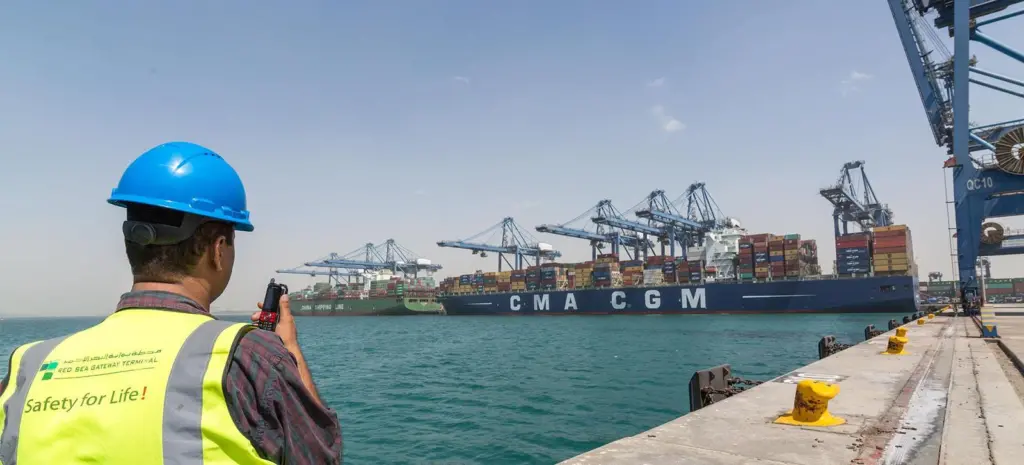
Most operators obviously started with the one port, their home base. They mastered the business, developed a hunger, but most importantly, they looked around and found perfect conditions — whether it was the cargo volume that the wider group controlled or logical affinities with their acquisition targets whether political, cultural or based on another logic. At Red Sea Gateway Terminal (RSGT) in Saudi Arabia, we are finding our perfect conditions now but are also fully aware of the challenges that we will face as we strive to grow our business internationally in the current environment.
How do we get past qualification hurdles in port tenders, for instance? How will we keep up, as we take the operator role in different and unfamiliar terminals globally, with the expectations of shipping line partners? Where should our geographical focus be?
How will we leverage our main shareholders and their unique capabilities to the best of our advantage and that of our partners and partner authorities? Then there is the opportunity as well as the challenge related to making the most optimal and win-win utilisation of the financing and finance partners available to us. For instance, the support from the Saudi authorities in helping its companies to expand, be it under the umbrella of the wider Vision 2030 or more specific support programmes such as the National Champions Promotion Program, has been unwavering.
We believe that, in spite of this favourable environment and support system, our key challenge will be in finding sensible investment opportunities large and fast enough to be able to deploy our vision and capital in a win-win manner for all stakeholders involved.
Learning from others
There are other challenges as well but perhaps they affect the industry in the same way as they affect us. The advantage that we might have is that we have learnt from watching them play out from the side lines and therefore might have more effective solutions to them.
For example, we have seen that imbalanced deal structures or legal frameworks may become unsustainable if the circumstances change. We believe that long term infrastructure creation and operations business will be supported by agile and bankable partnership structures.
Also, over-reaching regulation in the name of protecting the port user may stifle the creativity of the operator. There are enough examples of how to do it right and we need to learn from them. Look at Saudi Arabia, India or Ghana.
Further, over-capitalisation or sub-optimal prioritisation of investment deployment can lead to overcapacities in one area at the cost of under-investment in another.
And we should avoid a lack of vigilance concerning competitive conflicts as can be seen, for instance, by accumulation of port assets in the hands of single operators in East and West Africa.
Even so, we have thorough confidence in the attractiveness of this relatively young, yet well matured industry and, we believe, from the reception that we have received, both from our financing partners as well as investment recipients and local authorities we are dealing with, that the market is ready and the environment ripe for the advancement of RSGT as a strategic investor and operator. Watch this space.
Gagan Seksaria is the director of global investments for Red Sea Gateway Terminal and is responsible for the execution of the company’s international growth strategy.
Related Articles
 PORT TALK
 PORT TALK
 PORT TALK