



MODERNISE & REVOLUTIONISE
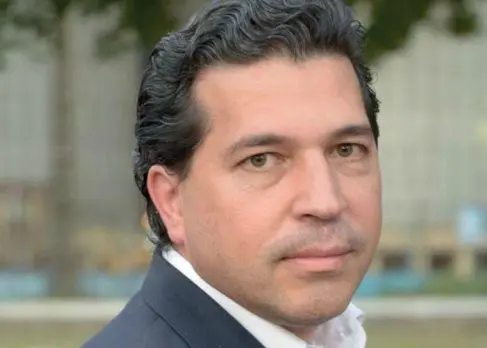
New Santos Port Authority President, Fernando Henrique Passos Biral, has a clear picture of what needs to be done to propel the port forward, he talks exclusively to Rob Ward
Santos is South America’s largest port for containers and one of the largest for all cargoes. It has a Reais10 billion (US$1.84 billion) expansion plan to increase overall capacity by 50 per cent from 160 million metric tons up to 240 million per annum by the year 2040, with box capacity rising by 60 per cent, from today’s 5.3 million TEU to 8.7 million TEU per annum by the year 2030.
In a lengthy and detailed interview with Port Strategy, Fernando Henrique Passos Biral, the new president of the Santos Port Authority (SPA), said a revitalized Zoning and Development Plan (PDZ), will “modernize and revolutionize” the port and will create nearly 60,000 new jobs.
While most of the new jobs will be in the construction of new infrastructure (road, rail and port), Biral expects 2,400 new direct jobs in the port sector, taking the overall port workforce up to 18,500, while a major increase in automation is also carried out.
As of early July 2020, Brazil’s minister for Infrastructure, Tarcisio Gomes de Freitas, has promised to approve the Santos PDZ plan, to the delight of Biral and his team at the SPA, which is likely to be privatised over the next year or so.
“Our Santos Port PDZ is a programme that we are very enthusiastic about because finally we are addressing many issues we have been suffering from in the port of Santos,” Biral told Port Strategy in a rare interview to foreign media.
“Unlike many other mega ports, such as the likes of Rotterdam and Antwerp, we have limited space. We have only 10 million m2 available, whereas Rotterdam has around 120 million m2 so we must be super-efficient and utilise our space very intelligently.”
Biral then explained that the “special logistics” of the port of Santos includes the geography of the port, plus the road and rail links that have to climb more than 800 meters through the Atlantic Rain Forest up to the plateau that hosts the city of Sao Paulo, South America’s most populous with a conurbation of nearly 20 million inhabitants.
With more than 45 million residents the state of Sao Paulo is the industrial engine room (and financial epicentre) of Brazil and its biggest consumer market. For several years, bottlenecks have occurred at the foot of the escarpment where the 12 lanes of highways (on two separate road networks) descend down to the entrance of the port of Santos. Ongoing road infrastructure projects are aimed at fixing this issue.
“Santos has delivered a lot to the Brazilian economy over the last century but our geography here is not so good, making logistics difficult, so we must plan very well to take the cargo up to and down from the plateau,” explained Biral. “That’s why we have been having dozens of meetings and consultations with port entities.”
Not everyone agrees that the “consultations” have gone far enough, however, and local dockers and port worker unions such as Settaport (which represents workers in the sea transport and port areas), and some trade associations, plus the owners of Marimex (the Santos based warehousing company which stands to lose out with re-organization of the port parameters included in the new PDZ) have been asking why there has been a “lack of transparency in drafting the PDZ” and no “official public hearing”. They also claim the port will lose jobs after the new PDZ is implemented.
“But at least Biral is listening more than his predecessor did,” said one Santos port terminal manager, who did not wish to be identified. Biral counters the criticisms full on and says that, if anything, there has been more than usual transparency as around 30 meetings were held with 50 port entities, from all sectors.
“In fact, it was a much more transparent process than if a few public hearings had been held, which are not mandatory in any case. We opted for more technical and segmented debates with people and bodies actually working in the port,” he added. “Also we will be creating thousands of new jobs, both during the five to 10 year construction phase and permanently in the port itself.”
SPA also wants the new PDZ to encourage further rail penetration into more port terminals and also to help with the development of “clusters” of terminals specialising in the same cargoes, rather than the rather hotchpotch spread of facilities that exists today.
“The survey shows that this PDZ will be for the current generation living in the Santos conurbation, one of the most important engines, for the creation of thousands of jobs,” said Biral, adding that a 100 per cent increase in port capacity would be twinned with a job increase of only around 15 per cent due to a “massive parallel increase in automation”.
Biral told Port Strategy that “despite COVID-19” the port’s cargo throughput, especially containers, was growing and when things get back to normal “a lot more capacity will be needed over the next few years”. “We have seen cargo increase about 10 per cent over the first four months of this year, with agribusiness exports and fertiliser imports doing very well, despite COVID-19,” he explained, adding, “Growth is sustainable in the agribusiness – soya, chicken, beef, coffee, etc – as there are new areas being developed for crops and productivity is increasing.
He is also excited about new port concessions coming up, starting with a new cellulose and pulp paper terminal for the area once occupied by Libra Terminais (Terminals 35 to 37).
“This tender will go ahead on August 28, as scheduled, and we have had a lot of interest shown by major cellulose operators, including Eldorado, Bracel and Klabin,” enthused Biral, adding that he is also very keen to push through a tender for the present day Petrobras liquid bulk terminal, located adjacent to the Usiminas terminal near the entrance to the port.
He explained that the port authority had been renewing the expired lease on the site every six months for five years and “this was not good practice”. What Biral plans to do next – if Infrastructure Minister Tarcisio Gomes de Freitas approves – is symptomatic of the way forward for Santos and Brazil in terms of privatisation and creating more competition.
“We have had many discussions about increasing competition, so want to split the facility into two terminals to provide competitors into the sector. This policy is aligned with the Ministry of Economy and also Infrastructure and it is heavily pro market, with an aim of breaking up monopolies and oligopolies…[even if it is Petrobras). The current government is trying to introduce this line of development into every sector of the economy.”
Standing up to the state controlled oil, gas and transport conglomerate Petrobras – which for decades has been seen as a “state within a state” – is a very brave (some might say foolish) thing for Brasilia and the SPA to do.
Biral added that both of the two winners in this tender would be obliged to build a new berth each to add liquid bulk capacity to Santos. In addition, SPA will also feed off a commissioned report by the Brazilian National Development Bank (BNDES), and several international field trips – Biral visited ports in the UK and Europe while Gomes de Freitas, an engineer with a military background, visited Australia – to work out the best way forward for a new container terminal, a new “revolutionary and innovative dredging concession” and for a new privatised SPA.
These will all be evaluated over the coming months, Biral (whose first two names echo Brazil’s best President of the past 50 years, Fernando Henrique Cardoso) told Port Strategy.
When asked how his regime as SPA president might differ from Tercio Carvalho, his predecessor, who received a lot of flak during his one-year reign, Biral was clear. “We have the same priorities but very different management styles. Tercio is a visionary and he has a very good understanding of the export sector in the Brazilian port system. “I bring people from the financial industry into play and work with re-structuring management systems. We certainly have different personalities and my focus has been to create teams and make them perform well… about giving a lot of attention to the strategic plans I also believe in flexibility.”
Biral also said a close relationship with Brasilia and, especially, the Infrastructure minister was essential for SPA to achieve its goals. The new SPA CEO said he and the other directors in the port have frequent, “weekly at least” contact with De Freitas.
“He contacts me and the other directors…. many interactions. He knows very well what is going on here…He has a military background and is a born leader,” concluded Biral. “He’s very technical and he is not especially political [Santos port users prefer technicos over politicos] and together, I am sure, we will deliver what the country needs.”
Impact of the US$2 Billion Package
The near US$ 2 billion package is divided between investments in terminals with ongoing contract extension commitments (US$ 500 million), in eight new concessions or added area incorporations starting 2021 (US$ 1.1 billion), and road-railway access renovations (US$ 400 million).
The 60,400 new jobs, promised by SPA, equates to 21 per cent of the current population of the three cities around the Port of Santos – Santos (204,200), Guarujá (54,600) and Cubatão (28,900), according to 2017 data from the Brazilian Institute of Statistic Geography (IBGE).
For construction work SPA foresees the creation of 58,000 jobs over the next five years, of which 19,300 will be direct, 9,000 indirect and 29,700 via a boost to local economy from increased logistics.
These numbers were from the Brazilian National Development Bank (BNDES) methodology, adapted by the government’s Planning and Logistics Company (EPL), the values of which represent the total jobs generated for the whole period of the project’s execution.
Related Articles
 SOUTH AMERICA
 PORT & TERMINAL NEWS
 PORT & TERMINAL NEWS