



Plugging in
The competition for post-Canal expansion transhipment traffic is heating up, finds Martin Rushmere
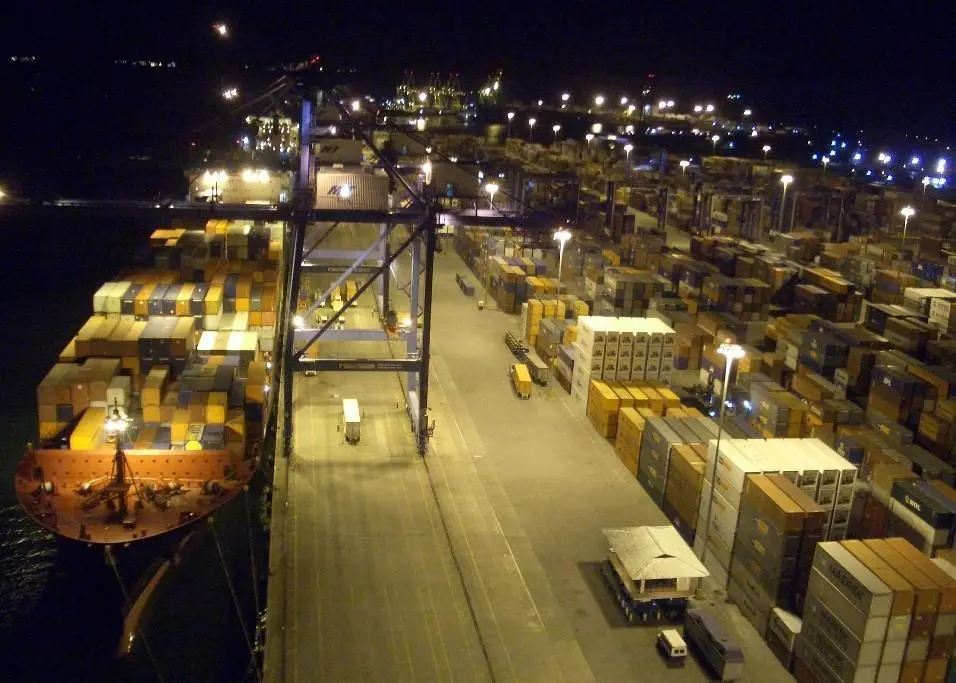
In the scramble to attract more transhipment traffic between the Atlantic and Pacific, a number of ports are jostling for the business that seems likely to cascade from the wider Panama Canal. But as the ports vie with each other to feast on anticipated greater volumes, most attention is being focused on three transhipment points – the canal itself, Mariel in Cuba and Kingston, Jamaica.
Two front runners have emerged in the canal – PSA’s Panama International Terminal (on the site of the former US Rodman naval base on the Pacific side) and SSA International’s Manzanillo terminal on the Atlantic side.
Both are being expanded to handle about 2m teu a year and both are being deepened to more than 16 metres. Manzanillo is larger at 52 hectares versus 40 hectares for PIT. Manzanillo offers five container berths, two ro-ro berths and 1600 reefer plugs.
Cuba’s Mariel has jumped into prominence because the US is expanding commercial relations and lifting political restrictions with the island, most notably the removal of a slew of companies from the prohibited trade list. PSA has taken a bold step in securing the operating lease, although terms have not been publicly disclosed.
Throughput is 800,000 teu at the moment, rising to more than 2m teu when full development is reached. The harbour depth is 17.9 metres at quayside.
US carriers will find themselves sorely tested if and when open trading relations are resumed. Operating efficiencies are much better for foreign lines and Crowley could be wiped out in the trade lane. In turn this will bring much more political pressure on the controversial Jones Act, with critics claiming that it provides an artificial barrier to commerce.
Jamaican drive
Kingston is being given a huge fillip with CMA CGM heading a consortium to lease and operate the main terminal. The French line has paid $509m for a 30-year lease on a build-operate-transfer basis, with container throughput being increased in successive stages to 3.6m teu and the draft reaching 15.5 metres. An unusual feature for an arrangement such as this is that CMA CGM will undertake dredging (although the government’s port authority will be responsible for maintenance dredging) and will take over ownership of equipment already at the terminal. At the end of the 30 years, all equipment will be handed back to the port authority, including that bought by CMA CGM.
CMA CGM has formed a special company, in which China Merchants Holdings has 49%, to take charge of the concession. One of the main features of the agreement is that the terminal will be on a common user basis, although CMA CGM will account for almost 40% of business.
Analysts say that Kingston has one big advantage over its two competitors through the active involvement of a shipping line and hence the ability to directly channel traffic through the port. The French carrier has wasted no time in aligning its Caribbean/South American services with the establishment of the Gulfbridge link, using 2,500 teu ships connecting through Kingston, increasing the frequency of port calls and reducing the voyage time to Colombia. In contrast, Mariel and Panama are passive operations subject to the whims of carrier schedules.
But two problems could emerge at Kingston. The labour force will be employed by CMA CGM, taking over from the port authority, which could lead to discontent at foreign involvement, while maintenance dredging could fall behind because of a lack of equipment. No details have been made available of which party will provide the equipment – particularly important when the 15.5m depth is reached.
Mariel speculation
Back in the US there is increasing speculation that Mariel could become the main transhipment thoroughfare, but the main US carrier servicing the port, Crowley Maritime, plays this down. Jay Brickman, in charge of Cuba services for the line, has gone on record saying: “Cuba has created a 180-square-mile industrial development zone contiguous with the Mariel port. You’ll be able to drive directly from the port into the industrial development zone.” Companies in the zone can be wholly foreign owned – in contrast to the rest of the island where foreign firms have to operate as a joint venture with Cuba.
“This is different than a free trade zone because it encourages investment that can combine production for local market and for manipulation and export,” says Mr Brickman. “This is more important for the port’s future than transhipment.”
SSA Marine acknowledges the competition from the other two, but reckons that’s nothing new. “The competition’s always been there,” says Carlos Urriola, senior vice president, “and there are at least five, including Freeport, the Dominican Republic, San Juan and Cartagena. Our big advantage is being on the canal, so ships don’t have to deviate on their route at all.”
He says that the basic strategy for any port trying to compete when the canal is widened is to offer services and facilities that can cater to the big ships. “It’s no guessing game. You must have the berths, draft, container yard and so on if you want to compete, otherwise you will lose out. And remember that the bigger the vessel, the bigger the problem that can occur, so you have to be careful.
“Our big decision was knowing we had to invest to take the bigger ships,” says Mr Urriola. “We always expand by phases – it takes 18 months to do a new berth.” Between 85% and 90% of the port’s business is transhipment, with 4,400 teu-5,000 teu the usual size of feeder vessel. SSA is forecasting that 10,000 teu will become the workhorse vessel, and this is where some ports will be weeded out. “Many of the Caribbean ports are not used to that size,” says Mr Urriola, “and do not have the facilities. Again, it’s a case of the bigger the ship the bigger the problem.
“Latin America is handling vessels of 9,000 teu-10,000 teu and it’s not a big problem for them”; CMA CGM is using a 10,600 teu vessel on a China-Brazil route via the Cape of Good Hope.
All-rounder
Coupled with this is the ability to offer a full service, including repairing containers and reefers. “It’s not just a case of moving a box anymore. You have to offer something that no one else is doing.” An example of this approach is to be found in the ro-ro service, which offers inventory management/inspection of vehicles and washing facilities. Manzanillo is also looking at project cargo – with the canal itself being a source of business. “Once the canal is finished, there will be a huge amount of equipment that has to be shipped,” says Mr Urriola.
SSA’s forecast is for traffic to grow 6%-7% through the wider canal. “Business is going to get tougher, there’s no doubt about that,” says Mr Urriola. “For us there is a huge plus in that we have a track record of 20 years and in that time not one vessel has missed transit through being delayed by our operations.”
One unknown is what the split between the US and Latin America will be – with some saying that the current proportion of 65% to the US will drop significantly. “Anyone who claims they know what is going to happen is a liar,” says Mr Urriola. “Lines will only make their plans for the Canal when they know it will be ready.
“And there are always dynamic changes in the market,” he says. “We have seen traffic with Venezuela drop, but more fruits are being containerised, which helps us.”
Vessel alliances are adding to headaches for port planners and liner schedules, as berthing windows are more complicated to arrange and more logistics considerations come into play.
Related Articles
 SOUTH AMERICA
 PORT & TERMINAL NEWS
 PORT & TERMINAL NEWS