



ROLLING WITH THE PUNCHES
In the past year, Peru’s port operators adjusted to the trade war between China and the US and now face the effects of COVID-19 pandemic. Rob Ward assesses developments.
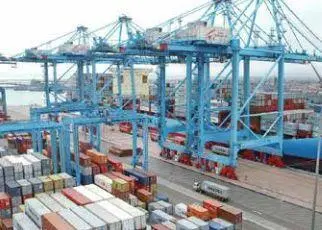
During the first four months of this year Callao, the country’s biggest port, has been heavily impacted by the coronavirus. Container flows have proven more erratic than previous years owing to, firstly, the effect of port closures and logistical networks in China, along with the usual disruptions caused by the Chinese New Year (from January 25 to February 1).
Then came the effects of the government in Peru realising the severity of the virus outbreak and its worldwide spread. The Peruvian government installed a State of Emergency on March 17, and state run bodies such as the Autoridad Portuaria Nacional (APN) have worked closely with port terminal operators – such as DP World Callao (DPWC) and AP Moller Terminals in Callao (APMTC) – to implement the containment safety policies.
Working from home wherever possible, and strict protocols for port workers – including daily checks of temperature, the use of Personal Protective Clothing (PPEs) when necessary, work distancing, disinfectant availability and a raft of other measures – have quickly become the norm and just as well, for both terminals have been particularly busy and tested at times, especially during February and March.
Around 85 per cent of DPWC staff are direct employees, and around 15 per cent of APMTC’s, with the rest made up of non-core “casual” labour. There have been two stand-offs with dockers – one at each terminal – over safety issues being implemented but both were quickly resolved and with only one shift apiece affected for DPWC and APMTC.
The outcome was a number of staff testing positive for COVID-19 and being told to self-isolate at home for two weeks.
Good 2019 – But “lumpiness” in Q1 2020
The two terminals shared the 2.5 million TEU Callao throughput last year, up 7 per cent over the 2018 figure. DP World’s operator handled about 53 per cent of the total and the AP Moller subsidiary the rest.
According to figures from Santiago-based ECLAC (A United Nations body covering Latin America), APMTC saw inbound flows jump 9 per cent and 57 per cent in January and February but fall by 1.7 per cent in March (giving an overall 18 per cent increase in Q1 2020). Meanwhile, DPWC showed -10.3 per cent in February but only -0.8 per cent, for March for an average fall of -4.1 per cent for Q1.
APMTC saw loading activity drop by -59 per cent (mainly due to a fall of -72 per cent in January) and DPWC by only -11 per cent, underlining the “lumpiness” of movement and also the fact that some MSC and Maersk Line services were switching some cargo flows to their own sister company. Combined totals showed 243,320 TEU loaded and 217,000 TEU unloaded.
“DPWC is also much more sensitive to the Chinese and Far East markets and so was more affected by a number of blank sailings (six out of 20 on that trade lane),” said a Callao based shipping agent. “Both terminals have been dealing very well with chaotic cargo flows.”
In addition, there was a shortage of dry boxes for imports post-Christmas period and a shortage of reefer boxes for export – Peru exports vast quantities of avocados and other fruit and vegetables plus fish – which is slowly being resolved with a number of extra loaders: one from Hapag Lloyd as Port Strategy went to press.
BACK TO NORMAL
One port consultant who works closely with one of the two box terminals in Callao said that both terminals in Peru’s leading port were operating “pretty much as normal” despite stevedore numbers being slightly down, owing to handful of dockworkers being absent owing to precautionary quarantining.
“Through April, ships have been arriving from Asia full again, and carriers have cleared the backlogs that had built up out of China during January and February,” he added.
He further stated that China was sucking in a lot of fruit, vegetable and fish exports (especially shrimp) out of Peru, with much of this cargo re-routed via South Korea and Southeast Asia earlier in the year when Chinese ports were closed. Electronics and household goods are filling inbound boxes.
“We are also seeing exports of grapes and avocados to the US. Ships are becoming full right now as everyone is playing catch-up, but I can’t see it lasting beyond June,” added the consultant, reflecting similar views to those being experienced in Brazil.
Related Articles
 SOUTH AMERICA
 PORT & TERMINAL NEWS
 PORT & TERMINAL NEWS