![PortStrategy[GreenPort]](https://www.portstrategy.com/wp-content/uploads/2026/09/PortStrategyGreenPort.svg)



CORONA DEPRESSION – SHORT OR LONG?
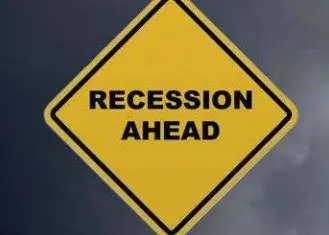
COMMENT: Four months after the advent of the coronavirus, leading to COVID-19 and the world isbeing plunged headfirst into a rapid and steep recession, writes Ben Hackett.
At the beginning the impact on economics and global trade were brushed aside. Logistics supply management was nimble and flexible and would be able to find alternative sources from China.
Then, by late February, we shifted into a global pandemic and supply chains began to come asunder as sourcing became a problem due to economic shut down as well as the ban on exports of key health products.
Economists began making uninformed projections of V shaped, U shaped and no shape recovery from an unquantifiable, non-economic and non-financial disease that was quickly bringing the globe to a jarring halt as 80+ countries introduced lockdowns forcing their populations to stay at home, closing down industry across the board. It is estimated that some 80 per cent of the major industrial capacity was shut down as a result.
The range of forecasts by banks and economic forecasting houses ranges across graphs and even within forecasters scenarios the ranges of high to low is so wide as to show the lack of confidence in their projects.
As recently as January 20, 2020 projections by the IMF suggested “Global growth is projected to rise from an estimated 2.9 per cent in 2019 to 3.3 per cent in 2020 and 3.4 per cent for 2021”.
The penny dropped in late March, the IMF view changed suggesting that the coronavirus pandemic will push the global economy into the deepest recession since the Great Depression and projecting that trade would collapse by 32 per cent, with the U.S. suffering at least a 10 per cent unemployment rate.
Global trade volumes during the Great Recession of 2008-9 contracted by 12.2 per cent. Compare that with 32 per cent. What is unmeasurable is the length of the lockdown of people and as a result industry in this virus pandemic.
What is also unknown is how long it will take to bring people back to work and to get the supply chains working again. And the biggest unknown is what changes will there be in the manufacturing sectors as nationalism is on the rise.
Related Articles
 INSIGHT & OPINION
 INSIGHT & OPINION
 INSIGHT & OPINION