



TIME TO ADDRESS BALLAST WATER
Mark Riggio, Head of Marine at Filtersafe*, highlights the tightening regulatory picture regarding ballast water management, the implications for ports and the need to participate in the push for compliance

Ballast water management has always been a multifaceted challenge.
The Ballast Water Management Convention (BWMC) took twelve years to ratify, about three times longer than expected, and now various operational issues, alongside the impacts of COVID-19 and supply chain disruption, are causing more uncertainty.
DYNAMIC REGULATIONS
Following some leniency in the height of the global pandemic, regulators are now set to properly enforce their respective regulations. In particular, the U.S. Coast Guard’s (USCG) ‘Final Rule for Ballast Water Treatment’ is already being more stringently enforced.
From a port operations perspective, it is important to remember port state control entities always have an expectation of cooperation, understanding of regulations, and require that a vessel’s paperwork is in order. In the past, this has been enough.
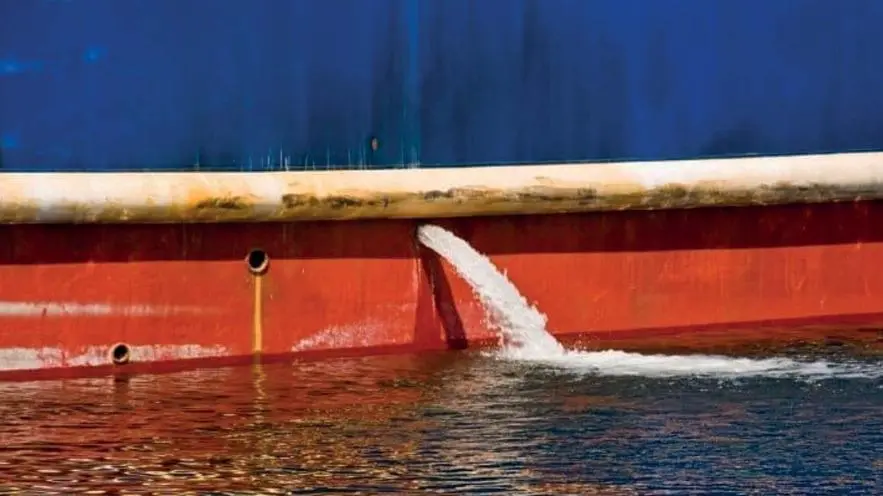
New enforcement of the BWMC, together with the expectation that a ballast water management system (BWMS) is functioning and discharging water that is compliant with the BWMC, is bringing an entirely new focus on vessel operations and threatens to impact the way that vessels interact with shoreside services.
Compliance is further complicated for ship owners by regional nuances and the ever-changing regulatory landscape. For example, Canada has recently indicated that it may be more-lax with enforcement in the Great Lakes, while the United States has no potential avenue to follow suit, giving vessels little option when trading across a largely confined but very small geographic area.
Knowing that systems must perform every day, whatever the conditions a port may be facing, creates significant challenges for operators. The most efficient solution is to ensure ship operators have an appropriate BWMS and filter onboard and to encourage them to treat their ballast water to the highest standards possible. This is particularly relevant for ports with what the IMO calls ‘challenging water conditions.’
SEDIMENT-RICH WATERS
One of the most common features of a port with ‘challenging water conditions’ is a high level of total suspended solids (TSS). While current IMO testing standards require a BWMS and filter to function at 50 mg/L TSS, ports such as Shanghai have TSS levels exceeding 1000 mg/L. A filter remains at the very heart of a BWMS and is fundamental to operational success. Using an inappropriate filter will often lead to BWMS clogging issues and delays in these ports. Using no filter at all may cause significant build-up of sediments that trap organisms and provide protection from in-tank treatments.
MEPC 77 agreed to progress work on guidance for ships that need to conduct ballast water management in ports with challenging water, with the view toward finalisation at MEPC 78 or beyond. With no firm guidance, IMO has reinforced the status quo and there are currently no mechanisms for granting exceptions or bypassing of systems for ships operating in challenging waters. It is, therefore, critically important that ports with sediment-rich waters such as Shanghai, Rotterdam, Mississippi or Hamburg are aware that effective ballast water treatment is expected of vessels in their waters.
Ship owners and operators may ask ports for case-by-case exemptions but ports should be wary of handing these out. Exemptions would allow low-quality systems to be by-passed in less-than-ideal ballasting conditions. This is not a long-term solution and port operators’ time will be wasted negotiating with ship operators on current water quality and whether they are compliant or not.
There is also no real basis for exemptions. They would be contrary to the environmental aims of the BWMC and is against the UN Sustainable Development Goal 14 Life Below Water. If ports are regularly found to be providing unfounded exemptions, especially for the same vessels repeatedly, there is a high risk that they would be in breach of their regulatory responsibilities, resulting in fines and damage to reputations.
Operational issues such as slower ballast flow rates and clogging are a reality of current ballast water treatment, particularly in sediment-rich waters and, unfortunately, a vessel experiencing clogging issues may cause port delays due to increased time at the pier or slower cargo loading rates. However, there is sufficient technology and equipment available on the market today to meet the operational challenges posed by high sediment areas. Ports should be encouraging ship operators to use an appropriate BWMS and filter for their waters in order to improve port efficiency, reduce regulatory risk, and meet environmental responsibilities.
COMPLIANCE DEADLINE
The final date when all vessels must comply with the D-2 standard for the implementation of the IMO’s BWMC is September 8, 2024. The standard includes specific details on the number of organisms per cubic meter of water, and the minimum dimensions of these organisms. But the bottom line for shipowners and operators is that there are about 28 months to install a BWMS. While this may feel like a long time, according to class society data, only about one-third of the existing fleet has a BWMS fitted. So, why does this matter to ports?
With a last minute rush to retrofit systems highly likely, there will be bottlenecks in shipyards and demand for spaces will far outstrip shipyard capacity. It’s likely that this will spill over and impact ports. Some vessels may be waiting outside shipyards and ports for dry dock spaces, leading to costly unforeseen port scheduling conflicts. Meanwhile others may miss the installation deadline and be in breach of regulations yet still wish to trade in the port. There is a concern that this will disrupt port operations and have a ripple effect on supply chains. It is important that suppliers, shipyards, ports, ship owners and ship operators work together to manage these BWMS installations and avoid this scenario.

IN SUMMARY
To summarise, in the early 21st century the United Nations described the proliferation of invasive aquatic species as the second biggest environmental concern after greenhouse gas emissions. Ballast water management is much more than a tick box exercise, and while appropriately a lot of focus is being concentrated on reducing shipping’s GHG emissions, ballast water management must not fall too far into its shadow. It remains a critical environmental consideration to all shipowners, operators and ports alike, and should form a central element of ESG responsibilities. From regulatory enforcement to operational issues such as clogging, there are many factors that ports should be aware of and indeed prepared to help solve.
In an ideal world, every ship calling at a port would use an appropriate BWMS and filter and would be seamlessly compliant with all regulations, causing zero impact on the efficiency of port operations and helping you halt the spread of invasive aquatic species in line with ESG targets. This can become a reality but only if all ballast water management stakeholders, including ports, incentivise ship operators to make it so.
*Filtersafe is a world leader in automatic water filtration, specializing in self-cleaning, high-capacity fine-mesh filters
Related Articles
 EQUIPMENT
 OPERATIONS
 OPERATIONS