![PortStrategy[GreenPort]](https://www.portstrategy.com/wp-content/uploads/2026/09/PortStrategyGreenPort.svg)




Maritime Centres and Democracy
In Belgium and Holland recently it was striking to see what a deep-routed culture of maritime tradition prevails. The history of maritime activity goes back centuries and as with any such region, this breeds much more than just the port and its core activities. In Benelux you will find the worlds leading dredging firms, towage and salvage operators, heavy-lift contractors. Then there are cargo handling equipment providers, logistics and distribution specialists, universities with vibrant maritime studies faculties interacting with local industries.
These clusters broadly based around the huge port complexes of Antwerp and Rotterdam, have evolved because of the ports.
So the port is the incubator for what, over time, becomes an ‘international maritime centre’ with real economic benefits for all.
Hong Kong, Singapore, Shanghai, Dubai, Piraeus, Oslo, New York?. all ports with that something extra.
In some cases, London for example, the port no longer plays such a key role. Terminal operations having long since migrated downriver to the lower reaches of the Thames Estuary. But the UK capital has hung onto its marine law, insurance, finance and publishing activities – with a little help from its Greek owner friends. Always though, it starts with the port.
Inevitably a true maritime centre will seek to expand beyond its immediate boundaries. The Benelux dredging contractors operate in every corner of the world – but are still known for coming from that part of the world where containing and controlling the sea is a national imperative.
Hong Kong and Singapore offer classic examples as their container terminal operations have spread far and wide.
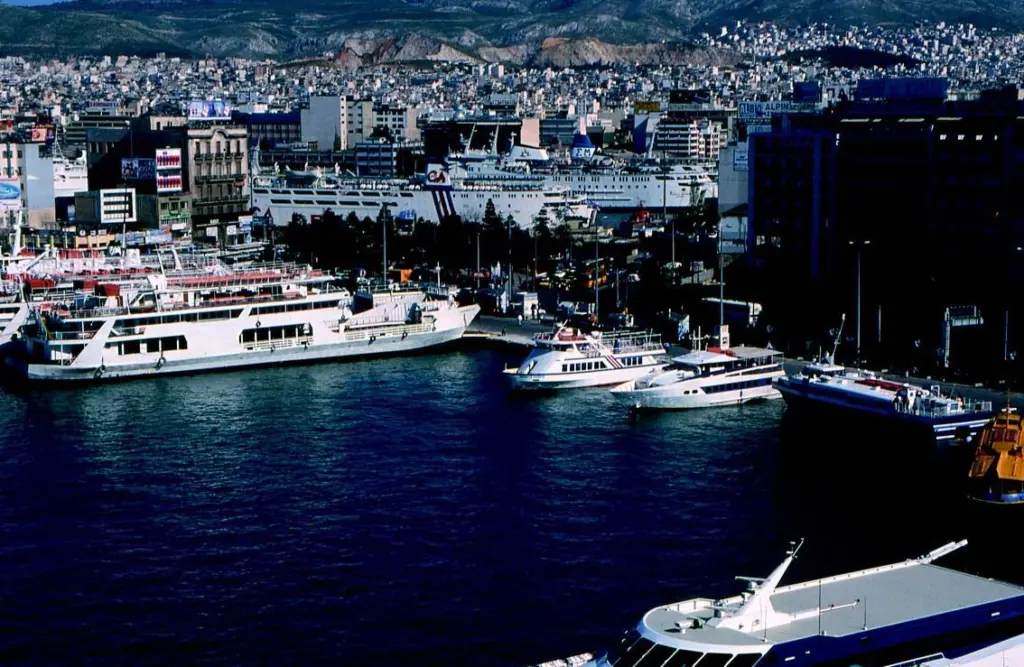
Piraeus is another. The maritime cluster around Akti Miaouli has pretty much everything on offer from owners to average adjusters, backstreet chandlers to the biggest maritime expo of them all.
Now it’s Dubai’s turn. DP World is acquiring P&O. Another nail in the coffin of Britiain’s illustrious maritime heritage? No. Just the way of the world – the free world that is. Now they’re getting flak in the States and Mike Mundy has something to say on the matter in PS this month. Our Washington-based Economist, Ben Hackett, puts it this way: “Those champions of globalisation and the free market (meaning US firms buying up foreign firms and happily operating overseas) decided that there was a major security threat with Middle Eastern interests operating terminals in the US. Not just any Middle Eastern country, but one associated with 9/11 money transfers. This situation cannot be tolerated goes the mantra. And the same thing happened when China’s national shipping line, COSCO, was planning on operating a terminal on the West Coast. And so it goes on.
“Are we witnessing double standards, paranoia, hysteria, xenophobia – or all these things? Whichever it is, it is not healthy and certainly not how the home of capitalism and the free market should react to what is a normal business transaction. When one reads that Senators Hillary Clinton (D-NY) and Robert Menendez (D-NJ) have indicated they will introduce legislation that would prohibit companies that are owned by foreign governments from acquiring operations at US ports, then one wonders where this democracy is headed. Another sad day.” Indeed.
Related Articles
 OPERATIONS
 INSIGHT & OPINION