![PortStrategy[GreenPort]](https://www.portstrategy.com/wp-content/uploads/2026/09/PortStrategyGreenPort.svg)





P&O Act 1 or 2?
Will DPWs bid for P& O prevail or is Temasek/PSA rewriting the script? Mike Mundy investigates.
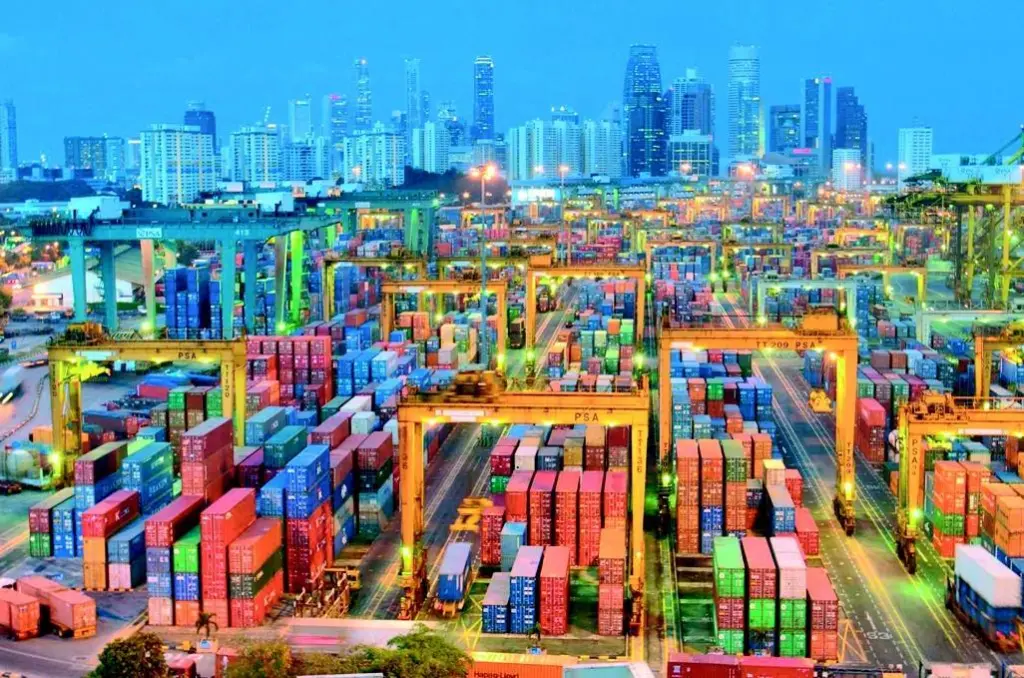
Is Temasek Holdings, the Singapore government investment agency, really going to enter the fray and challenge Dubai Ports World (DPW) for the acquisition of P&O? As PS goes to press, Temasek, owner of the Port of Singapore Authority (PSA), had raised its stake in P&O by one third to 3.24% and sent its broker UBS into the market for a further 5% at 460p per share. As a result, the P&O share price had soared to over 50p higher than the agreed 443p per share DPW bid price.
The jury was, however, still out on whether these actions represented early moves leading up to a serious challenging bid for P&O, whether it was Temasek looking to gain strategic leverage or simply “making a play” in order to cash in at the right moment.
The former and latter options are easy to understand. The “strategic leverage” one is a bit more convoluted in that this scenario envisages Temasek taking its holding up to a level just under where it has to announce to the Stock Exchange that it intends to make a serious bid for P&O. At this point, the theory goes, it will entice the interest of a number of the institutional investors in P&O and they may hold fire on signing up to the DPW bid in anticipation of bigger returns to come. This, in turn, could provide Temasek with the leverage to do a side deal with DPW to allow its bid to go through.
What would Temasek want? Its main interest is of course the port portfolio that is centre stage in P&O and within this there could be two main areas of interest – namely, container terminals that fit with PSA’s existing container terminal portfolio and others that can open up new markets for it. Under the former category, the P&O terminals in Qingdao and Shekou are a good examples. So too, theoretically, is Antwerp but here it is understood that a clause in P&O’s concession agreement for its new terminal in Antwerp prohibits the idea of a single operator port. In the second category, an opening into new markets such as the UK, North America or Australia springs to mind.
TECHNICAL REALITY The technical reality is that under its “scheme of arrangement” DPW only requires 75% of P&O’s shares to gain control of the company and having achieved this it could squeeze out a minority holding under the scheme. If therefore, a strategic game of the sort described above is being played by Temasek then it is only good for so long as it takes DPW to reach the 75%.
All that is certain at the time of writing is that Temasek’s appearance has sparked another round of speculation among financial sector industry analysts many of whom are seen by industry insiders as ill-equipped to offer proper analysis of the international ports sector, the business that is centre stage in P&O.
The ports sector is perhaps realising some of its potential to be the next ‘sexy’ utility after water, power and others but it is debatable as to whether there is a real understanding of the nuts and bolts of the business among the right proportion of financial sector analysts. This alone may yet cause a further surge in the P&O share price – ironically, by a lack of appreciation of the technical realities of DPW’s bid.
Only a couple of weeks back the other big players in the international ports sector, Hutchison and APM Terminals were cited by some analysts as also likely to throw their hats into the ring. But these organisations have their own views on the worth of P&O and face different circumstances regarding the fit of P&O Ports within their respective businesses. They have been noticeable only by their absence in terms of expressing any sort of interest in the P&O business. Doubtless they have been looking and studying behind the scenes, probably considering most seriously whether there are any interesting elements of the P&O business that could be picked up later at the right price from DPW or whoever the successful bidder is.
These kind of aspects virtually have to be considered as do the implications of the formation of a large new international ports group, through the joining of the DPW and P&O Ports’ businesses – one that will achieve a No 3 ranking in global terms. Based on 2004 throughput, Hutchison would be the No 1 global operator with 47m TEUs, PSA second with 32m TEUs and the new combined DPW/P&O business third with 25m TEUs.
Entities such as Hutchison and APM Terminals are, however, very different from DPW – practically speaking they are not sovereignowned and are essentially much more commercial in nature and, as a result, unlikely to enter a bidding war for P&O especially when the bush telegraph is beating out the message that they see the DPW bid price of 443 per share as excessive.
One reflection of this type of thinking is that over the last two years in particular, it has been something of a sore point with other ‘players’ in the business that DPW, Dubai Ports International/Dubai Ports Authority as it was formerly known, has been prepared to pay over the odds when bidding for port concessions and for port business resale opportunities. DPW bid prices when plugged into the financial models of many of its mainstream competitors simply do not come out in the right zone and, on more than one occasion, have been seen as unrealistic sovereign state-backed bids.
In this context, of course, Temasek Holdings and PSA International are also state-owned entities and could perhaps be seen by arm’s length analysts as going down the same road as DPW and therefore happy to enter a bidding war.
In reality, however, PSA is progressively endeavouring to leave the sovereign style business culture behind it. This culture did permeate it a decade or so ago and was the cause of some costly mistakes but it does not prevail today. It is steadily moving onto a more commercial footing, cleaning up its portfolio of ports and is expected to go for an IPO before too long.
Indeed, this latter factor comes into the equation when assessing whether Temasek will go for a serious bid – if PSA really is being lined up for an IPO then Temasek/PSA will not want to be paying values such as those implied by the current share price. The embarrassment of buying P&O at over 20 times ebit and then listing at 15 times appears too risky a proposition.
Another indicator of the cultural difference is that PSA, like its contemporaries such as Hutchison, APM Terminals and International Container Terminal Services Inc, is much more concerned about returns than volumes. DPW is perhaps doing what PSA used to do a decade ago, i. e. “sticking flags in the ground.”
SO IS IT A GOOD FIT?
So, not to sit on the sidelines and to attempt to gauge what the real play is from Temasek Holdings: is the P&O Ports business a really good fit with that of the PSA? As indicated above, there are distinct advantages in terms of both consolidating existing markets and breaking into new ones. There are not many regulatory worries from a competition point of view. As mentioned above the premier challenges are perhaps more likely to arise out of the nuances of individual concession agreements. So, in general, yes it is quite a good fit.
Is the P&O Ports business a good fit for DPW? Yes it is also a good fit for this company. In Qingdao DPW has agreed to invest in competition with the port authority, which is P&O’s partner, and in India it has won port concessions that P&O was not allowed to bid for. In the USA there is the issue of being viewed as a security threat but overall the match of the two entities gives upside not downside.
In contrast, for instance, both Hutchison and APM Terminals would have many more competition and other issues negatively impacting their respective desire to acquire the P&O ports business.
So, in the final analysis which party is seen as likely to acquire P&O?
The answer unequivocally is DPW. Informed analysis suggests that Temasek/PSA is just making a play designed to deliver to it a few P&O businesses that it would like to acquire and that in reality it recognises the overall price being asked for P&O is too rich for even its blood.
PSA no longer has the sovereign acquisition culture that DPW has and like other major industry players is judged to think that when you really look under the bonnet of the P&O business, and the ports portfolio in particular, that a price of 443p per share is high let alone any higher price it would have to offer to secure the company.
Related Articles
 OPERATIONS
 INSIGHT & OPINION