




Better together
Port alliances bring synergies if regulatory hurdles can be overcome.
As the Hanjin collapse illustrates, ports and terminals are vulnerable in a weakening market environment. One such vulnerability is to the negotiating power of major carrier alliances and the question arises, can protection be found in creating alliances of their own?
More and more, ports see “buddying up” – or mergers – as a counterpoint to the pressures applied by carriers. An early proponent of alliance by merger was Copenhagen-Malmo. Other collaborations followed from Ningbo-Zhoushan and Hamina-Kotka. In 2015, the ports of Seattle and Tacoma joined together to launch The Northwest Seaport Alliance. Before the alliance was created, each port would have competed to retain – or gain – similar customers.
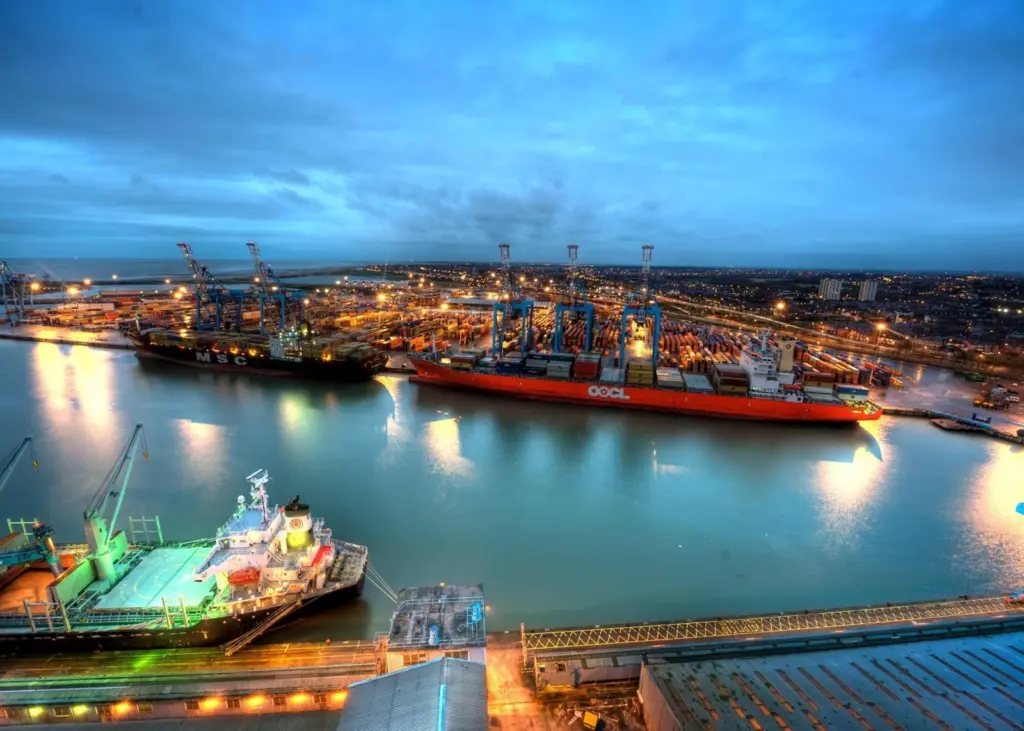
This year, another major initiative was announced with the four main ports in the north of England agreeing a new partnership. The Northern Ports Association will unite the ports of Liverpool, run by Peel Ports, ABP’s Hull, PD Ports’ Teesport and the Port of Tyne, into the Northern Powerhouse.
The alliance follows the publication of a Northern Ports report by IPPR North which recommended the creation of an association after highlighting the domination of southern ports and the problems this creates in transporting imports and exports across the UK.
Currently 60% of freight destined for the north of England is delivered to southern ports. Mark Whitworth, chief executive of Peel Ports, said: “There is so much potential for the north to be a true global gateway covering both coasts, especially at a time when our future trading relationships are unclear.”
Mark Whitworth, chief executive of Peel Ports, added further detail on the alliance’s logistics strategy, saying a global gateway covering both coasts had much to offer.
“Our vision is that we will see created a series of multimodal distribution parks and strategic rail freight interchanges, supported by an east-west cargo super-corridor, linking Atlantic traffic with the European mainland.”
Balance of power

Some industry analysts can see big benefits in such alliances. Drewry’s senior analyst – Ports & Terminals, Neil Davidson, believes alliances are a sensible response to the unprecedented challenges faced by ports due to carriers creating ever-larger carrier alliances, as well as the deployment of ever-larger containerships.
This creates more “lumpy” cargo exchanges – large alliances can bring ever-more cargo to a port or terminal in one go and the cascade effect means this logistics and infrastructural challenge is replicated on smaller trades worldwide.
There is also an implication for the commercial power balance. Mr Davidson told Port Strategy: “Ever-larger alliances also have more bargaining power and so this is also creating price pressures for ports and terminals.”
This is offset to a degree because as ships and carrier alliances get so large, they restrict the choice of ports and terminals that can accommodate them. Less choice means less bargaining power.
“The other [defence] mechanism is for ports and terminals to mirror the coming together of carriers, in other words for ports and terminals to work together as alliances, or to go further and consolidate [merger and acquisition].
“Instead of competing, the two ports can work together, developing and marketing their capacity in a co-ordinated way, and engaging with liner alliances jointly. They can also co-ordinate things like inland transport (trucking, rail, barge) to make it work more effectively. This not only increases the ports’ bargaining power, but should also lead to more efficient use of scarce resources, and avoid duplication of effort.
“Similar to port alliances, terminals could co-ordinate their capacity leading to more efficient overall use, and of course increase their bargaining power. However, while this would make sense operationally, there are many potential regulatory obstacles, with likely fears about collusion and market power.”
Mr Davidson says there is clear logic in alliances between neighbouring ports, and also terminals in the same port. “However, to be really effective the best solution is full-scale merger.”
Concentration of shares

Former APM Terminals executive Michael Kristiansen, president of CK Americas, agrees that port alliances are a necessity to build the concentrated market shares necessary for economic deployment of larger container ships.
“It raises the stakes for ports and terminals in competitive environments, though many ports of course are only in competition with other ports for a limited part of their business. The concentration of business on fewer services and in fewer hands increases the pressure on ports and terminals, though it is often forgotten that it is a co-dependent relationship.”
He says the concentration of business brought about by the carriers requires capacity and some terminals – especially neighbouring ones – can develop co-marketing agreements (where permitted) or alternatively sell capacity to each other, to optimise utilisation and manage peaks, without (much) additional investment.
“Port authority consolidation would reduce O&A cost, align pricing, procurement and processes, implement best practices from each port and eliminate over-investment. Some of this would be questioned by anti-trust authorities – except port authorities are typically government entities.”
A terminal forming an alliance with another terminal – possibly within the same port – could allow for equipment sharing. “Joint labour pools would also be a plus, for terminals adjacent to each other.”
Integrated opportunities
Mention of anti-trust concerns turns the focus on regulatory issues. Lamia Kerdjoudj-Belkaid, secretary general of the Federation of European Private Port Operators and Terminals (FEPORT), confirms that European competition law does not provide a framework that could authorise port co-operation or common capacity management as it is the case for liner shipping.
There is however a case for co-operation which is more integrated, such as in place at Malmo-Copenhagen.
She notes that the high market power of shipping lines and the acceleration of the upscaling of ship size over the last decade have big consequences for investments in infrastructure and port superstructure as they are in many cases not yet amortised.
“This leads to an increase of capital costs and a reduction of profit margins for terminal operators and port authorities. As shown by the report of the European Court of Auditors and the latest OECD report on port capacities (May 2016), there is overcapacity and this is due to the fact that inter-port competition is fierce thus giving liner shipping companies a tremendous choice of ports on which they can put pressure.”
Auckland’s solution
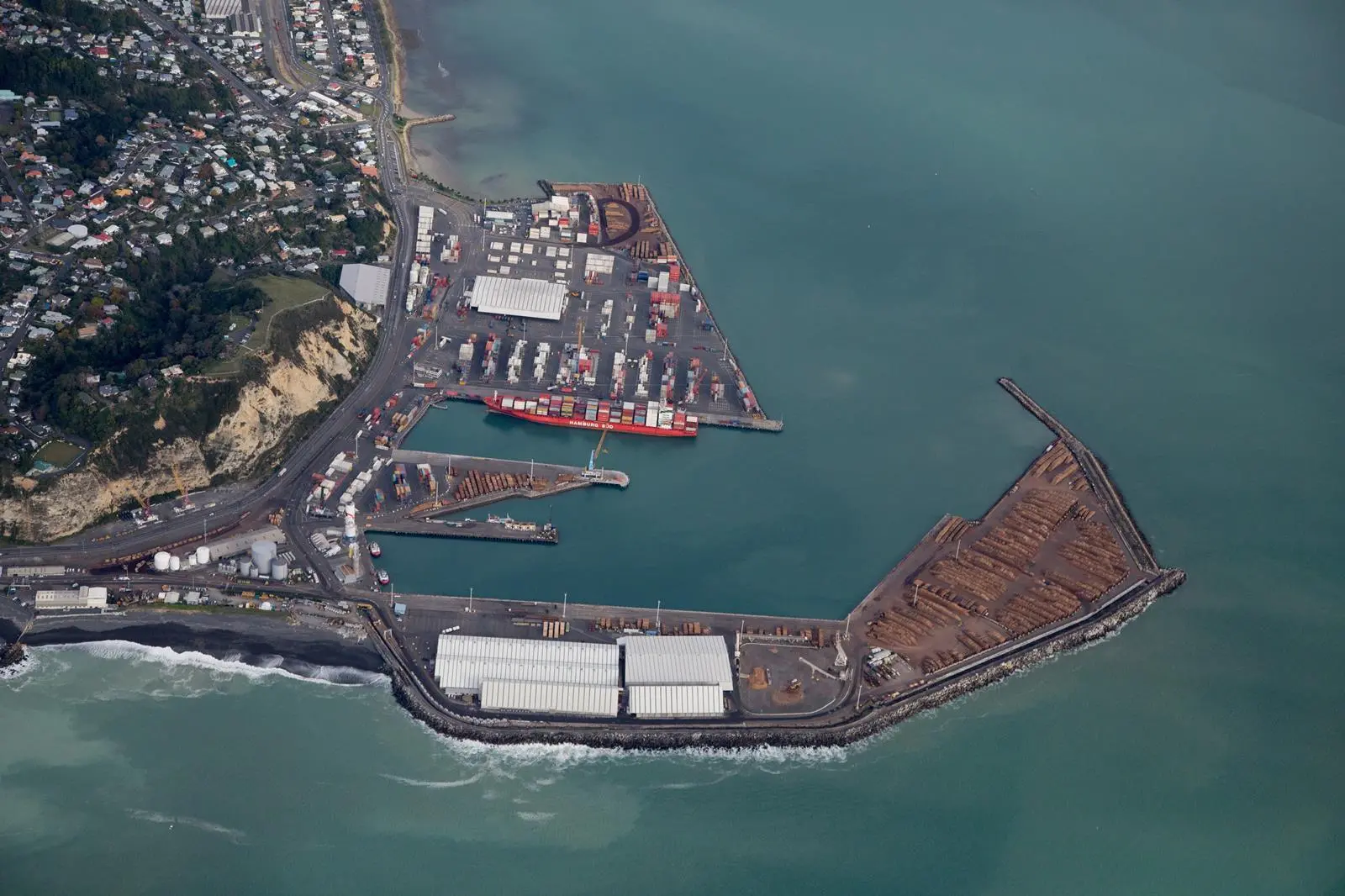
Ports of Auckland chief executive Tony Gibson, who has recently signed an alliance with the Port of Napier, explains why he pursued an alliance solution.
“Alliances between ports are particularly important in New Zealand, where we have a small population spread thinly across a long, skinny island. Land transport is expensive so the supply chain needs to be fully optimised to keep costs low.
“This means eliminating unnecessary landside moves, ensuring the fronthaul and backhaul legs are full and making the best use possible of coastal shipping. Alliances between ports in New Zealand, combined with strategic investment in inland freight hubs and smart use of technology to ensure the most efficient utilisation of transport between ports, hubs and customers, is how we aim to achieve this.”
Mr Gibson says that internationally, alliances between ports or terminals may help achieve similar efficiencies and help avoid the current situation where changes in carrier alliances are causing significant falls in volumes at some ports.
“On the other hand, alliances are not a magic bullet if there has been an over-provision of port infrastructure and there is simply too much capacity. In the latter case, there may be some ports which have to scale back or close.
“What we all have to do in this new world where high growth rates appear to have disappeared forever and where technology may have a significant impact in the future, is examine our business models and really honestly ask ourselves, ‘is the way we’re working now going to work in the future?’.”
More to Come From Auckland-Napier Alliance
A relatively low-key “collaborative alliance” between Ports of Auckland (PoAL) and Port of Napier could be the first stepping stone to a new level of competition between the major ports of New Zealand.
The alliance ushers in an agreement to work collaboratively to save backroom technology costs in things such as terminal management systems (both use Navis), cut costs when bulk buying from common service providers, exchange staff training and expertise and share the talent pool where possible, share best practice in sustainability practices and benchmark in adapting to new health and safety laws
However, it is a possible forerunner for a strong alliance being set up to challenge the Tauranga/Timaru pairing. There is a “natural fit” between the businesses – Auckland is import-dominant and Napier is export-dominant.
So possibly, there is a supply chain solution whereby an import box comes into Auckland, moves to the central North Island Longburn inland port (where both Auckland and Napier have an investment) and the empty is made available for export through Napier.
Napier requires empties for its export moves and in peak fruit export season, where Napier could be stretched to handle more volume, Auckland would be available as an alternative for export moves.
The two allies are believed to be looking at a possible third partner in the South Island, given that Tauranga is firmly established in the South Island through shareholdings and operational agreements in Timaru.
Related Articles
 WORLD
WORLD
 WORLD
WORLD
 PRODUCTS & SERVICES