
Leading analyst, Andrew Penfold, examines the latest trends in container terminal investment and assesses activities in an era increasingly buffeted by the impact of COVID-19.
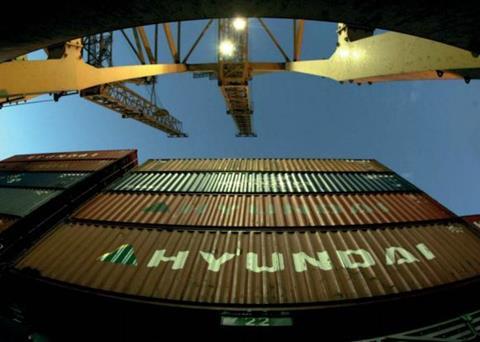
The container terminal market has seen some major trend developments in recent years. As shipping line (and alliance) volumes have consolidated and expanded there has been an increase in line investment in dedicated terminals. This has squeezed the market share of the major international stevedoring companies.
True multi-use terminals have seen market share fall from around 70 per cent of capacity in 2010 to around 40 per cent at present. In addition to this trend – and further complicating the picture – joint ventures between lines and stevedores have played an increasing role.
Of course, this is not unique to the port market – downstream investment in related sectors has long been a focus for the oil business and other transport sectors. The degree to which this has been successful has repeatedly moved into and out focus over the years.
As the COVID-19 demand shakeout progresses, what will be the impact on ownership in the terminal sector?
WHY HAVE LINES INVESTED IN TERMINALS?
The advantages are clear:
- Lines have been aware that in past years the profitability of terminals has far exceeded the returns from container shipping. As the lines are delivering demand, this has incentivised investments.
- Technical changes – much larger vessels and consignment sizes – raised concerns about the ability of existing stevedores to deliver required capacity. As vessel sizes increase, the control available by integrating stevedoring with vessel scheduling becomes increasingly attractive. Terminal investment has allowed increased control over the transport chain – at least in theory.
- Control of demand – especially during the early period of development – offers rapid ramp-up capabilities.
But there are downsides:
- Although the returns are potentially strong, the costs of development are very high. Most shipping lines (except for the state-controlled sector) have been under financial pressure at least since the Financial Crisis. Providing investment has been problematic. During the recent market downturns most lines were focused on survival and have started to downplay direct terminal investment as available financing has dried-up.
- Lines have found it very hard to sell capacity to third party lines. Why would a line use a competitor’s facilities?
- Despite best intentions, a controlled facility is a cost centre, rather than a profit focus. Motivation for efficiency and marketing will inevitably be different than with a commonuser terminal. It is far from clear that line-owned terminals are cheaper for the line.
- Port Authorities are sometimes concerned – rightly – that a line terminal will allow a dominant position within a port, especially in a lower volume Developing World situation.
THE COMMON-USER TERMINAL
In most competitive market situations – in higher volume ports with several terminals – the common-user facility offers a highly competitive option. Efficiency is run at high levels and costs contained by the competitive nature of the market. However, this model has come under pressure from the lines as their buying power has increased.
Following a rear-guard action terminal operators have sought to square the circle of different interest groups by developing the Joint Venture approach, with shareholdings split between specialist terminal operators and shipping lines – usually with the undertaking that these shareholders will commit their volumes (sometimes at a discount) to the joint-venture terminal. This model has become increasingly dominant in Europe and southeast Asia and offers some comfort in an increasingly competitive market.
WHAT IS THE OPTIMUM APPROACH?
This is a matter of perspective and the pros and cons differ for different interest groups: For the Port Authority seeking to develop overall port volumes and increase their presence in a port range, the line-owned terminal is attractive. It serves to anchor discretionary business in the port and offers a degree of security not necessarily available from a common-user alternative. Demand growth will be strong during ramp-up as the line owner concentrates its demand at the terminal.
This is why some Port Authorities have encouraged this approach – often at the expense of existing common-user terminals in their port. Such an approach can be justified, but it is very important that transparency is maintained in the bidding process.
Problems can be acute where the terminal is the primary (or only) access point for a key hinterland. Giving a line priority in these situations will have a negative impact and can generate a de facto monopoly. This is especially the case in some Developing World locations.
Perhaps the biggest uncertainty for the Port Authority in taking this approach is the issue of ‘counterparty risk’. Some line-owned deals have involved consortia of shipping lines but – as we know – shipping lines are vulnerable entities.
Commercial pressures and changed ownership can significantly change the market position of line owned terminals. Managing these situations can be highly problematic for a Port Authority.
For the shipping line the advantages are clear. There is the potential to shift the profits from a stevedore company to their own bottom line and – perhaps more problematically – it offers the chance to increase control of a particular market. If funds are available, then this is a highly logical move.
Where the origin of these funds is is opaque, i.e. where there is de facto state control, then this can be seen as unfair competition. It can be anticipated that more of these issues will emerge in coming years.
Often the interests of the shipper (the cargo owner) are ignored in these decisions. What the exporter or importer requires is simple: a reliable service at a competitive cost with the ability to handle current and future needs.
On this basis, it would seem to matter little if the terminal is owned by a line or by a common-user operator. However, the prudent shipper will not place all his business with a single line and if that line also owns the terminal, then there will be increased reluctance.
Generally speaking, the cargo owner will benefit from a common-user terminal in a competitive market and will favour such a terminal – especially if it can offer supporting facilities such as inland terminals and transport facilities.
SO HOW HAS COVID IMPACTED ON THIS?
There are several key points that have been accelerated by the current crisis:
- Although lines have successfully managed lower demand by reducing services and benefiting from much lower bunker prices, the basic balance of supply and demand remains highly unfavourable on high volume trades. The lines financial vulnerability has been obscured but not altered. Independent lines will have even fewer resources to invest in terminals.
- Volume downturns have impacted both terminal models, but the common-user model has had much more flexibility to revise services and prices and has proved quicker off the mark in responding to the downturn. The JV has allowed stevedores to benefit in the discretionary cargo sector and compete for other business.
- The financing of new capacity will become much harder. The confidence provided by a volume guarantee offered by an equity owner will come under much closer examination in coming years. The more diversified common-use stevedore company will enjoy an advantage here.
The crisis has underlined the need for rapid and flexible responses to short term market shifts. It is clear that the changes precipitated by the virus will have a sustained impact on the structure of the container terminal sector.