One out of four ports are dealing with a higher than normal number of empty containers.
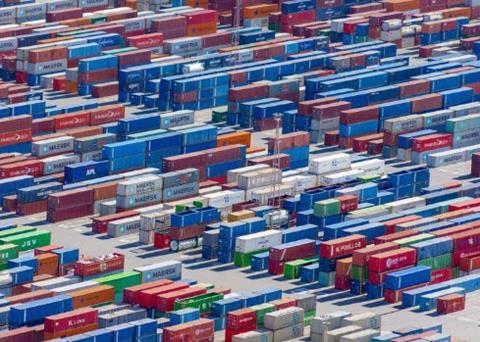
This is one of the key findings of the WPSP-IAPH Port Economic Impact Barometer report for week 50, which asked the world’s ports to indicate how the share of empty containers in total container throughput evolved in the past three months compared to the same period in 2019.
In addition to the 25% of ports dealing with a high number of empty containers, 15% report that the share of empty containers in total container throughput stands at a lower or much lower percentage.
“So of the ports surveyed, approximately 40% are experiencing a different pattern in throughput of empty containers at the terminals in their ports,” explained the report.
The number of ports that reported a significant imbalance compared to last year stands at 8%. 6% of ports reported the presence of much lower numbers of empties. Just over 60% of other ports responding to the survey reported a rather stable share of loaded and empty containers.
Barometer report co-author, Professor Theo Notteboom, commented: “Since early 2020, a large volatility in demand caused by COVID-19 combined with more rigorous capacity management by carriers has contributed to high freight rates, recent equipment availability issues and high costs to reposition empty containers. Despite the observed volatility, the ratio of full to empty containers served by ports has remained fairly much the same.”
The survey for the Barometer for week 50 is still dominated by respondents from Europe (46.2%). However it does has a relatively even spread of sample ports from the rest of the globe with 15.5% from Central and South America, 9.2% from North American ports, 18.4% from North Asia, South East Asia and Australasia, 9.2% from Africa and 1.5% from Middle East-Central Asia.