
Despite a difficult world economy at present, Indonesia’s ports are planning major redevelopments, as Michael Mackey discovers.
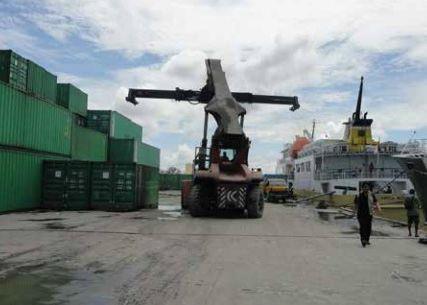
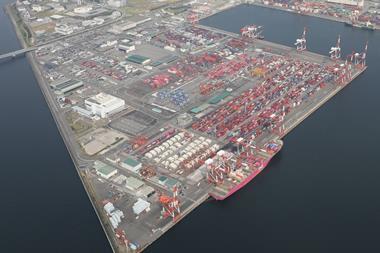
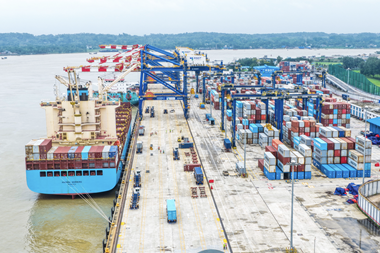
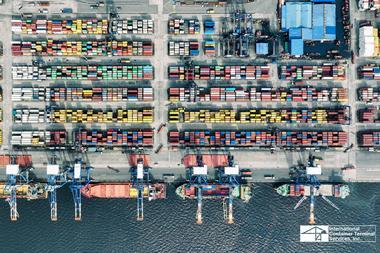
Container throughput at the Port of Tanjung Priok decreased 4.2 per cent in the first quarter of this year and the number of containers entering Tanjung Priok was 1.57 million TEU, down 69,000 TEU from the same period last year.
“Compared to last year, for February the decline in container flows at Tanjung Priok Port was 5.13 per cent while in March the decline was 4.2 per cent. It is still showing a decline but the percentage is getting smaller,” said Managing Director of PT Pelabuhan Indonesia II (Persero)/IPC, Arif Suhartono.
“During the COVID-19 outbreak, shipments of export and import goods to China experienced disruptions and China was a major contributor to the flow of international containers at the Port of Tanjung Priok. Now, economic activity there is gradually recovering. I expect the trend to improve in the next quarter,” Suhartono explained.
EXTENSIVE PLANS
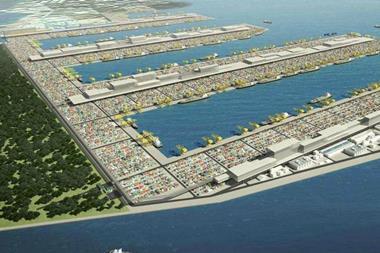
Indonesia has plans to become a global maritime axis, which is something the Indonesia Port Corporation (IPC) aims to play a key role by building extensive new facilities, as IPC President, Elvyn G. Masassya said at the recent ASEAN Ports and Shipping Conference.
A second big change will be the welcoming of foreign investors. New or much improved facilities are planned at seven different points of Indonesia: Belawan/Kuala Tanjung, Tanjung Priok, Tanjung Pura, Surabaya, Makassar, Biting and Sorong/Seget, Masassya said.
Tanjung Priok in Jakarta is its national gateway status, with the rest best seen as local hubs, parts of national hub and spoke system, Masassya said. The emphasis, though, will be on serving the regional, South-East Asian or ASEAN market.
“We have to increase our direct call among ASEAN countries. We can rely on ASEAN countries,” Masassya said noting the “huge” trade potential.
Of the seven facilities Tanjung Priok and Surabaya are on different parts of Java, the economic centre and most populous part of Indonesia. The other five are spread, one each for the archipelago nation’s major islands, as Masassya pointed out.
UPHILL STRUGGLE
Belawan/Kuala Tanjung is on the Northern end of Sumatra, Tanjung Pura is on Western Borneo. Makassar on Southern Sulawesi is balanced by Bitung on the same island’s north with Sorong/Segret on the Western tip of economically underdeveloped West Papua. (“Very challenging” was Masassya’s view on the uphill struggle it faces.)
Sorong is where work is expected to start next year and at the end of its third (undated) phase will be able to take ships of up to 5,000 TEU and will have a 50ha container yard fronted by a 1,440m berth for a total capacity of 2.95 million TEU per annum.
By contrast Tanjung Pura, a terminal at the Port of Kijing will be focus on shifting commodities. A sixty-nine-year concession with development in two phases, the first one ending next year with a second, planned for 2026, will see a port capable of handling 1.95 million TEUs as well as fifteen million tons of dry bulk and just over twelve million tons of liquid bulk.
FLEXIBLE AND FOREIGN PARTNERS
Equally as striking is the willingness of IPC to work with foreign partners and in a very flexible way. Brown field sites offer opportunities including Strategic Partnerships, Bond Issuance, Commercial loans and overlapping PPP and BOT options.
Another category of commercialization (for existing facilities) will allow the use of IPOs, Disinvestment, Rental Schemes and Asset Securitisation.
“The most important thing,” Massasya told the ASEAN Ports and Shipping Conference, “Is that we are open to collaborate with everybody, so the concept of PPP is not a strange one. We open for PPP, we open for joint venture we not rely on bank loan anymore, we can run the business together. This we call collaboration.”