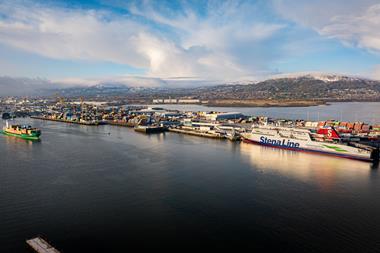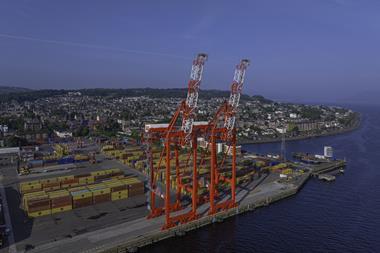
Construction is on-going to increase the terminal space at a Swedish port, the largest expansion the port has seen since the 1970s.
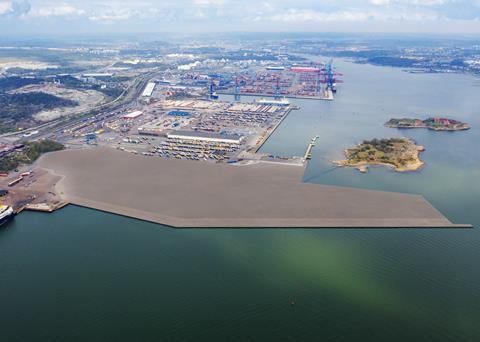
One hundred and eighty thousand cubic metres of dredged material are currently being reused as filling material at the Port of Gothenburg. When the masses have been stabilised and further surface work completed, 140,000 square metres of new space will be available.
“The terminal is a crucial aspect of the port's long-term expansion plans and will further strengthen Gothenburg as the Nordic logistics capital,” said Joakim Grenmarker, project manager at the Gothenburg Port Authority.
“By almost exclusively using recycled material in the project, we are also able to expand with environmental consideration,” he added.
Construction of the new terminal began in autumn 2018 and since then, 1,500 piles have been sunk into the bedrock and the Arendal bay has been embanked with blasting stones from an adjacent hill.
Once the 180,000 cubic metres of new material fills the basin, water is forced out but needs to be purified before its return to the sea. This is done by adding CO2 which lowers the pH value so that pollutants can precipitate. The water is then pumped on to a sedimentation basin and then on to a sand and active carbon filter before being returned to the sea.
The terminal is expected to be completed by 2023 although certain sections might be brought into use before then.