Aaron Nelson, Senior Associate at UK-based law firm BDB Pitmans, puts the spotlight on the complex situation regarding the Northern Ireland border as the end of the Brexit transition period fast approaches.
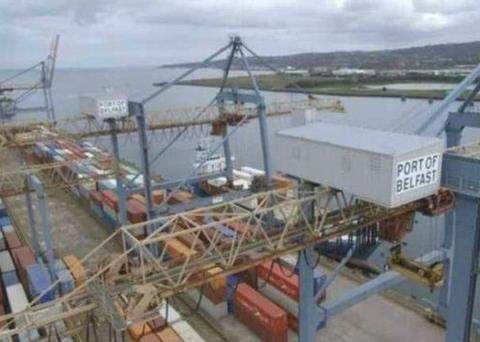
With less than three months to the end of the transition period, time is running short for Northern Ireland’s ports and traders to prepare for the impact of Brexit.
The Northern Ireland Protocol in the Withdrawal Agreement provides that, after transition, Northern Ireland will remain subject to certain EU rules, particularly on customs, animals and food products. This will avoid creating a hard border between Northern Ireland and the Republic of Ireland, contrary to the Good Friday Agreement.
So, when the Brexit transition period comes to an end on 31 December 2020, sanitary and phytosanitary checks will be required on animals and food products crossing the Irish Sea from Great Britain to Northern Ireland, to ensure they comply with EU standards.
The Northern Ireland Executive has legal responsibility to get Northern Ireland’s ports ready for this change, and work on the necessary infrastructure began in the early summer.
But the controversial Internal Markets Bill, introduced into the UK Parliament at the beginning of September, cast doubt – in some quarters – on whether these preparations were strictly necessary.
While the main aim of the Bill is to maintain the harmony of the UK’s internal market post-Brexit, it also contains clauses which, if enacted, would allow UK Government Ministers to disapply or modify certain procedures agreed in the Withdrawal Agreement, including in respect of trade between Great Britain and Northern Ireland.
CONTROVERSIAL POWERS
These powers are controversial because – as the UK Government has admitted in Parliament – exercising them would breach the terms of the Withdrawal Agreement, and so international law.
The UK Government says they are “limited and reasonable steps to create a safety net” in order to prevent EU rules “interfering” with the UK internal market, and would only be used only if a UK/EU Free Trade Agreement were not concluded.
And, in any event, international law operates in a separate sphere to domestic law, and that national governments are entitled to breach international obligations in the national interest.
But opponents – including a number of experienced backbench Tories and eminent lawyers – argue that, even if strictly “legal”, any such breach would deliver irreparable damage to the UK’s reputation for upholding the rule of law.
These controversial provisions prompted Northern Ireland Agriculture Minister Edwin Poots – whose Democratic Unionist Party opposes the new checks as a “border in the Irish Sea” – to propose halting work on the new checking facilities (although he stopped short of ordering his department to stop work). This caused a rift with his permanent secretary, Denis McMahon, who refused to comply, saying his department was legally obliged to proceed with the work.
He acknowledged the need to work with his Minister and noted — “I am also absolutely required to comply with the law… [My department] has been put in an impossible situation as a result of the wider politics around this, we find ourselves having to navigate our way through this process.”
Ultimately, UK DEFRA Minister George Eustice intervened, indicating to both parties the UK Government’s expectation that the work should resume. Poots maintains his opposition to the new infrastructure, but now acknowledges the legal requirement, both in domestic and international law, to set it up.
UNCERTAINTY AND DELAY
Uncertainty and delay thus means that practically speaking the new infrastructure will not be ready for 1 January. Denis McMahon has advised the Northern Ireland Assembly that procurement, planning and IT issues have delayed work, and there is a lack of clarity on the checks required and the size of facilities needed, as this has not been agreed by the EU/UK Joint Committee on the operation of the Northern Ireland Protocol.
To help Northern Ireland business through the uncertainty, the UK Government recently launched a Trader Support Service, providing education and guidance for traders moving goods under the Protocol, including between Great Britain and Northern Ireland.
Tens of thousands of traders will receive emails and letters about this free-to-use digital service, which will help businesses and traders of all sizes to navigate the changes to the way goods move once the Northern Ireland Protocol comes into effect on 1 January 2021.
The UK and the EU continue to meet to try to resolve the outstanding issues. With less than 100 days to Brexit, consensus and clarity are in short supply.
Aaron Nelson is a Senior Associate at law firm BDB Pitmans. BDB Pitmans act for many of the UK’s port authorities, advising on port developments, management and operations. Aaron advises on obtaining or objecting to development consents, including compulsory purchase, highways, rights of way, open space and interfaces with utilities, and on wider legal powers, duties and regulatory requirements. He also writes BDB Pitmans’ Brexit blog. BDB Pitmans was established in 2018 following a merger between legacy firms Bircham Dyson Bell (BDB) and Pitmans Law. This brings together over 300 years of legal expertise across four locations – Cambridge, London, Reading and Southampton, serving clients across the UK and internationally.