



Dwell penalty
Ocean carriers will face a financial penalty for import containers that dwell on terminals at two US ports.
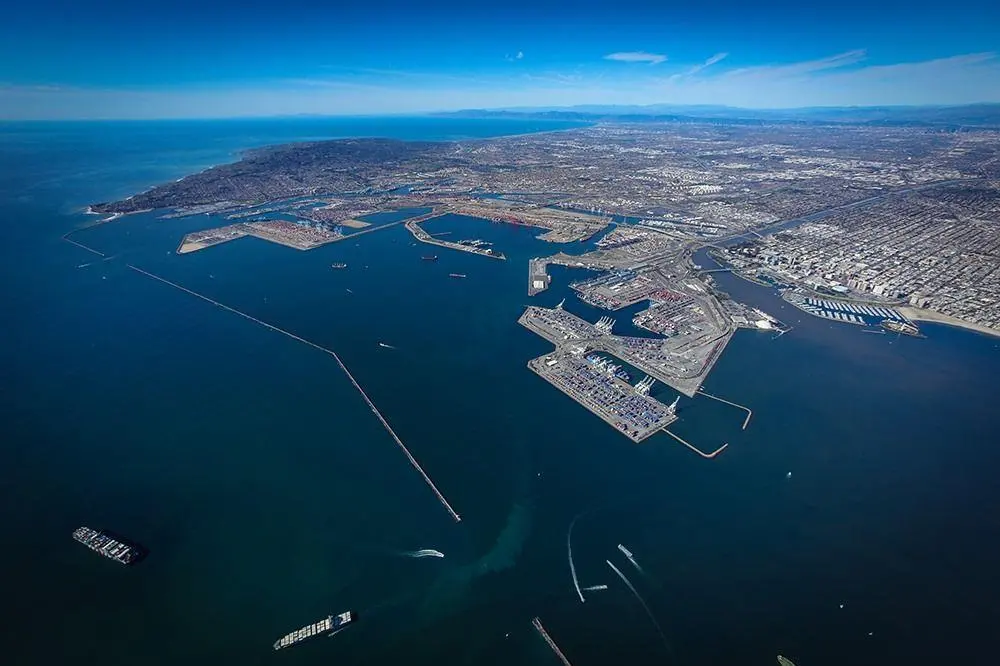
The ports of Long Beach and Los Angeles are implementing the surcharge measure to help improve cargo movement amid congestion and record volume.
“With the escalating backlog of ships off the coast, we must take immediate action to prompt the rapid removal of containers from our marine terminals,” said Port of Long Beach executive director, Mario Cordero. “The terminals are running out of space, and this will make room for the containers sitting on those ships at anchor.”
The rules
Under the new policy, the ports will charge ocean carriers for each container that falls into one of two categories. In the case of containers scheduled to move by truck, ocean carriers will be charged for every container dwelling nine days or more. For containers moving by rail, ocean carriers will be charged if the container has dwelled for three days or more.
Beginning 1 November, the ports will charge ocean carriers with cargo in those two categories US$100 per container, increasing in US$100 increments per container per day.
“We must expedite the movement of cargo through the ports to work down the number of ships at anchor,” said Port of Los Angeles Executive Director Gene Seroka. “Approximately 40% of the containers on our terminals today fall into the two categories. If we can clear this idling cargo, we’ll have much more space on our terminals to accept empties, handle exports, and improve fluidity for the wide range of cargo owners who utilize our ports.”
Before the pandemic-induced import surge began in mid-2020, on average, containers for local delivery sat on container terminals under four days, while containers destined for trains dwelled less than two days. Those numbers have increased significantly, making it difficult to clear cargo off the terminals and bring in ships at anchor.
Fees collected from dwelling cargo will be re-invested by the two ports for programs designed to enhance efficiency, accelerate cargo velocity, and address congestion impacts throughout the San Pedro Bay.
The policy was developed in coordination with the Biden-Harris Supply Chain Disruptions Task Force, U.S. Department of Transportation and multiple supply chain stakeholders.
Related Articles
 PORT & TERMINAL NEWS
 PORT & TERMINAL NEWS
 OPERATIONS