

Mike Mundy unveils the findings of a new study focusing on South East Asian port costs
Anew study from Ocean Shipping Consultants compares and contrasts vessel costs, terminal handling charges and container shipping costs in four South East Asian Ports – Ho Chi Minh City, Vietnam, Jakarta, Indonesia, Laem Chabang, Thailand and Manila, the Philippines.
The study analyses vessel costs based on two sizes of container vessel, 3,000 teu and 1,500 teu, based on a port call lasting two days in the former case and one day in the latter.Vessel costs are defined as all the direct costs associated with a vessel’s stay in port and include costs associated with port dues,government personnel (Customs boarding officer, inspector/guards, launch service etc), cargo expenses, and ship and agency expenses.
Ho Chi Minh City is the only port where vessel costs for a 3,000 teu vessel are not studied – this port does not yet possess the necessary infrastructure to accommodate a vessel of this size. Vessel costs – 3,000 teu ship
The striking conclusion with the 3,000 teu vessel design is that Manila is much cheaper to use than the other two study ports able to accept this size of vessel, Jakarta and Laem Chabang.
The study estimates that the typical vessel costs involved for a 3,000 teu vessel in Manila are just under $18,000 and in Laem Chabang and Jakarta nearly $23,000 and $26,000 respectively.
These costs, the consultant clarifies, are the upfront quoted costs and do not factor in any discounts offered for multiple port calls or similar arrangements – indeed they make the point that the study does not attempt to identify whether such schemes exist.It further notes that were such schemes to exist they would presumably discount from the bases quoted in the study and as such the cost differentials identified would still apply.
The precise configuration of 3,000 teu vessel that the cost analysis is based on is a design with a gross tonnage of 42,000, net tonnage of 17,800, length overall of 240m and draught of 12m.
Vessel costs – 1,500 teu ship
The specific configuration of vessel employed for this cost analysis, which in this instance covered all four study ports, is a vessel with a gross tonnage of 16,200, net tonnage of 9,400, length overall of 180m and draught of 10m.
The findings show a much more level playing field than with the 3,000 teu vessel with all four ports applying charges around the $10,000 mark.
The differences in this case were a few hundred dollars between ports rather than several thousand dollars as is the case with the 3,000 teu vessel. Terminal handling charges
The often thorny subject of container handling charges was also examined as a component influencing overall port costs. The container handling charges identified are actually those quoted by shipping lines and not necessarily the actual rates offered by container terminals. It is well known, for instance, that terminals will often discount their standard rates offered to shipping lines when certain volumes are guaranteed.
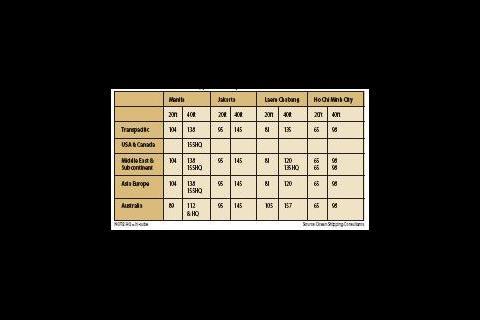
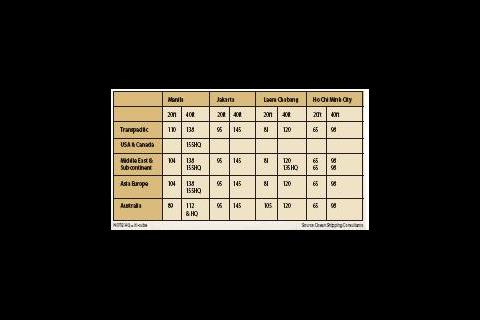
Table 1 highlights the principal findings in terms of terminal handling charges as applied to loaded containers moving in export in conjunction with specific trades.The most notable factor in this respect is the lower cost of Ho Chi Minh City port – although it should be borne in mind here that the port is constrained as to what size of vessel it can accept and that facilities in this port leave something to be desired in certain key respects.
Leaving aside Ho Chi Minh City, there are variations in the 40ft container handling charge between the other three ports but in general these do take place in a restricted range.
However, there is greater variation in the terminal handling charges applied for 20ft containers.
Table 2 explores terminal handling charges further by identifying the charges applied by shipping lines for loaded import container movements in conjunction with different trades.
Overall, no major changes are noted in the competitive profile of the four study ports for import movements when compared with the position for export activity.
Once again, Ho Chi Minh City offers the cheapest handling charges but also again the operational situation of the port has to be taken into account in this respect. Laem Chabang is next in line in terms of competitive pricing and thereafter Manila and Jakarta offer very similar scales of charges.
With its report, the consultant further addresses, under the heading of container handling charges, the container storage charges applied in the various container terminals of the study ports. The results in themselves are interesting but so too is the fact that these charges were included;they are often overlooked but can actually prove quite important.
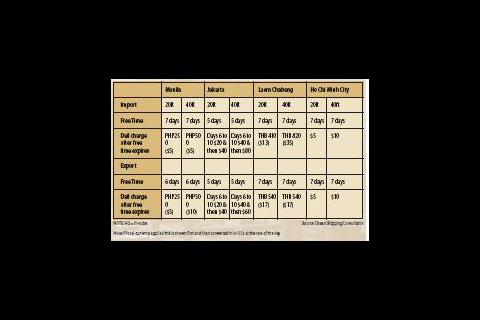
Table 3 highlights the principal findings.
The scale of charges applied by Jakarta and Laem Chabang after the free time expires, which in Jakarta’s case is two days less than anywhere else, are obviously a lot more expensive than those that apply in Manila and Ho Chi Minh City. Third dimension
As an added dimension to assessing the competitiveness of the study ports, the consultant also considered freight rates for two types of commodity – a/ garments and b/ household electrical goods – to two destinations, the US West Coast and northern Europe. Space constraints here do not permit a full analysis of the conclusions found but suffice it to say that Ho Chi Minh City and Manila emerged as the two most competitive export platforms in price terms.
Finally, it is most interesting to note that the consultant estimated terminal handling charges to represent only around 5% or less of the total freight cost – a very interesting figure when seen against the backdrop of recent unrest over the terminal handling charges passed on by shipping lines to Asian exporters and importers.