



Investment risks build
Political risk is much more to the fore nowadays and this promises to be the case for the short-term at least. Andrew Penfold charts the risk environment and considers the implications for port investors
A very clever man once said, ‘Prediction is very difficult, especially if it’s about the future!’. A quick look at how the port market has developed in the past three years can only confirm Niels Bohr’s profound words.
Long term planning is always subject to ‘Black Swan’ events and – indeed – we can see that these are what really move the market. How then does an investor looking at major commitments (often with a ten year-plus returns horizon) cope with all of this? A shipowner always has the possibility to sail away his assets if the unexpected is realised – not so the terminal investor.
As we begin to emerge from the COVID-19 crisis we now find ourselves in the midst of political uncertainties (and risks) far higher than seemed likely in the comfortable days before the pandemic. However, demand continues its, somewhat patchy, expansion and new investment is essential. In the short term, a limited consensus seems to have emerged with the major international bodies – the IMF, OECD, etc. – confirming a slowdown in 2023 but a general return to a more restricted expansionary trend in later years. However, for investors this really isn’t good enough.
TYPES OF RISK
There are some issues facing port and terminal investors that lie way outside their ability to influence. Here, the investor can only take a view of how things will develop and – where possible – take the required mitigating steps (risk spreading, insurance, etc.). Other issues are much more closely related to initial investment decisions. These risks are summarised in Table 1.
The port and terminal business faces greater uncertainties now than at any time since the bulk and container handling revolutions started in the late 1970s. These are systemic risks that could dramatically impact the outlook for port demand, profitability and investment in the next ten years. It is worth a close look at some of these.
EXTERNAL FACTORS
Globalisation and protectionism: containerisation has ridden the wave of globalisation – indeed, the container system has been the facilitator of this more than any other factor, allowing freight costs to fall to negligible levels in relation to the value of the commodity for most manufactured goods. Supply-chain uncertainty and political risks are changing this view. Protectionism is becoming an important driver. Deepsea container flows are directly in the firing line of this trend.
Financial instability: the recovery since the Financial Crisis and the subsequent Covid period has been built on massive increases in debt. Quantitative Easing has disguised a fundamental imbalance in the world economy. Inflation and higher interest rates will be the new normal.
Structural demand change: consumption in the developed economies has reached very high levels and there are concerns about the future scope for per capita increases. This has seen the link between GDP and trade decline. The scope for other economies to pick this up is unclear.
Near-sourcing: recently, pressures have increased to repatriate production to the major OECD economies. This is a compound effect from greater protectionism, post-COVID-19 supply chain reassessments and political risks. The degree to which this a simple case of China substitution or a deeper trend is unclear. The impact on containerisation could be profound.
Technological change: there are two clear issues here: the blockchain process (digitisation) and 3D printing. These are nascent technologies whose development is uncertain. Blockchain has the potential to place the trade ecosystem under a single data source – with this offering major potential benefits for goods flows. ‘3D Printing’ is shorthand for a whole new set of technologies that could well result in a dramatic modernisation of the logistics chain. The potential for order-specific, bespoke production of consumer goods and industrial components will see production move nearer to consumption with price alone no longer being the key determinant of sales potential.
Environmental pressures: for many years international shipping and terminal development largely escaped from environmental pressures. This is no longer the case. In the shipping sector emissions are now the subject of direct regulatory pressures. The port and terminal sector is much more visible and has been under pressure for some years. These pressures will intensify further and minimising a project’s environmental footprint will be central to development – this can only mean higher costs.
The port/terminal developer has no direct control over any of these risks.
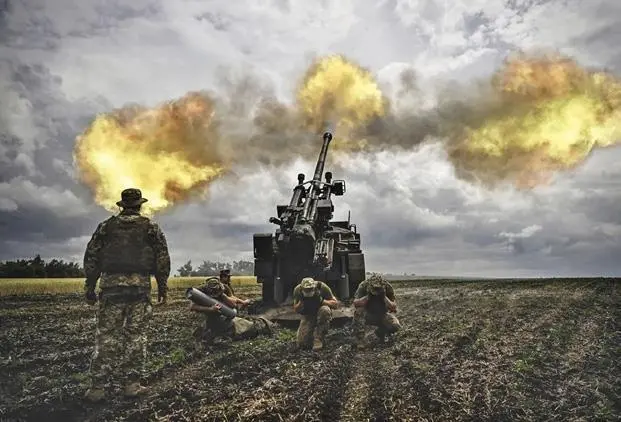
Also, the invasion of the Ukraine has reintroduced risks not seen in fifty years. The risk of an uncontained war will take all bets off the table.
INTRINSIC FACTORS
As if these uncertainties were not enough, the port investor has a whole set of specific issues that are directly related to the sector itself. These include:
Shipping over-capacity and instability: container shipping is a very difficult market. Recent returns will see over-ordering and a new downturn. The rush to larger vessels has also had far-reaching effects. The impact on the terminal sector is complex – demand has grown but the needs of the lines have shifted. The pressure is on for much longer and deeper quays to berth these vessels and a massive increase in yard size and productivity to handle these much larger consignments. With a collapse in freight rates customers will be under renewed financial pressures. This mismanagement of the shipping sector will impact terminal investment.
Alliance instability: investing in a new terminal is a long-term project. Renewed instability in the shipping sector leads to uncertainty in demand forecasting. As growth slows, the risks here become much greater. When securing financing for expansion or greenfield terminals, this is an increasing focus of attention.
Shipping line terminal investment: this has been an accelerating trend. It’s always the case that a line will seek to control its own stevedoring but how this plays out when alliances shift has been very problematic. Lines under financial pressure will face difficulties here.
Larger vessels and cascading: the pressure to deploy large vessels on secondary trades (‘cascading’) has been driven not by a careful and rational consideration of optimum vessel sizes and service structures on these trades but by the need to find some employment for otherwise redundant tonnage. Providing required port investment is already problematic.
Unrealistic expectations and overcapacity: assumptions that recent growth rates will continue are highly risky. Resulting expansion has been encouraged by Port Authorities anxious to maintain market shares. This places great pressures on terminal operators who may see their utilisation rates – and, therefore, unit revenues – contract. This is a high-risk issue in some places.
New company involvement: the port sector has been driven by specialist shipping companies and stevedoring concerns. Infrastructure funds have taken a central role of late and driven up prices. The degree to which some of these investments can be justified is unclear. Specific issues such as investment driven by the Chinese ‘Belt and Road Initiative’ provide further uncertainties.
Tightening regulatory framework: the room for development has been increasingly curtailed by government involvement, either at the policy level, for example, the continuing push for a ‘European Seaport Policy’ or requirements to invest in supporting infrastructure such as road and rail links. This means much higher costs of development.
| External Factors – zero/very limited control | |
|---|---|
| Globalisation and protectionism | Pace of demand growth |
| Financial instability | Short term volatility in demand |
| Structural demand change | Maturation of the market will moderate container growth |
| Near-sourcing | Reduced overall significance for deepsea operations |
| Technological change | Increased supply chain integration – higher investment |
| Environmental pressures | Higher capital and operating costs |
| Intrinsic Factors – limited direct influence | |
| Shipping over-capacity | Pricing pressures on stevedoring |
| Alliance instability | Short-term shifting in demand |
| Shipping line terminal investment | Increased competition for third party operators |
| Larger vessels & cascading | Large scale investment to handle larger tonnage |
| Unrealistic expectations and over-capacity | Danger of excess capacity driven by Port Authorities |
| Automation | Increased costs and uncertain benefits |
| New company involvement | New players in the market |
| Concession renewal/extension | An area of increasing concern and difficulty |
| Tightening regulatory framework | Government policies and increased access investments |
POSSIBLE SCENARIOS
Port investment is a complex process. The pressures and risks associated with development are multiplying rapidly. Very careful navigation of these issues is increasingly central to future profitability. At present the following long-term scenarios may cover the risks:
Returned Stability. It is possible that the pattern of global trade recorded since the Financial Crisis and following the recovery from the Covid pandemic is largely regained. This would generate fairly stable growth on the main arterial trades – with this continuing to be funded by manufactured goods shipped from China and (increasingly) other low-cost Asian producers. However, the overall level of trade growth will decline under these conditions. Nevertheless, this generates the highest growth rates for port demand.
Increased Protectionism. Protectionist trends have become a much more significant issue following the economic upheavals of the Covid period and global political uncertainties. As these forces gather further strength this will impact on the level of deepsea container flows – especially from China to the US and Europe. This will see continued demand growth but at a slower pace.
Cyclical Downturn & Recovery. It’s clear that we are open to the risk of a more prolonged global economic slowdown – especially as geopolitical tensions worsen. Forecasting such an event is inherently problematic, but the impact on the container sector of another crisis would be dramatic. This scenario would significantly upset the port and shipping markets. This case projects a much steeper short-term downturn followed by a more rapid economic recovery.
I think we can say that Mr Bohr was quite correct, and Mr Putin has confirmed this.
Related Articles
 EQUIPMENT
 OPERATIONS
 OPERATIONS