![PortStrategy[GreenPort]](https://www.portstrategy.com/wp-content/uploads/2026/09/PortStrategyGreenPort.svg)



Jan De Nul wins major contracts to boost ‘Middle Corridor’
Jan De Nul has been awarded two major contracts in Georgia and Kazakhstan, providing a significant boost to the ‘Middle Corridor’.
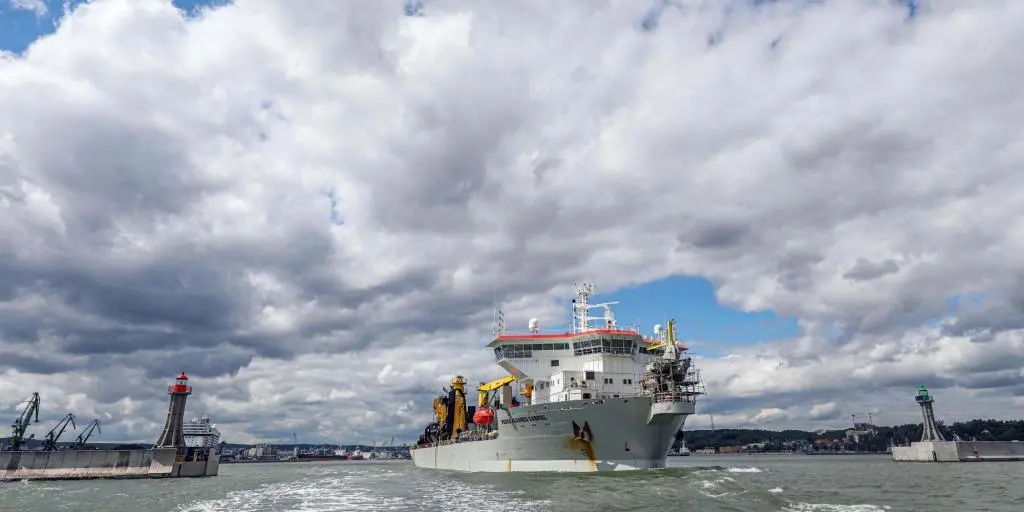
Also known as the Trans-Caspian International Transport Route, this corridor is seen as a reliable alternative to travelling through Russian or the Suez Canal. However, ports in the region can act as bottlenecks for cargo, says Jan De Nul.
The construction of a new deep water port in Anaklia, Georgia, expanding cargo capacity by 600,000 containers, along with the expansion of the Kuryk port in Kazakhstan, will help address these challenges, says the group.
“These projects will have a big economic impact on the region,” said Stefan Muntoiu, business development manager at Jan De Nul Group.
“The Georgia and Kazakhstan governments made firm decisions and we are proud to take part in the development of this important trade route.”
Another challenge for the development of the Middle Corridor is the dropping sea level of the Caspian Sea due to climate change. Besides a major threat for nature and biodiversity, it also risks to restricting transport through the Caspian Sea.
Jan De Nul will therefore be undertaking capital dredging work in Kazakhstan as well as building a breakwater, access channels and turning points in Georgia.
“For sea level changes, we are actively discussing possible solutions with Turkmenistan and Azerbaijan, among others,” continued Muntoiu.
“No matter how big the challenges are, I’m convinced that Jan De Nul has the knowledge, tools and expertise to provide tailor-made solutions.”
Related Articles
 EQUIPMENT
 OPERATIONS
 OPERATIONS