![PortStrategy[GreenPort]](https://www.portstrategy.com/wp-content/uploads/2026/09/PortStrategyGreenPort.svg)



Operator selection minefield
Need a container terminal operator? Tread carefully, all is not what it seems. Mike Mundy takes a detailed look at how the international container terminal operating sector is now structured, the different classifications of operator and their respective pros and cons
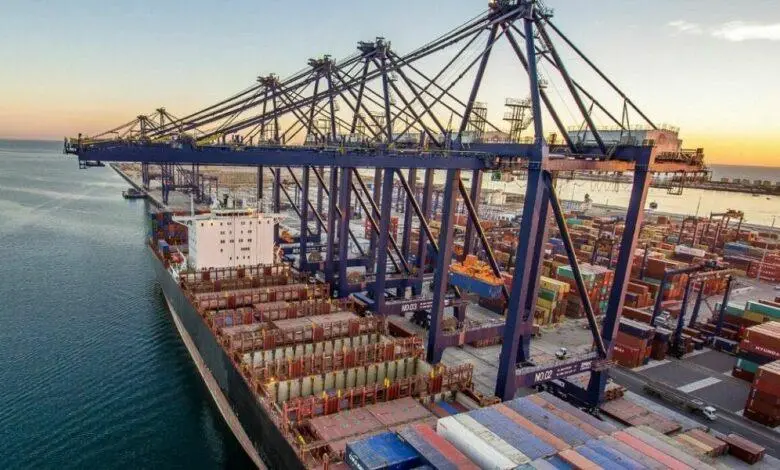
Outwardly the most visible sign of structural change in the container terminal operating sector is the considerable enlargement of the presence of shipping lines but actually the scale of change has been much more far reaching in recent times with significant implications for those parties offering concessions or investment opportunities in general. Essentially, for these latter parties – seeking serious investors – it is important to understand that the international terminal operating sector is today made up of different categories of terminal operator and to seek out the category most appropriate to their respective needs.
Table 1 presents Port Strategy’s current view of the container terminal operating industry, unveiling an inherently more complex picture than might be anticipated even by quite experienced port authorities or other government agencies. It shows that when it comes to operator selection there is quite a lot to think about with quite marked differences between different categories of operator. Inevitably, there is a degree of subjectivity in assembling such a categorisation and defining the associated characteristics, but this has been done tapping into the extensive knowledge of Port Strategy’s in-house team and the input of diverse industry professionals. The analysis also goes one step further by identifying the leading players in specific categories.
The traditional method of appointing a terminal operator – as recommended by the World Bank, IFC and other leading agencies – is via a competitive tender with this usually consisting of two key elements, a technical submission and a financial bid. It is a tried and tested process, with a competitive base, that will mechanically deliver the best terminal operating option. Points are awarded for both the technical submission and financial offering – the party with the largest number of points wins and is awarded preferred bidder status.
QUESTIONABLE APPROACHES
Approaches to securing a terminal opportunity that have recently been much more prevalent such as country to country deals – the mechanism for example that is said to have delivered the new Patenga Container Terminal (PCT) opportunity in Bangladesh to Red Sea Gateway Terminal – are essentially designed to deliver exclusivity and as such do not possess the inherent advantages of the more competitive open tender approach. The same can be said of when political pressure is brought to bear on behalf of a given party or if a multi-bidder process is run but this is open to undue internal influence – basically corruption – to place the opportunity in the hands of a specific bidder. Angola, for example, has run tender processes open to diverse bidders where the winner (in terms of points over a technical and financial bid) has not actually been designated the winner but another party has with a lower score.
In all instances, it is important to ensure bid integrity. Not to do so is to work against the host country’s economic objectives and in all probability to add to costs for importers and exporters. Or to put it more crudely, for the agency issuing the bid to ‘shoot itself in the foot.’
Just as there are tried and tested bid processes there are tried and tested mechanisms, some involving arms-length bodies, to ensure clean bid processes.
SHIPPING LINE TWIST
Readers will recognise that shipping lines have long been involved in the terminal sector with the last couple of decades seeing the formation of shipping line linked terminal groupings that have not only been established to meet the needs of the associated line but also to service third party business. The full pros and cons of such entities are detailed in Table 1 but it is worth highlighting here a ‘new twist’ to shipping line involvement in the terminal sector. This follows on from the dive by certain lines into logistics on a broad scale and is when the ownership of a terminal by a shipping line affiliated operator is instrumental in the sister line exerting strong control over a supply chain as a whole. This is a step that can remove healthy competition and impair profitability.
Bottom line, today’s international container terminal operating sector is much more complex and it is fundamentally important for any government agency offering a concession to understand the different categories of operator and their respective merits and demerits to secure the best fit partner.
INTERNATIONAL TERMINAL OPERATOR CATEGORIES & CORE CHARACTERISTICS
Government Owned / Controlled / Country-to-Country Deals
Companies
AD Ports, China Merchants Ports, COSCO Port, DP World, Red Sea Gateway, Q Terminals
Profile
The recent distinguishing characteristic of these companies is that they have all played the government-to-government card to gain access to market opportunities. Frequently, this approach has a backcloth to it which offers a wider level of engagement designed to be attractive to the country presenting the opportunity and with this invariably possessing a strong element of financial inducement that extends way beyond the port sector.
The downside of this approach is that it can eliminate healthy competition focused on securing the best investor/operator for the opportunity at hand and similarly set against a wide offering the importance of the core opportunity can be undermined.
Government Owned
Companies
PSA International (Port of Singapore Authority affiliate), Shanghai International Port Group
Profile
These two companies reflect something of a conservative nature in accord with their public ownership – they are not at the far end of the risk-taking spectrum. PSA International is a first-generation entrant to the international terminal operating sector and has a strong global presence often reflecting its strong skill set in the area of transshipment activity. SIPG’s terminal operations are mainly in China with a relatively limited presence overseas.
Private / Strong Political Backing
Companies
Adani Ports & Special Economic Zones (AP&SEZ), Yilport, CMA Terminals /Terminal Link
Profile
It is the past activities of these three groupings that identify them as having strong political backing from their respective home countries – Adani (India), Yilport (Turkey) and CMA Terminals and Terminal Link (France), although it should be acknowledged Terminal Link is 49 per cent owned by China Merchants Port Holding Company Limited. This political backing has been useful consolidating their presence at home and advancing their expansion overseas. It is not infallible, however, as witnessed by the recent situation with Adani which has seen billions wiped from the market cap of the conglomerate’s listed companies. This followed a report issued by New York-based Hindenburg Research which accused Adani of using an offshore shell network to manipulate earnings and “avoid a material writedown and negative impact to net income.” Now, as PS goes to press, Adani awaits the imminent findings of a probe by The Securities and Exchange Board of India plus it has just seen Deloitte, the longtime auditor of its ports division, resign voicing concerns it could not comprehensively scrutinise transactions between companies in the group and the ports unit. India’s Prime Minister, Narendra Modi, is recognised as a long-time supporter of Adani but as the group’s current troubles indicate such affiliations can prove problematic.
Shipping Line Affiliated Operators
Companies
Africa Global Logistics (MSC affiliate/ex Bollore), APM Terminals, COSCO, Hapag Lloyd, Terminal Investments Limited
Profile
The above are the major shipping line affiliated terminal operators that offer their services not just in conjunction with the activities of their sister shipping line and that lines consortia partners, if applicable, but also to other lines in a general context. As noted at the outset of this article, shipping lines during the lucrative years of the pandemic have greatly increased their presence in the terminal sector with a number of notable deals for terminal portfolios concluded, particularly noteworthy are:
– MSC’s purchase of the Bollore terminal and logistics businesses in Africa comprising 22 port and rail concessions, 66 dry ports, two river terminals and over 250 logistics and maritime agencies. These businesses were rebranded under the name Africa Global Logistics, and
– Hapag Lloyd securing a 40 per cent stake in J M Baxi’s Indian port and logistics operations which comprise key container terminals, a multi-purpose terminal, inland container depots, CFS and other logistics activities. Further this acquisition followed on the heels of the company buying SAAM Ports and SAAM Logistics from Chilean multinational port services company SAAM with the terminal portfolio comprising 10 port terminals located in six countries in the Americas. On a smaller scale a 49 per cent stake has also been taken in Italy’s Spinelli group which includes a Genoa container terminal operation.
Such shipping line affiliated operators have a number of core characteristics including:
– With new concession opportunities holding out the carrot of bringing volume to the facility via their partner shipping line and affiliated consortia members.
– The downside of this is that liner operated terminals will typically operate them as cost and not profit centres when serving their sister line and partners.
– In a service context, while publicly they will deny it the priority is to meet the needs of the affiliated shipping line(s).
– Increasingly, terminal assets are seen by lines as an integral part of their efforts to control a whole or large part of a supply chain with the knock-on effect of reducing competition.
Private & Independent Operators
Companies
International Container Terminal Services Limited (ICTSI), Eurogate and SSA Marine
Profile
All the above companies have long been established in the terminal operating sector and largely offer services on a neutral basis (without preference) to all shipping line customers. This neutrality or independence contributes to their strength facilitating highly productive common user terminal operations.
The Eurogate network covers 12 terminals in Europe and it does operate in partnership with shipping lines at the Eurogate Tanger SA facility where it has a 20 per cent equity stake.
ICTSI is the most independent of the three companies with a global portfolio of over 30 terminal facilities including the newly added Durban Pier 2 Container Terminal where it is in partnership with Transnet.
SSA Marine is active on a global basis but has a particularly a large footprint of terminals in the Americas which has recently added to through the purchase of the Ceres Terminals group from Macquarie Asset Management.
Related Articles
 EQUIPMENT
 OPERATIONS
 OPERATIONS