





Regional role affirmed
Indonesia is a key trading partner for Singapore, with this transshipment hub responsible for aggregating container traffic for the country, AJ Keyes asks how ports in Indonesia are developing to keep pace with future demand and whether current dynamics will change?
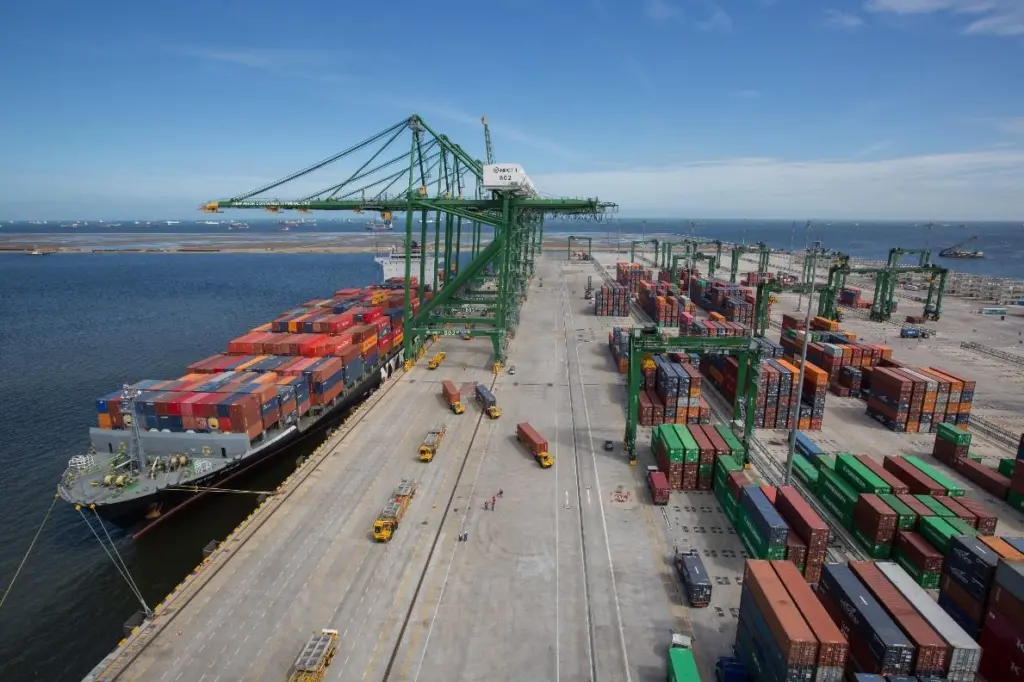
Indonesia is an island nation comprising more than 17,000 islands and collectively a very populous country. Despite an estimated 110 commercial ports able to accommodate larger cargo ships, container-handling facilities are limited. Port infrastructure in many places is old and obsolete, resulting in very high logistical costs and longer vessel turnaround times as some ports are operating beyond realistic capacity limits.
The government has been modernising and upgrading infrastructure in certain locations, most notably in Jakarta (Tanjung Priok), but even so challenges remain.
Jakarta, on the island of Java, is the capital, the largest Indonesian city and an important centre of commerce and education. Its port, Tanjung Priok, is the principal port of the country.
Jakarta is situated on the northern coast of Java Island. Its economy depends on manufacturing electricals, automobiles, mechanical engineering products and chemicals.
Established in 1999, Jakarta International Container Terminal (JICT), located at Tanjung Priok, is a joint venture between Hutchison Port and Pelabuhan Indonesia (Persero). The facility is the largest container terminal in Indonesia and offers a capacity of 2.5 million TEU per annum. The 45.5ha facility has eight berths and 1640m of quay, with water depths ranging between 12m and 16m. There is also the Koja terminal, another Hutchison facility situated adjacent to JIT, which has a 620,000 TEU capacity.
EXPANSION AGENDA
The port has largescale expansion plans with these focussed on the “Newpriok” area of the port. Newpriok Container Terminal 1 is already operational offering a 1.5 million TEU annual capacity and with a draught of 16.5m is reportedly capable of handling Ultra Large Container Ships (ULCS). The four shareholders behind this project comprise: Pelindo II (IPC); Mitsui & Co., Ltd, PSA International PTE Ltd. and NYK Line.
According to Alphaliner, there are further planned facilities including: CT2 (1.5 million TEU per annum), CT3 (1.5 million TEU), plus CT4, CT5, CT6 and CT7 also due to introduce a capacity of 1.75 million TEU per annum. There are no confirmed dates for the construction of these terminals at the present time.
Yet despite the desire to develop substantial additional capacity, with space to do so, the major users of this port confirm that ships calling are exclusively serving intra-Asian trade routes, supplemented by coastal services.
Based on Q1 2024, the biggest users of Jakarta Port, based on TEU capacity, are identified in Table 1. It can be seen that MSC’s weekly capacity of 4210 TEU (applicable in March 2024) includes the largest ships calling on the operator’s intra-Asia service linking Indonesia to Qingdao, Shenzhen, Singapore and ports in South Korea, Vietnam and Thailand.
Table 1: Main Container Shipping line Users of Port of Tanjung Priok (Jakarta)
| Shipping Line / Operator | Share of Ship Calls | Share of TEU Capacity | Vessel Information (TEU) |
|---|---|---|---|
| Includes operating Newpriok terminals Source: Alphaliner, dataand.com |
|||
|
Timo Intim Line |
15.1% |
7.1% |
480 – 662 size range |
|
Temas Line |
9.3% |
5.0% |
2607 & 2135 biggest tonnage |
|
Salam Pacific Indonesia Lines |
10.6% |
4.8% |
Largest vessel is 1744 |
|
MSC |
4.8% |
9.3% |
4210 weekly capacity |
SURABAYA SPLIT
Indonesia’s other major container facility is Tanjung Perak (Surabaya), but it is a port with a more uncertain future.
DP World (DPW) decided not to renew its operating contract and 49 per cent share in the PT Terminal Petikemas Surabaya (TPS) facility when its concession ended in 2019 – this resulted in TPS returning to being a 100 per cent subsidiary of Pelindo III.
DPW stated at the time that the new terms offered did not meet its requirements: “It is unfortunate that the significant positive contributions made by global terminal operators in Indonesia have not been fully recognised, despite our successful track record.”
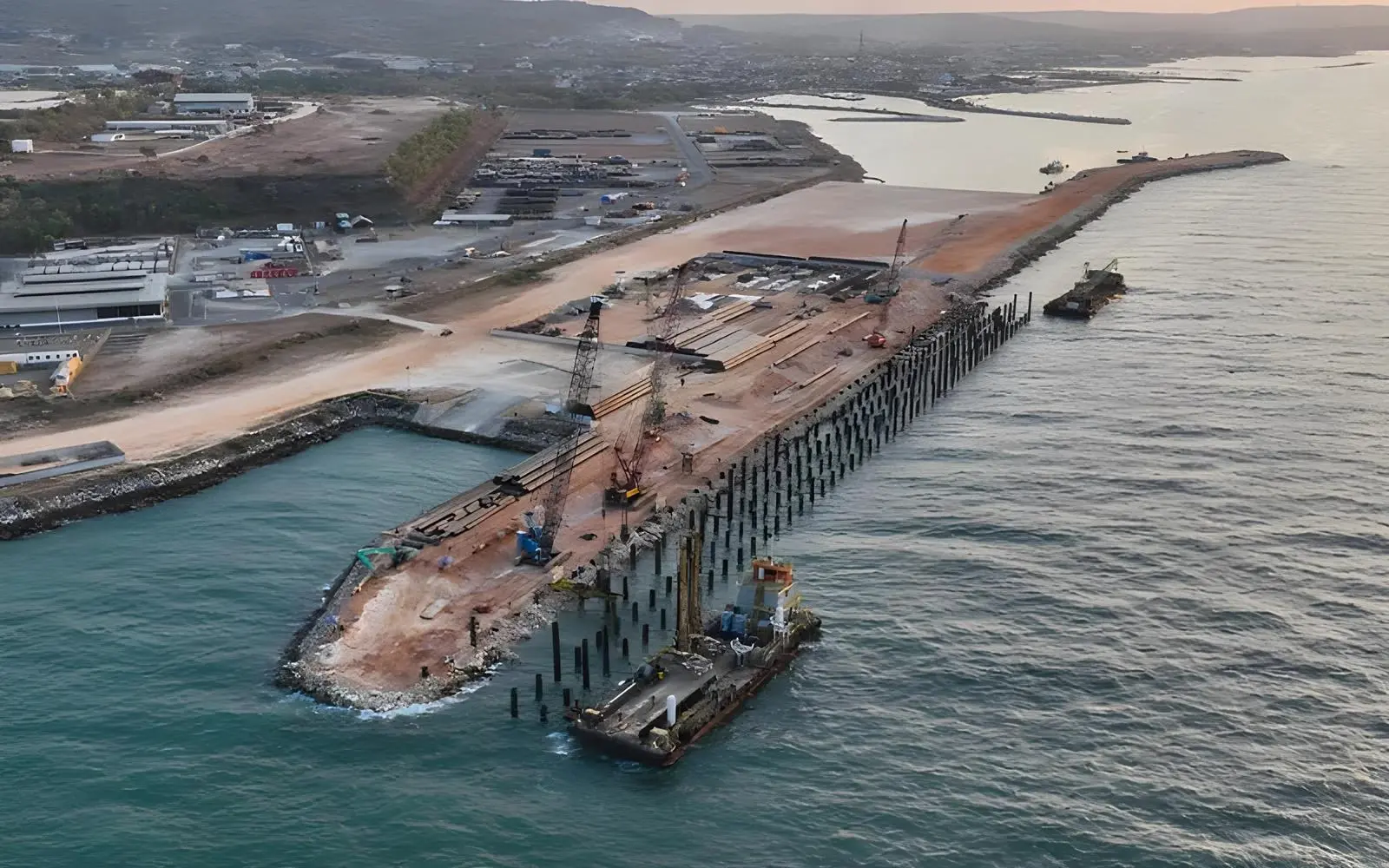
Instead, DPW, in quick order, signed a US$1.2bn agreement with the Indonesia-based Maspion Group to develop a new three million TEU capacity terminal in Eastern Java with an adjacent industrial facility. This new development is less than 10 miles from the company’s previous operation, TPS, and has more capacity (TPS was capped at a maximum of 2.5 million TEU per annum). DPW states that this project is the first of its kind in Indonesia that involves a partnership between a private foreign investor and a private-sector Indonesian company. In October 2023, ground was finally broken on the 110ha project site.
ENTER EJMT
However, DPW is not the only global operator developing facilities in Indonesia. Also in Q4 2023, International Container Terminal Services Inc. (ICTSI) confirmed development of a multipurpose terminal, with operations commencing in Q4 2024.
The project is being undertaken by the company’s business unit in East Java, East Java Multipurpose Terminal (EJMT). A 300m quay, breakwater and breakbulk area catering for super heavy lift cargoes are planned, along with dredging of the navigational channel to 13.5 meters. It will be supported by two post-Panamax mobile harbour cranes and other cargo handling equipment, with the aim of serving hinterlands in Lamongan, Tuban and central Java.
Gerard Langes, Head of Business Development for Asia Pacific and the Philippines, ICTSI, explained the company’s approach: “By building positive relationships with stakeholders, ICTSI is contributing to the sustainable economic and social well-being of the local community.” Based on the company’s ongoing expansion on a global basis, this is a strategy that clearly works well.
There is substantial space and capacity potential at Jakarta, while DPW is developing a new largescale facility close to the original container terminal in Surabaya. These ports will clearly offer long-term potential for container handling, but sizes of ships calling will be a crucial factor. The ICTSI project will also be part of the competitive landscape with operations scheduled to commence in 2024 and the ability to serve container vessels of a size typical to the Indonesian market.
Vessels calling in the country are typically smaller in nature and are exclusively intra-regional and/or coastal, linking with major hubs like Singapore. Port container volumes continue to grow and support expansion of terminal capacity, but a continued role as a regional port linked to major regional hub facilities looks set to remain firmly in place moving forward.
Related Articles
 EQUIPMENT
 OPERATIONS
 OPERATIONS