

Short-sea shipping under the spotlight
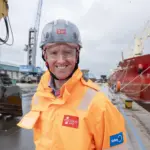
Maurice Delattre, Area Manager, Port of Amsterdam, talks one to one with Port Strategy highlighting short sea shipping as being key to sustainability, as the port readies to host this year’s Coastlink conference
With regard to short sea, can you explain the port’s offering and give some context on market share?
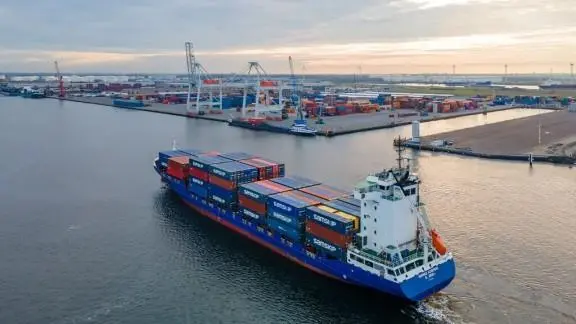
As a European port with a strong international network of partners, short sea shipping is of strategic importance to us and our customers. Facilitating multimodal transport between various European regions is a key component in ensuring more sustainable supply chains and ports play an important role as hubs for feeder and short sea connections for all kinds of cargo flows. Historically, our customers have established strong ties with i.e. Scandinavia and the Baltic region, as well as the UK and Ireland.
Our service offering is therefore mainly concentrated on facilitating trade between these regions, the Netherlands and Germany and continental Europe via short sea, rail and inland shipping. Via our port, partners such as Thor Shipping, Samskip and DFDS operate weekly services with fast turnaround times and a customer-oriented approach characterised by high flexibility. In this context, we are continually working on the expansion of our European network by adding capacity to existing liner services or by developing new connections together with our partners.
What makes Amsterdam unique in its approach to short sea?
The geographical location of the Netherlands, and the North Sea Canal Area (NSCA) in particular are key advantages when it comes to accommodating the individual service and logistics needs of shippers and service providers. Our region is historically characterised by strong industrial activities, international logistics hubs and the metropolitan region Amsterdam being the largest economic cluster in the Netherlands. This constellation bears great potential in facilitating trade via short sea shipping.
Next to extensive terminal capacity, cross-docking, as well as all-weather handling and storage facilities, our customers are able to provide a wide range of specialised services. On top of that, the close proximity to Europe’s fourth largest airport and its surrounding logistics cluster enables our customers to combine all modes of transport. In recent years, we have seen steady growth in our general cargo segment, as a result of strong demand for intra-European transport in both, containerised and bulk commodities.
Due to capacity requirements, the need for fast transit times and direct connections towards the European hinterland, the port of Amsterdam was able to gradually develop its hub function helping facilitate efficient and sustainable transport across Europe.
What is the port’s current focus in terms of business strategy, is short sea one of them?
Short sea shipping is a key pillar in our business strategy. As a partner, we are involved in several initiatives to promote new and existing network connections in the market. We do so by working closely with the Federal Ministries, as well as our customers and other relevant stakeholders to ensure that short sea shipping receives the desired attention in the market.
Based on recent studies and given the anticipated increase in cargo volumes towards 2030 and beyond, it is expected that consolidation of cargo flows and transport via short sea will become even more important in the near future. Therefore, we are investing in our port infrastructure to make it fit for the long-term. In addition, we are currently working on our new business strategy 2025-2030 in which short sea shipping plays a prominent role given its important role as a modality linking to all general cargo segments.
With regard to green hydrogen, which we know is big on the port agenda, how does this fit in with short sea and the overall decarbonisation objectives at the port?
Together with our international partners and various stakeholders we are involved in several strategic initiatives in the context of the production, import and also distribution of renewable hydrogen and synthetic fuels to the respective end-users.
We believe that all kinds of initiatives leading to reduced CO2 emissions are necessary in order to be able to work towards our joint global emissions reduction targets and adhere to the EU guidelines as part of the “Fit for 55” package.
To meet these ambitious targets, ports play a crucial role in facilitating the energy transition, especially when it comes to providing space and infrastructure, but also in creating private and public partnerships between multiple industries. Moreover, ports serve as central nodes for sector coupling and energy system integration which directly contributes to the transition towards more use of renewable energy products.
In the last couple of years, we have seen an increasing number of promising initiatives, strategic partnerships and (pre-)investment decisions being made. Our teams at Port of Amsterdam are involved to help drive these kind of initiatives forward. For this reason, we are working closely together with strategic partners, such as Samskip, on the development of green corridors and the supply of renewable hydrogen and e-fuels in the foreseeable future.
These kind of partnerships not only strive for the decarbonisation of transport chains, where ports have an important function, e.g. as hubs for multi-fuels bunkering facilities, but also for the development of new energy ecosystems in providing land for production, jointly developing low carbon energy projects or supplying large volumes of renewable energy carriers to help decarbonise hard-to-abate industries. In order to strengthen Port of Amsterdam’s leading position as a European energy port, these activities focused on reducing CO2 within transport chains. They’re of strategic importance as they are directly contributing to our overall goal: To achieve net carbon neutrality by 2050.
What about other alternative fuels, what other activities are taking place at the port which are helping bolster the energy transition and the move to alternative fuels?
As a large energy hub with more than 50 per cent of our total cargo turnover coming from energy products, naturally we aim to take on a leading role in expanding our product portfolio and thereby increasing the share of bio and synthetic fuels as part of the total energy mix.
For example, Amsterdam is currently one of the largest gasoline ports in the world with an extensive network of partners active in liquid bulk, such as petrol, diesel, kerosine, LPG, chemicals, biofuels and renewable hydrogen. By making use of this existing network, as well as the energy infrastructure inherent in the port area, the port of Amsterdam has unique prerequisites to transform towards a renewable energy port in the near future.
In recent years, the product variety in the energy cluster has expanded with an increasing share of biofuels. By 2025, our target is to grow the percentage of total turnover of alternative fuels and energy sources, such as biofuels and hydrogen to 12.5 per cent. In this context, Port of Amsterdam is taking a leading role in developing new value chains for hydrogen and its derivatives by actively collaborating with international partners on establishing up, mid- and downstream activities along the entire chain.
For this purpose, the “H2A Foundation” was founded in 2023 which enables various local companies and international partners to join forces in realising the large-scale import of renewable hydrogen through multiple vectors via the port of Amsterdam. The H2A consortium has initially been initiated by Evos, SkyNRG, Port of Amsterdam, Zenith Energy Terminals, Hydrogenious (Germany), Electriq Global (Israel), the Municipality of Amsterdam and the Project Office North Sea Canal Area. They’re all significant players in the development of new value chains with the aim to meet the anticipated high demand for renewable hydrogen and e-fuels in the near future.
We are actively engaging in strategic projects with terminals, suppliers, off takers, technology providers and public stakeholders in order to develop the port into a renewable energy hub for Northwest Europe in the coming years.
How does short sea fit in with the port’s overall environmental targets and the demands of the supply chain?
Short sea shipping has a vital role in making shipping and transportation more sustainable. On the one hand, it helps increasing the reliability of international supply chains and on the other hand, in the light of steadily increasing cargo volumes, it provides a great solution for shipping goods over longer distances and arranging the first and last-mile transport by truck.
In today’s fast-paced environment, smart logistics solutions are needed to satisfy customer demands and short sea is a key enabler in transporting large volumes of goods between European regions in a reliable and sustainable manner. Thereby, it actively contributes to a reduction of CO2 emissions, especially with an increasing share of renewable fuels being used in the coming years which is a key requirement for customers in modern supply chains.
Lastly, in your own words, why should people attend the Coastlink Conference this year?
Coastlink offers a unique network of professionals from all over Europe who are jointly engaging and interacting with each other during the conference. The programme is highly interesting for anyone active in our industry as it touches on all relevant topics in the field of transport & shipping, business & logistics as well as sustainability and energy transition. It therefore offers a unique opportunity to meet in person with business professionals, shippers, representatives of shipping lines, terminals and ports, but also industry experts and consultants who are all working in the same field of business.
Coastlink is a neutral pan-European network dedicated to the promotion of short sea and feeder shipping, and the intermodal transport networks through the ports that support the sector.
It takes place this year from 24 to 24 April at the Port of Amsterdam.
For the full programme, info on delegate or exhibitor places, visit https://www.portstrategy.com/coastlink or email info@coastlink.co.uk
Related Articles
 EQUIPMENT
 OPERATIONS
 OPERATIONS