



Two tales from toc: streamlining inland barging
Steve Cameron, well known Moderator at the Terminal Operations Conference (TOC) and roving correspondent for Port Strategy, highlights two ‘tales’ from the June TOC in his own inimitable style
Last year at TOC Rotterdam the consistent feedback from speakers, was concern about the lack of connectivity, shared data, and visibility in the hinterland supply chain. Since then, Maersk has developed a supply chain Resilience Model (SCRM) to help customers reduce supply chain risks and mitigate disruptive impacts. This year Matthijs van Doorn, Vice President Commercial the keynote speaker from the Port of Rotterdam, focused on these issues.
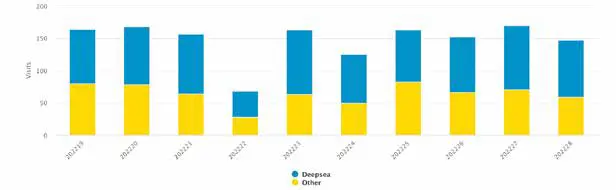
For some time, the handling of inland container vessels at Rotterdam’s deep-sea terminals has been under pressure. Barge delays at terminals peaked last year when congestion resulted in waits of over 180 hours. In part, the congestion has been due to barge operators arriving at already congested terminals, taking up space to unload small volumes of containers when the berth space could have been used more effectively. As the Operations Manager of one barge operator pointedly underlines: “This is not good for inland supply chains, when all of your barge fleet is stuck at the deep-sea terminal.”
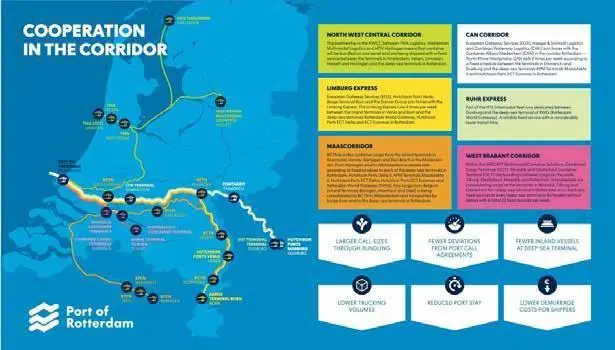
Another issue identified is where the major inland barge destinations share the same artery/routing. The duplication of vessels for that sector of the route contributed to congesting the waterway and overall inefficient use of resources. The solution for these and other issues, requires a more transparent and efficient structuring of the container inland shipping chain with all players working together.
During an interview with Port Strategy, after his presentation, Matthijs van Doorn, flagged that: “Inland shipping plays an indispensable role in the transport of containers to the hinterland. Last year container throughput at the port of Rotterdam was 15.3 million TEU. At present, 38 per cent of the containers that move between the Maasvlakte (outer port area), and the hinterland are transported by inland vessels. The Port Authority, says van Doorn, aims to increase this share to 45 per cent by 2030 by fully optimising the inland container shipping chain, noting that with no fewer than five deep-sea terminals at the Maasvlakte, the planning of inland container shipping in Rotterdam has become more complex than ever.”
Until recently, the inland terminals have relied on their own vessels to transport cargo to the terminals in Rotterdam. As a result, the deep-sea terminals receive a lot of calls with smaller sized vessels. Accordingly, planning terminal calls in the port complex is a complicated affair, and there are risks of accumulated delays when vessels call at more than one terminal during their visit.
INITIATIVES IMPLEMENTED
Initiatives have already been implemented to limit waiting times for container vessels at Rotterdam’s deep-sea terminals. One of these initiatives is the bundling of cargo destined for Rotterdam in the West-Brabant. This new collaboration between Oosterhout Container Terminal, Barge Terminal Tilburg, Combined Cargo Terminals, Moerdijk Container Terminals, and the deep-sea terminals in Rotterdam’s port area within the West-Brabant Corridor has been the first concrete initiative to yield positive results. Merging cargo streams within the Corridor has improved the capacity utilisation of inland shipping on this route, which, in turn, has shortened waiting times at the terminals.
The UK MD of a global liner container operator responsible for European logistics, explains that route optimisation enables carriers to share barge, road and rail containers, and its use for inland logistics enables, in a few seconds, the planning of 10,000 loads. He notes that, while it has been around for 30 years and used by individual carriers, it only recently started to be shared and used more strategically to look at vessel scheduling and transit times. “The ethos in Rotterdam,” he said “appears to be to get everything to Moerdijk to decongest quay & roads. This may work well on imports, but perhaps on exports it may be less effective, we will have to see what happens”.
In the meantime, the Port of Rotterdam has introduced a weekly report on its barge monitoring service, which shows the percentage of delays and schedule performance for the lower, middle, and upper Rhine as well as time spent in port
OUTCOME INTERESTING
It will be interesting to see how this collaboration between the Port of Rotterdam and the barge operators develops. As efficiency gains from co-ordination of sailings, and sharing of barges take effect. The barge operators appear to be mirroring the liner shipping consortia. If they achieve the same level of sophistication as the liner shipping industry, in controlling the balance between supply and demand, it will be revealing to see the long-term effect this has on freight rates.
Related Articles
 OPERATIONS
 OPERATIONS
 OPERATIONS