Savannah has been the fastest-growing port in North America for a number of years, but how does the port continue to out-perform the market and will its strategy change in the future, asks AJ Keyes
There are a number of basic factors that influence a port’s competitiveness. These include (in no specific order), water depth at berth, access to open sea, length of quay, ability to serve cargo consuming/generating hinterlands and quality of infrastructure
In 2000, the Port of Savannah was located up river, had water depth restrictions and served a small local hinterland. By the end of 2022, the port was still located upriver and still served a limited local hinterland, but has been the fastest growing container port almost every year since and is a highly effective option for serving the US Midwest market via intermodal rail.
So, how has this port been able to transform itself into one of the most successful facilities in North America and then remain a leader in an already highly established port market?
METEORIC RISE – WHY?
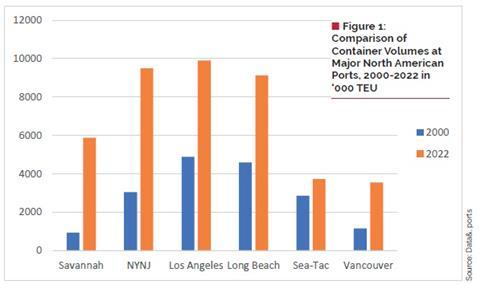
Figure 1 offers a comparison of throughput at Savannah and other major ports in 2000 and 2022 and the numbers substantiate the Port of Savannah’s meteoric rise. In market share terms, in 2000, the port accounted for 3.1 per cent of total North American container port volumes and 7.6 per cent of East Coast North America (ECNA) total activity. By the end of 2022, these shares had risen to 8.7 per cent (North America) and 18.6 per cent (ECNA).
So, the Port of Savannah has been extremely successful, even though it continues to compete in a mature economy served by an established port market and Ed McCarthy, Chief Operating Officer, Georgia Port Authority (GPA) offers insight here: “The key to Georgia Ports’ success in the container trade is a commitment to serving every stakeholder in the supply chain, from importers and exporters to warehousing, motor carriers, shipping lines, stevedores and the International Longshoremen’s Association. The Port of Savannah’s customers enjoy superior reliability, speed to market and capacity for growth. Savannah is the most westerly major port on the U.S. East Coast, providing shorter overland routes to important markets, with fewer opportunities for delay.”
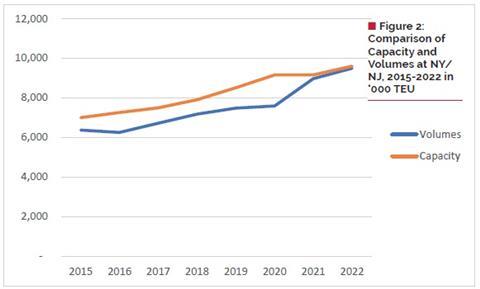
Of course, any port can invest in new cranes, build quays and dredge for deeper water, and many have done so in North America, but adopting an attitude of ‘build it and they will come’ is certainly no guarantee of success. GPA has continued to invest in its facilities, but there is a strategy behind it, as McCarthy further highlights: “The Port of Savannah’s success is a product of several factors coming together,” he opines, before adding, “service reliability is key. Logistics managers who choose Savannah know they can build supply chains around our efficient, flexible port services. Additionally, the Authority has had a long-time investment philosophy of maintaining at least 20 percent capacity over current demand. This ensures GPA has room for existing customers to grow, and to take on new business. It’s also about location, with Georgia providing the most efficient service to markets such as Atlanta, Memphis, Charlotte and now Dallas.”
TARGETING THE USERS’ BOTTOM LINE
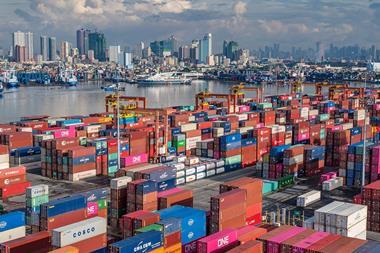
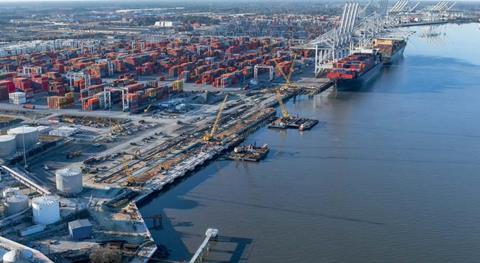
The infrastructure supporting the Port of Savannah has grown in-line with volumes. GPA currently supports 35 weekly containership services, direct interstate connections, and on-terminal rail service from Class I railroads Norfolk Southern and CSX. Intermodal containers move from vessel to departing rail in less than two days in Savannah, while its truck gates handle up 15,000 interchanges per day. The Authority’s Mason Mega Rail Terminal has boosted rail capacity 30 per cent to one million containers per year.
However, the application of its infrastructure investment is only part of the focus from GPA. “The Georgia Ports Authority delivers unparalleled service, because we understand how important our role is to port users’ bottom line. Savannah was the first port with a one-call customer service centre to help drivers and cargo owners settle any issues that might arise. Additionally, our trade and operations departments work with cargo owners and logistics providers daily to deliver creative, nimble solutions that help them better serve their own customers,” explains McCarthy.
One interesting part of the strategy that has occurred over the past 20+ years has been the seamless transition between leadership changes at the helm of GPA. A spokesman for GPA acknowledged this point and elaborated: “The Board expects the port to be run like any other business. In terms of executive directors, the board sought out both Griff Lynch and his predecessor, Curtis Foltz, who first served as chief operating officers before taking over the new leadership role. Their familiarity with the Georgia Ports Authority’s operations and personnel made for a smooth transition between administrations.”
CONTINUED CARGO FLUIDITY
Moving forward, the obvious question is whether GPA will maintain its successful trajectory. To ensure what the port authority describes as “continued fluidity,” berth capacity and terminal space are being added at a fast pace and on a par, if not quicker than any other major container port in the US, as McCarthy explains: “By January 2026, GPA will double its space for 16,000+ TEU vessels to six berths, and grow its annual terminal capacity from the current 6.5 million TEUs to 10 million TEUs per year. This new infrastructure does more than add space. It allows for greater velocity from dock to destination and delivers the dependable service that logistics managers need to build reliable supply chains.”

The old saying of “if it ain’t broke, don’t fix it” probably best sums up GPA’s strategic approach to the future, as McCarthy summarises. “Cargo owners can look back on a history of superior service and flexibility at the Georgia Ports Authority. They can see our aggressive expansion plan as we build for the future. Those who choose to move containers across our docks can attest to the friendly, solutions-oriented service we provide. We are committed to building on those strengths, working with port users to develop logistics solutions beyond our gates to the markets they serve. This commitment to our customers will ensure GPA’s continued success,” he confidently states.