

Privatisation proceeds apace
Steve Cameron reports on terminals, transport and trade. And you cant have the first two if you dont sort out the latter.
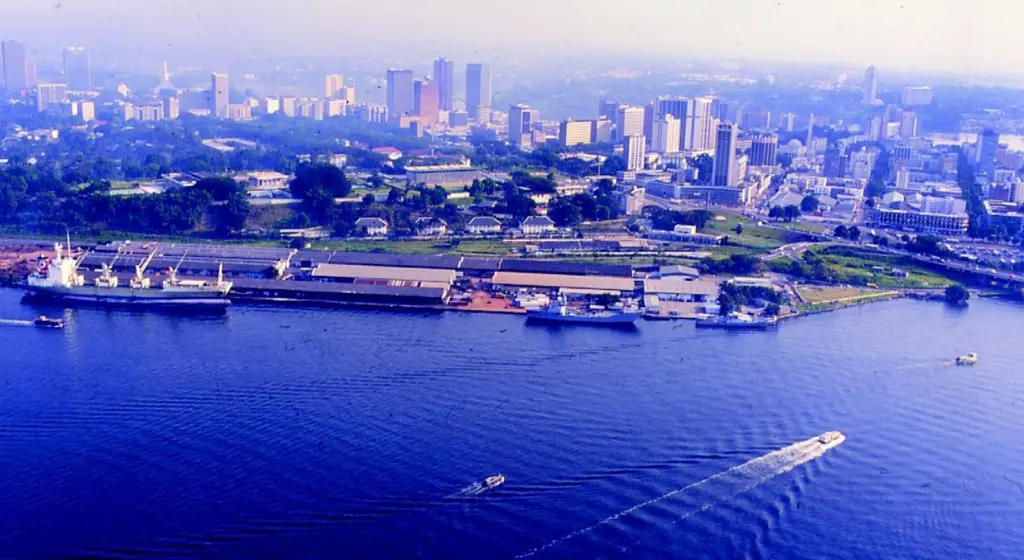
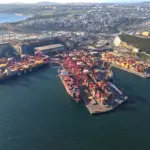
There has been considerable development in the privatisation and concessioning of West Africa’s ports. In a burst of activity concessions have been awarded in Cote D’Ivoire, Ghana, Togo, Nigeria, Cameroon and further south in Angola too.
The majority of these concessions have been granted to the regional specialist Bollore Group and to APM Terminals. Bollore, which is in the process of selling its liner portfolio (which includes Delmas and OTAL) to CMA-CGM, whilst retaining its profitable landside operations in Africa, has secured concessions in both Abidjan and Tema.
APM Terminals appears to have been successful in Lagos, Douala and, subject to a court hearing, in Luanda too. Interestingly, given its impending arrival in West Africa through its acquisition of Delmas and OTAL, CMA-CGM is already involved as part of a consortium building a new container hub at Lome in Togo.
So after the recent years of regional dominance by Bollore and APM Terminals it will be interesting to see the effect that a large and ambitious organisation such as CMA-CGM, will have on local dynamics. Its regional specialist subsidiary, UK based operator MacAndrews, is already expanding its recently commenced East Africa services and CMA-CGM has been running Far East-West Africa services for more than three years.
LANDSIDE LURES For the Bollore Group, landside operations in Africa have always been the money spinner to the extent that they often dominated strategic thinking of the Delmas liner division. Their importance is founded on the tariff structure charged to clients, particularly in Francophone Africa.
Whilst the stevedoring to ‘under ship’s tackle’ at between US$50-75 per box is reasonable, it is effectively subsidised by other elements of the tariff. Here the ‘across quay’ and ‘lift to truck’ charges are levied by the stevedores to captive clients of the lines using the stevedores’ facilities. But a common tariff is set (in theory) by government and consignee charges based on cargo weight and commodity range from US$150-350 per container. Clearly, with rates at these levels this side of the business is a big revenue generator.
It was the extent of this revenue from the landside operations that led Bollore to purchase OT Africa Line five years ago to secure the OTAL cargo volumes for the Bollore landside business in Africa. As part of the sale of Delmas and OTAL to CMA-CGM, it is expected that there will be a long-term commitment required by the latter to continue using the Bollore landside operations for the Delmas and OTAL services. Bollore is likely to be looking for a 10-year deal; equally it can be imagined that Jacques Sade would be looking for less.
At time of writing, the agreement that was expected to be finished by the end of July, has still to be finalised. Local sources suggest that whilst the deal has been done and agreed, there are still social and employment issues to conclude. This is not unusual for employers in France and everything is nevertheless expected to be finalised by the end of August.
HINTERLAND HINDRANCES African countries have been pressured for many years by institutions such as the World Bank to privatise their ports as part of the solution to help them stimulate more trade. Now, in the main, this appears to be well underway, where does Africa go from here and what else is required to allow it to trade successfully so its ports and economies can flourish?
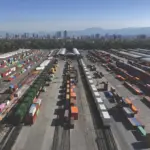
Clearly more needs to be done to improve hinterland infrastructure as well as at Customs and border crossings. Roads and railways have needed investment for many years. Unlike ports, road and rail concessions normally provide much lower returns on investment and privatisation is not necessarily the best route.
However, over the last three years rail concessions have been awarded. The railway links from Senegal, Cote D’Ivoire, Benin and Cameroon together with the roads from Ghana and Nigeria, provide the vital trade and aid arteries for the five major landlocked countries of Mali, Burkina Faso, Niger, Chad and Central African Republic.
Interestingly Bollore dominates this sector too. See Table 1 One Bollore observer notes that payback on rail investment is normally 5-10 years though there is at least one case where a net return is seen within 3 years.
UNIONS DETER INVESTORS Bollore appears less than enthusiastic about investing in road transport versus rail, limiting its investment in trucking activity to local deliveries within city limits and subcontracting to third party providers for long distances and cross-border business.
The same Bollore observer explains that it is the strength of the national trucking unions that is a problem in countries such as Senegal, Cote D’Ivoire, Burkina Faso and Cameroon. This is a headache Maersk-Sealand faced when it entered the haulage market in Cote D’Ivoire with the purchase of 120 haulage units. The local unions came out on strike and caused serious disruption.
Whilst the trucking unions believe that by their actions they are defending their national interests, the combination of their grip on the haulage market and the limited competition between road and rail, is inflating prices in the hinterland and damaging the economies of these landlocked countries.
Table 1: Rail concessions granted West Africa From To Concessionaire Dakar – Senegal Bamako – Mali Canac (Canadian) Abidjan – Cote D’Ivoire Bamako – Mali Bollore Abidjan – Cote D’Ivoire Ouagadougou – Burkina Faso Bollore Douala – Cameroon Yaounde – Cameroon Bollore/S. African partners Undergoing Privatisation Point Noire – Congo Brazzaville – Congo Currently CFCO National Rail Co
Related Articles
 PORT & TERMINAL NEWS
 PORT & TERMINAL NEWS
 PRODUCTS & SERVICES