In today’s rapidly evolving world of innovation, the introduction of digital twin technology has provided a game-changing tool for transforming airline operations and has huge potential for application with ports and terminals. Simon Miles, Head of AI, Aerogility, sets the scene
REDEFINING OPERATIONS
Digital twins grant ports and terminals the ability to create virtual replicas of their operations, unlocking unparalleled insights, efficiencies and AI-powered analytics to inform decision-making.
An enterprise digital twin can be created using software such as Aerogility’s model-based multi-agent AI framework. Here, ‘agents’ are used to represent the various components of an operation – things like equipment, processes and people.
Each of these agents follow specific rules for how they collaborate with others, similar to how team members have their unique roles. Moreover, there are factors that some agents depend on, which can place restrictions on what they can do at a given time. So, when you make a change that affects one of these agents, the technology ensures all other connected agents are informed. This prevents the presentation of strategies that might not actually work, guaranteeing decisions are sensible and practical.
Whether you are a port or terminal manager, traffic services operative or engineer, digital twins adapt to the needs of various stakeholders. The software’s versatility also applies to its usage, available as a fully hosted software-as-a-service (SaaS) through a standard browser. Alternatively, it can be installed on-site within a data centre, aligning with the port or terminal’s specific needs.
‘WHAT IF’ ANALYSIS
Multi-agent systems are an example of model-based AI, enabling businesses to explore hypothetical scenarios before making decisions that affect their organisation. Each AI model will contain a part it computes for itself and a part defined by the people who constructed it.
With model-based AI and digital twin technology, ports can play out a variety of scenarios and detailed simulations to examine and identify potential issues and make better business decisions. For example, if a projection foresees potential delays in port maintenance due to the unavailability of certain resources, stakeholders can strategise and simulate the most effective course of action, ensuring they keep future operations working smoothly.
This proactive approach enables ports to predict and prevent potential challenges. Furthermore, situational awareness becomes a cornerstone of port management, allowing immediate identification of bottlenecks and inefficiencies.
ENHANCED FORECASTING AND PLANNING
Digital twins allow port managers to gain a holistic, forward-looking view of their operations. By replacing error-prone linear spreadsheets with data-driven simulations, digital twins allow for efficient answers to complex forecasting questions. Furthermore, the siloed nature of knowledge within a few key individuals is dismantled, as insights become accessible to the entire team.
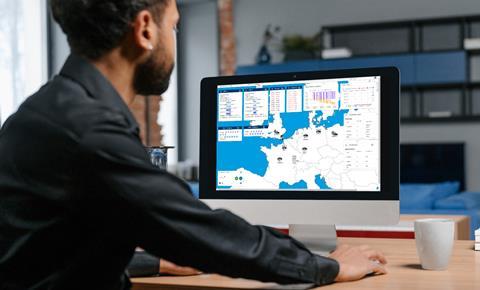
The integration of digital twins into port operations transcends traditional forecasting and planning methods. Ports and terminals can now confidently project costs related to maintenance, human resources and operational shifts. The agility of digital twins permit instant re-planning when circumstances change, ensuring that organisations remain adaptable and responsive. For example, if a port faces unexpected congestion due to weather disrupting shipping routes, digital twins can quickly simulate and implement alternative strategies. This enhances port management and efficiency by optimising resources and minimising disruptions. The same benefits are realised in conjunction with a terminal operation that has to adapt to late vessel arrivals.
Whether it’s short-term quarterly adjustments or long-term decade-spanning strategies, digital twins empower ports and terminals to make informed decisions with lasting impact.
SUSTAINABLE PRACTICES
Digital twins hold the promise of advancing sustainability within port operations. Ports can align their strategies with net-zero emissions goals by meticulously analysing their carbon footprint and optimising processes.
Efficient resource allocation, guided by data-driven insights, reduces waste and environmental impact, contributing to an era of greener port operations.
THE FUTURE AND AEROGILITY
Aerogility enhances planning and forecasting by building upon existing human knowledge and experience. It assists users in gaining a better understanding of the likelihood and severity of variables in the business in terms of financial impact. This scenario modelling results in realistic, secure and trusted planning that helps contain costs and reduce volatility.
Aerogility has been modeling the dynamic, high-stakes environments of civil aviation and defense for years. But its capabilities do not end there. The valuable insights gained from these sectors are seamlessly applied to the port sector. The platform excels at enabling planners and strategists to optimise operational effectiveness when dealing with multiple assets and their many interrelated dependencies. As such, it can be used across many complex industries, ports included.
The potential of digital twins for ports goes beyond immediate benefits. As the technology matures, ports and terminals can expect a wave of sophistication that transforms their respective business sectors. Streamlined logistics become attainable through accurate real-time data, leading to improved resource allocation and reduced inefficiencies.
As ports and the business units in them continue to evolve into dynamic, data-driven ecosystems, we can expect to see a vast increase in demand for model-based AI and digital twin technology.