



Pushing boundaries
Faster, greater stability, more manoeuvrable, cleaner power and supported by IoT and AI, a new generation of advanced pilot boats is launching. Felicity Landon reports
SECTOR ANALYSIS: DECARBONISATION, ENERGY EFFICIENCY AND OPTIMISATION
As global trade expands, there is an increased demand for specialised pilot boats to navigate congested waterways. Additionally, advances in technology, an emphasis on reducing operational costs and the growth of sustainable propulsion are driving market growth, as stakeholders invest in new, modern designs. Growth is forecast at an annual rate of 14% from 2024 to 2031, according to the Pilot Boats Market: Global Market Forecast and Market Trends (2024 – 2031) report. It notes that market trends include the integration of automation in pilot boats to boost navigation efficiency and safety, as well as digitalisation and IoT, to enhance operational tracking and maintenance efficiency.
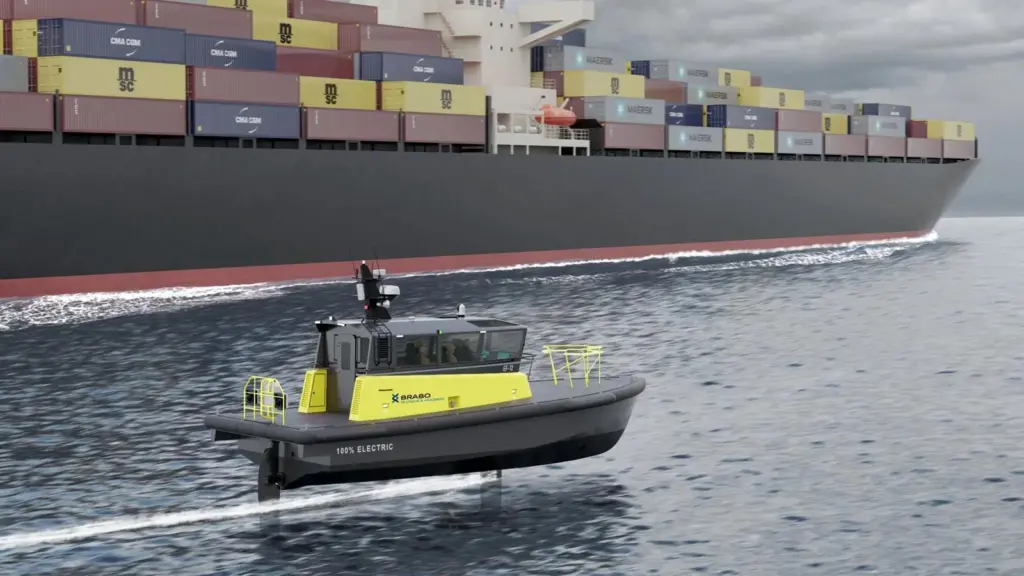
Plus, growing emphasis on sustainability and emissions regulations is fuelling the increase of hybrid and fully electric pilot boats. One form off electric propulsion gaining momentum is e-foiling. Dr Iain Percy, CEO, Artemis Technologies, says: “We’ve been inundated by inquiries. Our e-foiling in the pilot boat sector works due to safety, economic and environmental benefits.” He explains that by the vessel taking off out of the water on the foils, drag is reduced by approximately 70%, meaning that less electricity is used.
There is also a large safety increase for pilots when they transfer. “It is like having the world’s biggest stabilisers – when pilots transfer to the ladder, the platform is stable,” Dr Percy says. Artemis Technologies’ recent contracts are highlighted below, as are other pilot boat builder profiles, which reveal an emphasis on environmentally friendly and energy efficient features.
NEW DESIGNS, REDUCED OPEX, ENHANCED STABILITY, CLEAN POWER
Data analysis: sustainability, energy efficiency, optimisation and investment
Artemis Technologies: Northern Ireland’s Artemis Technologies has signed a clutch of new contracts for its electric foiling pilot boats. In August this year, pilot services provider Brabo Partners signed a deal with Artemis Technologies, to bring an Artemis EF-12 Pilot boat into its fleet in the Port of Antwerp-Bruges. Scheduled for delivery in late summer 2025, the 100 per cent electric boat produces zero operational emissions whilst slashing operational costs by up to 80 per cent. An advanced active flight control system offers precise control, ensuring optimal stability and safety in displacement mode during pilot transfers, even in challenging conditions. The Artemis eFoiler® electric propulsion system also minimises wake, allowing for high-speed transit in areas where such speeds were previously restricted. Artemis Technologies has also secured a contract to supply the Swedish Maritime Administration (SMA) with a fully electric Artemis EF-12 pilot boat. It will be the first 100 per cent electric pilot boat to operate in Nordic waters.
Baltic Workboats: Estonia’s Baltic Workboats has signed a contract with Flotte Hamburg for the construction of a new pilot boat. The pilot boat will be based on the Baltic Workboats PILOT 17 WP platform. The contract includes an option for another identical pilot boat. The PILOT 17 WP platform features a wave-piercing hull design which reduces vertical accelerations in heavy seas up to 40% and increases fuel efficiency. The vessel will be equipped with Stage V emission compliant drive system to minimise the environmental impact. The PILOT 17 WP will feature Baltic Workboats’ Integrated Automation, Control and Monitoring System to allow monitoring and control of the vessel’s main and auxiliary systems from a single touchscreen at the captain’s position and remote monitoring from shore. This is the third hybrid-electric patrol boat under construction in Baltic Workboats shipyard for Flotte Hamburg. In 2023, Baltic Workboats delivered its first ever vessel to Canada. The 17-metre ice-capable pilot boat entered service for Laurentian Pilotage Authority in Montreal and features Baltic Workboats patented wave-piercing hull, an in-house developed remote monitoring and control system and IMO III compliant propulsion solution with Volvo Penta main engines.
Gladding-Hearn: US shipyard Gladding-Hearn has built more than 80 pilot boats, operating in the United States and the Caribbean. In December 2023, the Alabama Pilot, Inc. in Mobile, Alabama, took delivery of its second Chesapeake Class high-speed pilot boat from Gladding-Hearn Shipbuilding. The new all-aluminium pilot boat is powered by twin Caterpillar C-18 diesel engines, each delivering 671Bhp at 2100 rpm and a top speed of 27 knots. The engines turn 5-blade NiBrAl propellers via Twin Disc MGX-5136A ‘Quick shift’ gears. A Humphree interceptor, with automatic trim optimisation, is installed at the transom. The launch is equipped with a 9kW Northern Lights EPA Tier 3-compliant genset. Last year the shipyard also delivered a Chesapeake Class pilot boat, certified to Lloyd’s Register class, to the Bermuda Government, Department of Marine and Port Services. The new all-aluminium launch replaces a 10-knot steel pilot boat built by the shipyard in 1980. Powered by twin Caterpillar C-18 diesel engines, each producing 670 Bhp at 2100 rpm, its top speed is 24 knots. With oversized fendering, thicker hull plating and conservatively rated machinery, the new launch was intentionally overbuilt to be heavier than the typical target displacement to improve seakeeping, longevity and reduce maintenance, explains Peter Duclos, President, Gladding-Hearn Co. The mechanical systems, with keel cooling and dry exhaust for the main engines and generator, copper nickel piping for fire, and HVAC seawater piping, also contribute to the vessel’s longevity and low maintenance, he adds.
Glosten: Naval architecture and marine engineering company Glosten is to design low emission boats for San Francisco Bar Pilots that will meet California Air Resources Board (CARB) emission requirements. CARB has established regulations to limit emissions below what is required by EPA for Tier 4 and must be met by any vessel considered a harbour craft by CARB operating in harbour and coastal California waters. San Francisco Bar Pilots is slated to be the first pilot association in California to acquire vessels that will meet CARB’s Commercial Harbor Craft Regulation. The US-headquartered shipyard support of the new boats includes a propulsion feasibility study, which is currently underway, and a contract design package. The first two station boats are expected to be in service by the end of 2024, with the third in service by the end of 2025.
Hart Marine: Hart Marine has completed the ‘Spirit’ pilot boat for Flinders Ports, marking the inauguration of the first vessel in a series of three commissioned builds for the South Australian port. Australia-based Hart Marine has emphasised the importance of sustainability initiatives for itself and Flinders Ports, and to this end Spirit deploys Volvo Penta IPS systems, which enhances fuel efficiency and reduces environmental footprint. “The twin counter-rotating propellers operate in undisturbed water, optimising thrust parallel to the hull, resulting in enhanced forward propulsion and manoeuvrability,” the port explains. The Volvo Penta Inboard Performance System offers a reduction in fuel consumption. Its beak bow design facilitates smooth navigation in turbulent waters, significantly reducing vertical acceleration and ensuring stability for pilots. Elsewhere, Port Phillip Sea Pilots (PPSP) has chosen Hart Marine to construct its new pilot build. PPSP has chosen the same specifications as the Spirit pilot boat. Equipped with a Marfle fuel monitoring system, the vessel relays real-time engine telemetry and fuel data to the fleet manager. Michael Hanson, Managing Director, PPSP notes: “This new launch marks Port Phillip Sea Pilots’ seventh partnership with Hart Marine and a giant leap forward in meeting our sustainability targets”.
Holyhead Marine: Dover Harbour Board’s Diligent pilot boat is now operational. Following three years of work, trials and consultations with partners in the industry, Diligent arrived in July 2024. Developed in collaboration with Holyhead Marine, it is powered by HVO diesel to improve fuel efficiency and reduce emissions. Steven Manser, Harbour Master, Port of Dover, states: “Brand new and with the latest features, she will provide exceptional assistance to our pilots, who do a great job escorting vessels into berth, sometimes during challenging weather conditions.” Holyhead Marine also built a pilot boat for Belfast Harbour, which was launched in April this year. The vessel replaces PB4, which was the oldest pilot boat in the harbour with 24 years’ service. Elsewhere, Forth Ports, the UK’s third-largest port group, has placed an order with the company for two new pilot boats to join their fleet working on the Rivers Forth and Tay. The vessels are 16.6 meters long and have an updated hull design and engines offering increased efficiency. In the future, the engines will be capable of operating on HVO fuel which could result in a C02 emission reduction of up to 90%, according to Forth Ports.
Next Generation Shipyards: The Port of Milford Haven has celebrated a milestone with the keel laying ceremony for its new 22-metre pilot transfer vessel, currently being constructed by The Netherlands-based Next Generation Shipyards and designed by Camarc Design. This new vessel is the first step in a long-term, multi-million pound investment programme aimed at enhancing the UK energy port’s pilotage capabilities. Wayne Busby,, Watch Manager, Port of Milford Haven, points out: “We are faced with some of the most challenging weather conditions in the world and with this substantial investment being made it will allow us to continue providing an excellent service now and long into the future.” Ed Soothill, Technical Director, Camarc Design, adds: “This design from our 22m series has been enhanced with our refined hull, waterjet propulsion and a self-righting capability and is due to join the Port’s fleet in 2025.”
Related Articles
 DIGITAL
 PRODUCTS & SERVICES
 PRODUCTS & SERVICES