



Regulation driving electric propulsion demand
New US emissions regulations are creating a market opportunity for electric vessels on inland waterways.
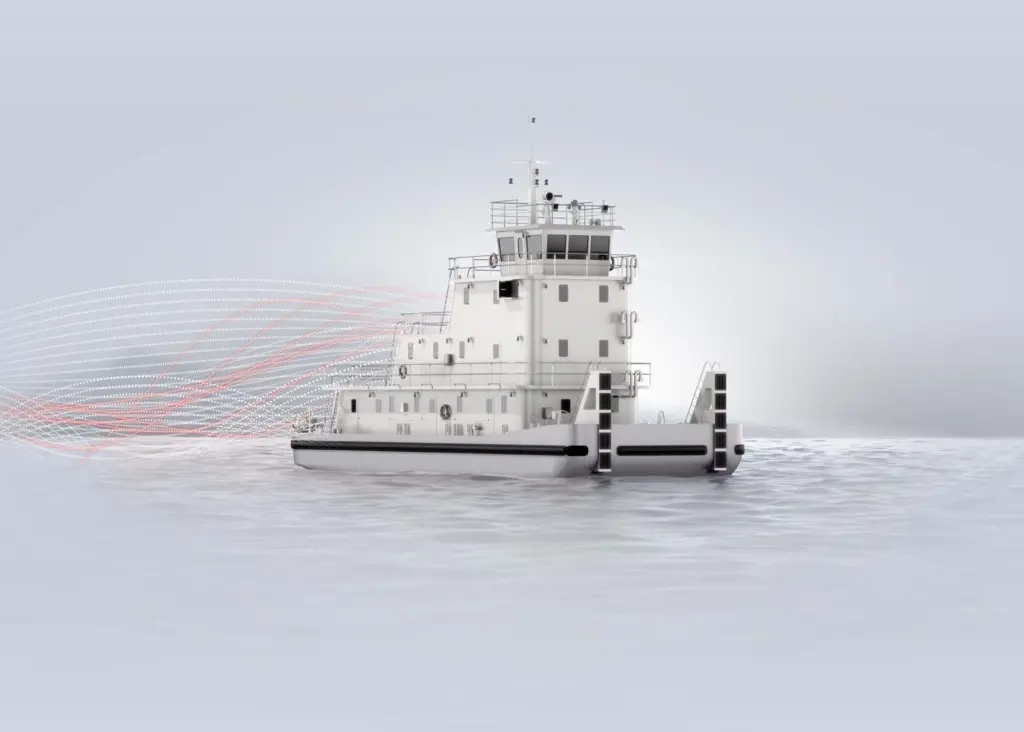
The US ports emissions clean-up is now in place across the country and emissions expectations have moved to inland waterways, which play an important role in transporting cargo inland from ports following efforts to reduce emissions from road haulage.
New inland river fleet vessels must comply with engine after-treatment systems and ABB claims its ETB (Electric Towboat) design offers high efficiency through a wider design point which enable reduced fuel usage and costs.
The ABB ETB towboat has an ABB electric propulsion system that includes generators, propulsion motors, low voltage switchboards and automation and can be optimised when in standby mode, moving empty or full barge loads and when travelling up river, down river and in high water.
The vessel can be designed as both a Z-Drive and conventional propeller vessel and has multiple prime movers which means if an engine fails the vessel can remain in service at a reduced capacity. Redundancies also eliminate single point failure removing a vessel from service, said ABB.
Owners can standardise engines through multiple horsepower vessels, while the automation enables unrestricted planned engine maintenance.
In October, a fleet of 43 27ft passenger boats powered by electric propulsion systems from Torqeedo were deployed on the River Walk in San Antonio, Texas.
The propulsion system includes a Cruise 10.0 electric outboard engine and 16 Power 26-104 lithium batteries and is designed for automatic recharging with a built-in shorepower connection onboard, though the boat can operate up to 12 hours without recharging.
With a 12kW peak output and 10kW continuous output, the propulsion system includes remote throttle and steering connections.
Related Articles
 ALTERNATIVE FUELS GREENPORT
 OPERATIONS
 ALTERNATIVE FUELS GREENPORT