![PortStrategy[GreenPort]](https://www.portstrategy.com/wp-content/uploads/2026/09/PortStrategyGreenPort.svg)




Shipping fees crackdown
The US is clamping down on shipping fees as ports continue to experience congestion.
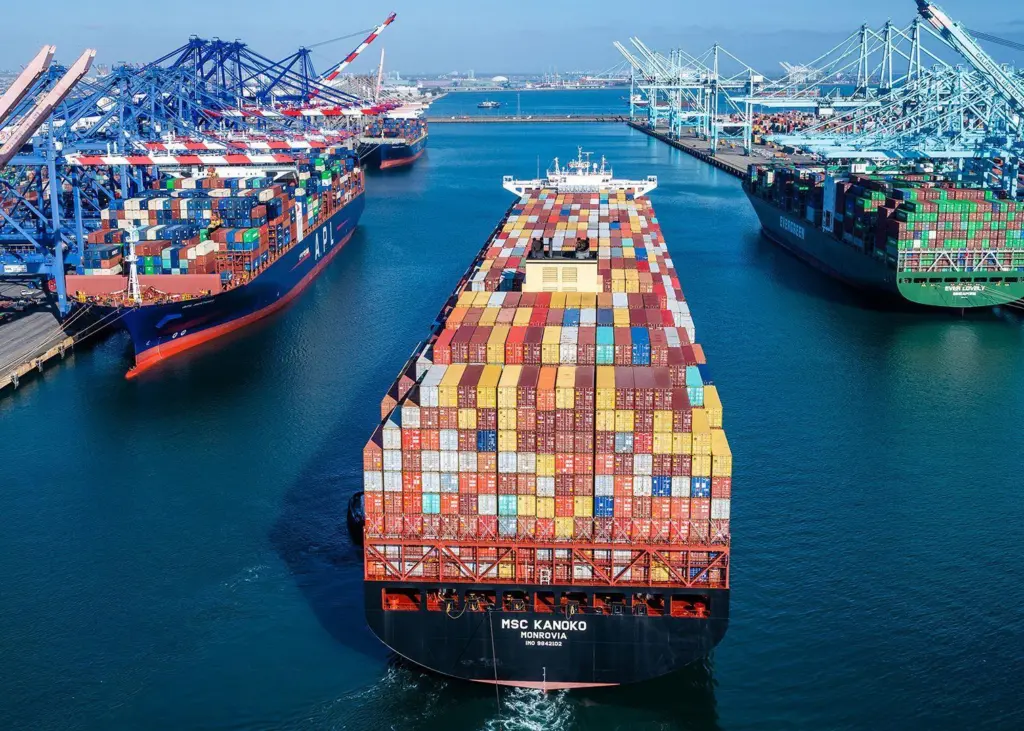
As part of the new Executive Order on Promoting Competition in the American Economy, President Biden ‘encourages the Federal Maritime Commission to ensure vigorous enforcement against shippers charging American exporters exorbitant charges’. The order follows continued congestion at US ports, particularly on the west coast.
The White House noted the increasing consolidation that has occurred in maritime shipping in its Executive Order release on 9 July. It said: “In 2000, the largest 10 shipping companies controlled 12% of the market. Today, it is more than 80%, leaving domestic manufacturers who need to export goods at these large foreign companies’ mercy.
“This has let powerful container shippers charge exporters exorbitant fees for time their freight was sitting waiting to be loaded or unloaded. These fees, called “detention and demurrage charges,” can add up to hundreds of thousands of dollars.”
Double approach
At a White House press briefing on 8 July, Press Secretary Jen Psaki discussed how the Executive Order would tackle both rail and shipping prices.
“On international shipping, the executive order calls on the Federal Maritime Commission to crack down on unjust and unreasonable fees and work with the Justice Department to investigate and punish anticompetitive conduct.”
Addressing domestic freight rail, Psaki said the executive order urges the Surface Transportation Board to allow shippers to “more easily challenge inflated rates when there is no competition between routes”.
Psaki stated: “Many freight routes are monopolized because they’re served by a single railroad. Three foreign-owned shipping alliances now control more than 80 percent of the market.”
She added: “That concentration has contributed to a spike in shipping costs and fees during the pandemic. For example, the index price to ship one container has gone up eightfold. And shipping container companies have charged companies massive fees while their goods sit at ports.”
Related Articles
 PORT & TERMINAL NEWS
 PORT & TERMINAL NEWS
 OPERATIONS