



Significant LNG project in Sweden
A Swedish LNG project has been recognised by the European Union as having the potential to significantly contribute to market integration and competition, enhance the security of supply and reduce CO2 emissions.
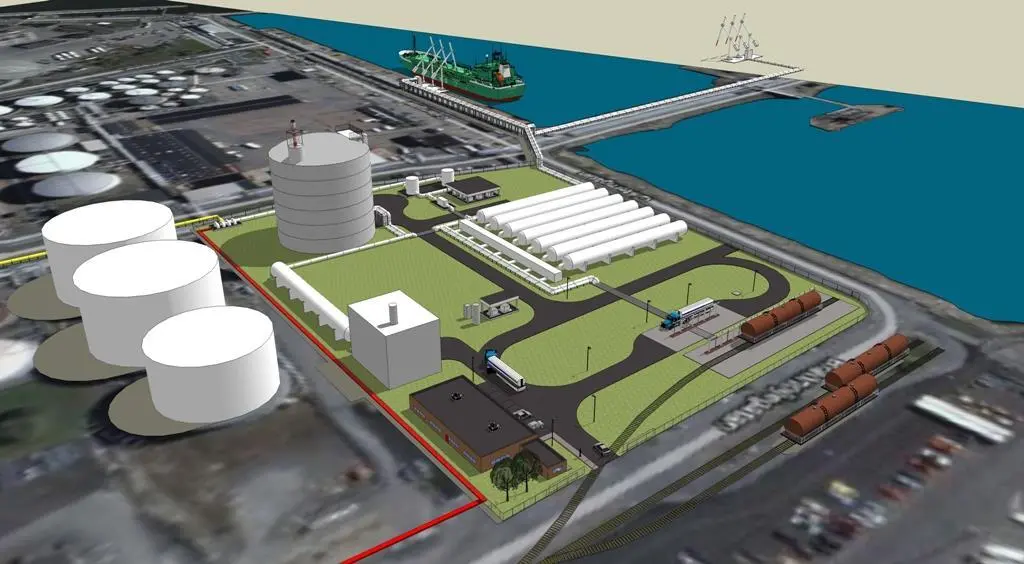
The planned LNG terminal at Gothenburg to be built by Swedegas and Vopak in cooperation with the Port of Gothenburg is among the list of 248 Projects of Common Interest (PCIs) which could get funding under the Connecting Europe Facility (CEF).
Gothenburg’s new LNG terminal is part of a project being run together with Port of Rotterdam and Gasunie to create an efficient LNG infrastructure between Sweden and the Netherlands. The project recently received €34 m in EU funding in the form of a TEN-T grant.
Saila Horttainen, spokesperson at Swedegas, said to GreenPort: “At the moment the Swedish gasmarket is dependent on the one pipeline from Denmark. Today natural gas only accounts for 2 to 3% of the energy mix in Sweden. But this new terminal will contribute to open up the market in Sweden. In addition, the terminal will be the country’s first open access terminal where any gas seller can book capacity offering customers the best market price.”
“At the moment Sweden is recognised as the market with least flexibility in the EU. There is a need to build better storage capacity and to improve security of supply.”
The terminal will have access to the national grid, owned and operated by Swedegas, as well as rail and road meaning that LNG can be transported across the country to build a new market in Sweden. And the infrastructure being built today can also be used for biogas meaning that large scale production plants in Gothenburg and the south of Sweden will be incorporated into the grid.
One of the primary aims of the LNG Terminal is to meet the stricter EU sulphur emission requirements that will be imposed on shipping. Swedegas says that construction could start next year with completion in 2015 prior to the new sulphur emissions regulations coming into force.
The EU has estimated that infrastructural investments totalling €200bn are required to achieve the energy and climate goals for 2020. The PCI process is a means of highlighting and rewarding projects that give customers value for money in an integrated market.
Related Articles
 ALTERNATIVE FUELS GREENPORT
 ALTERNATIVE FUELS GREENPORT
 ALTERNATIVE FUELS GREENPORT