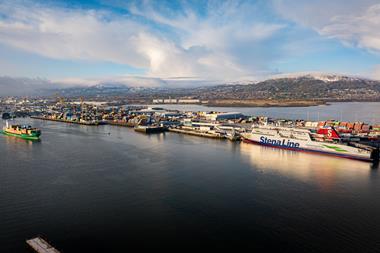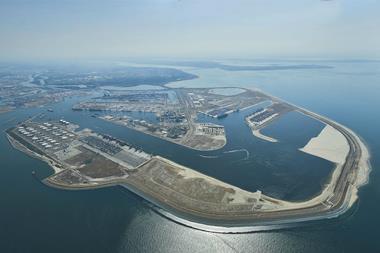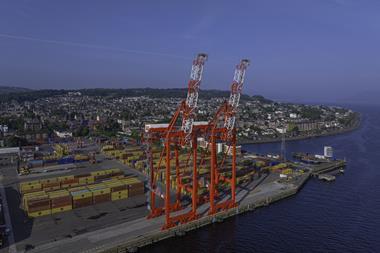
The Port of Klaipėda has plans to develop a new largescale terminal before the end of decade. AJ Keyes assesses the viability of the project
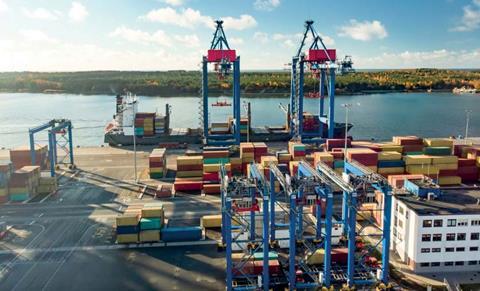
The Port of Klaipėda is one of the more northerly ice-free ports in the Eastern part of the Baltic Sea – it primarily serves industrial regions to the east of Lithuania. Despite the loss of cargo opportunities to Russia, Klaipėda saw record growth in container handling, with an increase of 57 per cent in 2022 compared to 2021.
This strong growth was due to additional activity from Mediterranean Shipping Co (MSC), which also chose to utilise the port for some transshipment cargo, even returning the containers back to the Polish market, especially for US trades. Access to other markets, including Pakistan and Ecuador, were also confirmed by the Port Authority as contributing to recent demand.
Yet is this sufficient to commit to a major new large-scale terminal development project?
Well, the port can claim several important competitive factors supporting future demand. Despite its location it guarantees uninterrupted shipping and cargo operations, unlike Russian ports like St. Petersburg (before the current economic sanctions on the country decimated its cargo activity).
The port is served by two railway stations and highways which together link Klaipėda to Kaunas, Vilnius, and cities in the nearby countries, such as Minsk, Kyiv, and Moscow. However, the ongoing conflict in Ukraine instigated by Russia continues to curtail cargo flowing to and from many of these locations.
There are two existing terminals where containers are handled, although the limited berth depths of 11m restricts the size of ships that can call. The depth issue has, however, been partially rectified because the port waters and entrance channel dredging project that began at the port in 2020 has been completed, with 15.5m now the depth of the Port of Klaipėda ship channel.
FURTHER DREDGING
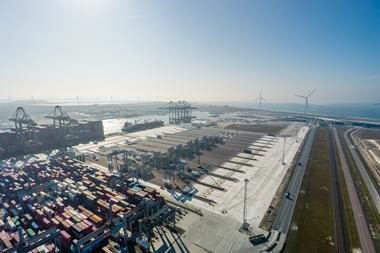
According to the Klaipėda State Seaport Authority strategic plan, further dredging of the port waters to a depth of 17m is planned for 2026, which links with the South Port project so that transshipment and import-export containers can be targeted, while also supporting the offshore wind industry.
The project will see between 70ha and 100ha at the Southern part of the port developed, with the initiative ultimately providing a continuous quay that stretches 1300m, and an entrance channel of 200m in length and 600m wide.
So far, the infrastructure seems to be ticking all the necessary boxes. There is also a confirmed timeline for the project, at least to 2028 according to the Port of Klaipėda, which highlights that the very earliest that any cargo movements could commence is from 2029 onwards.
Table 1 outlines the various activities to be undertaken and when each is currently slated to occur. An in-depth market study will be crucial in outlining the projected demand to support the planned facility. Assuming this process generates a positive range of cargo forecasts that can support the planned capacity of the facility and ensure a sufficient rate of return for investors, then construction could occur between 2026 and 2028. Again, this is assuming all technical documents are finalised and all required permits are in place.
Based on these projected timescales, the earliest estimated start for operations will be 2029. So, will there be sufficient container volumes to warrant this project?
Table 1: Klaipėda South Expansion Plan Timescales
| Date | Activity |
|---|---|
|
2022-2024 |
|
|
2025-2026 |
|
|
2025-2026 |
|
|
2026-2028 |
|
|
2029+ |
|
Source: Dates and activities from information outlined by Klaipėda State Seaport Authority
The Klaipėda South port is clearly a largescale project that will add additional container space and deeper water for larger ships. It is clearly an ambitious plan, with the need for an additional facility adding in excess of 1 million TEU per annum extra capacity, somewhat questionable.
Container activity at the port in 2023 and over the short-term thereafter will ultimately dictate whether this extra space is needed for containers. Since 2014, container volumes have increased by 11.1 per cent per annum to the end of 2022, but this is due to MSC helping the 2021 total of 667,000 TEU jump to 1.05 million in 2022.
This level of growth will need to be maintained for the planned new facility to be commercially and economically viable. Clearly, the limited local Lithuanian cargo base will be insufficient to fill this capacity by itself, with this further underlining the necessity of establishing a regional transit and transshipment role.