



ETS: Complex, costly and changing
The European Union’s Emissions Trading System (ETS) became applicable to shipping from January – just as the crisis in the Red Sea was escalating. Felicity Landon addresses the key points
The introduction of the EU’s Emissions Trading System (ETS) for shipping already came with daunting new mountains of admin and significant uncertainty. There are complex issues and questions still not resolved, and that’s quite apart from the significant new costs involved. which themselves cannot be pinned down, and the threat of hefty fines for non-compliance.
Could this new carbon tax lead to a transhipment merry-go-round and/or entirely new trading patterns? Would owners simply deploy their best quality tonnage in Europe and send the rest elsewhere? Might some ship owners even opt out of Europe altogether?
Suddenly, the Houthi attacks in the Red Sea have thrown it all up in the air. At the start of the year, Lloyd’s List Intelligence reported that diverting away from the Suez Canal and around the Cape of Good Hope could cost up to US$1 million per voyage in ETS costs for certain container ships, as faster speeds and longer distances nearly double CO2 emissions. “Carriers will pass on the cost, but emissions will rise at a bad time for an industry trying to be greener,” said the report.
Under the EU ETS, ship owners must verify and report emissions data for every vessel of 5,000 gt and above entering EU ports. Owners are required to open a Maritime Operator Holding Account to transfer and surrender EU Allowances (EUA) – carbon credits – which must be purchased. However, the EUAs themselves are traded on the free market and therefore subject to price volatility.
Shipping companies must purchase EUAs for 10 per cent of emissions from voyages between EU ports or for ships docked at an EU port; or 50 per cent for voyages between an EU and non-EU port. The system is being phased in; 40 per cent of emissions reported in 2025 (for 2024) must be covered by EUAs. That rises to 70 per cent in 2026 (for 2025 reported emissions) and 100 per cent in 2027 (for 2026).
The rules apply regardless of the ship’s flag, and there are some strange winners and losers in the whole picture.
CONTAINERSHIPS MOST EXPOSED
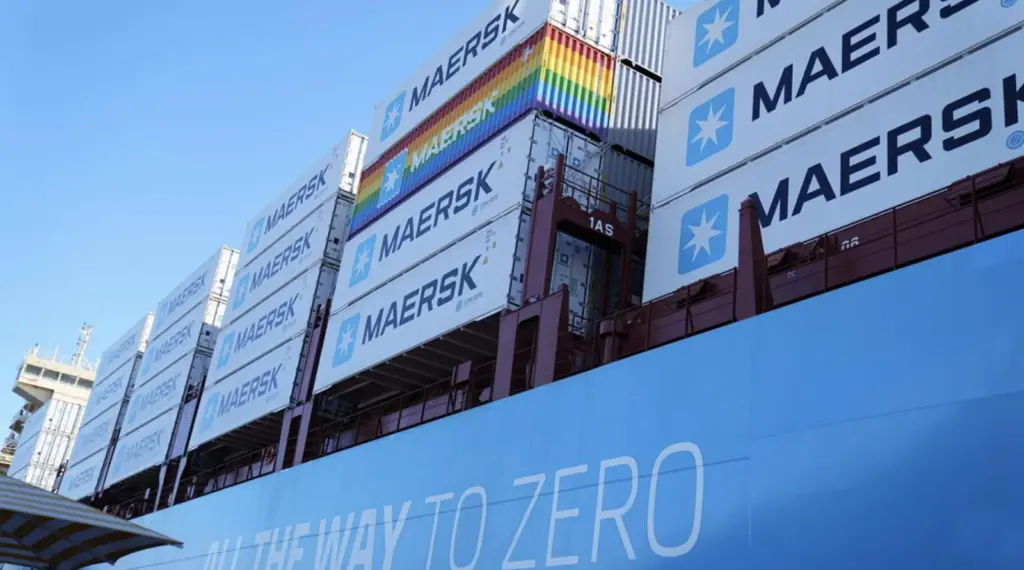
Albrecht Grell, Managing Director, OceanScore, which offers an ETS management solution, says container ships are the most exposed to the system, accounting for 28 per cent of the total EUAs required by the industry, due to their size and speed. The most expensive according to vessel type will be ro-pax and cruise ships, he notes.
As for the proceeds of the ETS, 10 per cent of the total is destined for an EU fund for sustainability projects for shipping. Another 10 per cent will go to the EU’s social fund. The remaining 80 per cent goes “straight into national state coffers”, based on some complex calculations – with Greece, Germany, the Netherlands and Cyprus set to benefit the most.
The first winners within this 80 per cent are wherever the ship owner is based in the EU, or where the manager responsible for ETA compliance is based. In second place, where the owner or manager is outside the EU, the funds go to the state according to which port the vessel has made the most calls in the past five years. This would make the Netherlands a strong winner, said Grell. He said there might be an incentive here for states to attract more ship calls to a particular port in the hope of bringing in more ETA money for the treasury.
Overall, he says, “less efficient tonnage will suffer and more efficient tonnage will suffer less”. He said trading patterns will change but he does not see or expect substantial evasive behaviour. “Our experience is that shipowners are not obsessed with avoiding these fees. It is about making sure they work in an efficient way.”
There were fears last year that one unintended consequence would be a mass shift of container carriers from EU transhipment hubs to hubs just outside the EU in the hope of cutting the liability to 50 per cent. In this scenario, the big losers would be the southern EU ports in the Mediterranean. However, towards the end of last year (2023), the EU addressed these concerns, setting out criteria which designated Tanger Med and East Port Said as official ‘neighbouring transhipment ports’ and therefore included in the ETS regime.
Martin Crawford-Brunt, CEO at Lookout Maritime and decarbonisation lead at the Baltic Exchange, said people have been “kicking the tyres” on potential diversions. “But the EU has a reasonable handle on it and understands liner shipping. It’s now official that Tanger Med is considered an EU port call.”
Yes, in theory (and notwithstanding the regional tensions), a container ship could take a stop in Saudi Arabia or Dubai and tranship from there to Europe. “But at a certain point, all the hassle of doing that negates the cost being saved,” says Crawford-Brunt. He suggests there might be a move to truck goods out of the EU from Greece into Turkey for onward loading (and vice versa). “But again, there are a lot of diminishing returns.”
He believes there is “a substantial incentive to cheat – and shipping is nothing but creative”.
“I wouldn’t advocate it, of course. But if it does happen, it leaves the more established players that have reputations to manage in a less competitive position. But this is short-termism, because the regulator has a very long memory. No one responsible, identifiable and professional would try it.”
Shipping lines were already publishing a range of surcharges to cover the ETS costs towards the end of last year. Now, of course, with the Suez Canal having waved goodbye to nearly a quarter of ship transits due to the Houthi attacks, all bets are open.
Related Articles
 PRODUCTS & SERVICES
 OPERATIONS
 PRODUCTS & SERVICES