



Gaining a life extension
Experience in the arena of STS crane upgrade/refurbishment has come on leaps and bounds. John Bensalhia charts the progress and expanding range of possibilities
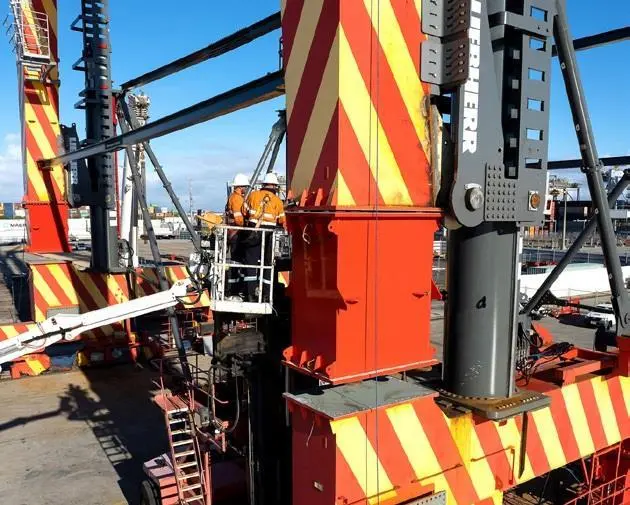
Extending the life of a ship-to-shore (STS) container crane through upgrade and/or refurbishment is a development option open to ports and terminals that is progressively being taken. It is both a path to “getting even more out of what you have got” and frequently the most cost-efficient option. This applies across the board with STS cranes remaining in their original workplace or being redeployed or sold-on for use elsewhere.
The importance of a crane refurbishment/upgrade for STS units and for cranes generally has recently been acknowledged by crane supplier Liebherr which has launched a major new initiative in this sector of activity.
“Liebherr Transform is a new crane upgrade, modification and overhaul service for Liebherr Maritme Cranes,” explains Trevor O’Donoghue, Marketing Manager, Liebherr Container Cranes Ltd. “It is a range of ingenious upgrades, clever retrofits, machine overhauls and service modifications to breathe new life into customers’ existing machines. Our customers,” he elaborates, “already own some of the best container handling equipment and Liebherr Transform, through a series of hardware and software upgrades, using the latest available technologies, will unleash the full potential of the cranes. A team of dedicated engineers and technicians are on hand to custom design and implement the solutions.”
For Liebherr’s refurbishment contracts a project management structure is in place to ensure site work is planned and resourced correctly, with detailed method statements available in advance. Liebherr’s OEM design expert knowledge aims to ensure the upgrade and/or refurbishment project can be implemented as efficiently as possible on site.
As an example of this, O’Donoghue notes: “With our patented STS lift height extension system, we can increase the lift height of a crane in 4-6 weeks. Our system has minimal operational impact and does not require larger auxiliary equipment. We have a quality management system in place,” he elaborates, “to ensure components meet the design requirements and that there are no technical issues when it comes to installation.
“Continuous communication with all stakeholders ensures the smooth running of the project and a clear understanding of roles and responsibilities.”
Konecranes takes a turn-key approach across all modernisations. Jose Antonio Martinez, Product Manager, explains: “We conduct a rigorous inspection of the crane and quay, followed by stability calculations, and then we produce a functioning 3D model of the entire set-up.
“Once the project moves into the manufacturing stage, we ensure as many components are built in-house as possible and avoid delivering separate components to the customer’s site. This limits the impact of the project on our customers’ day-to-day operations.”
FOLLOWING PROCEDURES
Paceco’s Troy Collard says that there are many procedures that can be followed to achieve smooth refurbishment:
“Ensure the equipment, components, and labour are ready before commencing the work. Constant communication with the terminal is very important – for instance, about their vessel schedule and traffic that might affect the work progress. It is also important to co-ordinate with the owner and the subcontractors well. Plus, consider night shifts, and provide a buffer and critical path when planning the schedule.”
For a port to qualify for an STS crane refurbishment project, Martinez underlines that the business case must make sense. Effective payback is a pre-requisite. Also, considering the proposed upgrade/refurbishment in the context of the long-term marine plans of vessel operators with special reference to phased increases in vessel size including the impact of vessel cascading.
“Finally, we encourage customers to think about “the whole yard”,” comments Martinez. “If they are planning yard automation in the future, then it would make sense to look at expanding the scope of the STS refurbishment to also accommodate our “Path to Automation” approach.
“The condition of the crane structure, handling capacity, and the cost comparison of replacing the old cranes with new ones are the key criteria to determine if the crane upgrade/refurbishment is worth it,” observes Collard. “In today’s market, the cost of materials and shipping has soared to new levels, making crane modification more attractive to terminals and pushing out investment in new equipment to when inflationary pressures may have subsided.”
OPTIONS AND EXPERIENCE
Before crane upgrade takes place, Konecranes undertakes a rigorous inspection of the complete structure. “Our experts take note of weak points of wear and tear, which can then be reinforced during modernisation,” says Martinez. “This already adds one to two million moves to the lifetime of the crane,” he suggests.
By lifting or “giraffing” an STS or extending its boom, Martinez explains that the crane’s worth immediately increases, as it will be able to service higher and/or wider vessels, adding value to the terminal’s operations and facilitating a strong return on investment (ROI).
Overall, there is a fairly wide range of options customers can select from when pursuing crane upgrade or refurbishment.
O’Donoghue says that these depend on the values/benefits the customer wants from the crane post upgrade. Typical options include: reduction in energy consumption; ability to handle larger vessels, increased automation features or the adoption of modern supportive HMI/CMS systems. “With Liebherr Transform, our customers benefit from making their cranes faster, smarter, stronger, greener and ultimately better,” he says.
Liebherr’s recent projects include increasing the lift height and outreach of an STS crane at Patrick Terminals, Brisbane facility. It has also extended the outreach of Liebherr STS cranes in the ports of Southampton and Helsinki. At Luka Koper, Slovenia, Liebherr will fit additional checkers cabins, platforms and lift landings to its cranes.
Paceco has undertaken some notable STS crane refurbishments. These include work on three MGM Cranes at the Matson Terminal, Sand Island, Hawaii. The work included converting the existing 2.4 kV bus bar system to a new 11.5 kV cable reel system to power the cranes; replacing all 2.4 kV electrical components with 11.5 kV elements and integrating a new VFD and cable reel system into the existing ABB control system.
At the ITS Terminal Long Beach, USA, Paceco undertook ‘giraffing’ and boom extension work on three MES-M cranes. Height was raised by 25 ft 4in and crane outreach increased by 2ft 6 inches with this accomplished by solutions like the installation of a jacking tower with a jacking system applied to the crane and new leg extensions fitted.
THREE KEY CATALYSTS
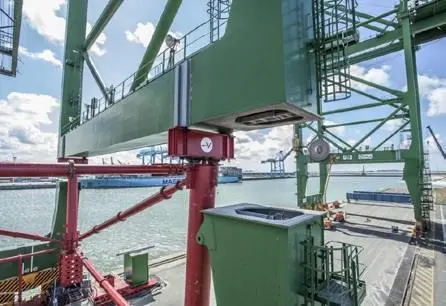
There are three main catalysts driving crane upgrades/refurbishments.
The sustainable use of resources is a big factor. “It is a very attractive option for terminals looking to do more with what they have and make a positive impact on both their carbon footprint and their bottom line,” says Martinez. Similarly, O’Donoghue notes: “We see a big drive towards greener cranes and the ability to reduce port carbon emissions.
Responding to larger vessel deployments also continues to be important, although there has been considerable work already undertaken in this area. As O’Donoghue notes: “With ships becoming larger the ability to increase the size of serving STS cranes – height/outreach etc – is critical for ports to maintain their competitive advantages.”
As an example, crane builder ZPMC increased the height of three STS cranes at Hutchison Ports’ Barcelona Europe South Terminal (BEST) by five metres. The process was completed in just five weeks, causing minimum disruption to operations. Likewise, four cranes at PSA Belgium were raised in height, with work also carried out in accordance with a tight schedule.
Advances in digital and data technology are also encouraging crane refurbishments. Italian Terminal Darsena Toscana has installed Orbita technology in six of its cranes as a means of using the latest AI technology to enhance operational processes. Orbita’s CraneCCR system was installed as a means of controlling the crane and to constantly monitor the spreader and identify the crane’s various movements. CraneCCR has been specially adapted to optimise the conditions of image captures, offering detailed visuals of important aspects of container handling, including ID numbers and ISO codes.
Twenty one cranes at Panama’s Manzanillo International Terminal will be augmented with ABB’s Optical Character Recognition Systems to enable automated container information handling. Vital container data can reach a Terminal Operating System in close to real time. The system includes software that can identify container numbers, with a camera system detecting door direction, bolt seals, and hazardous material labels.
“As cranes become more technically complex, the modernisation and upgrading of computer components will become more common. This will become a built-in replacement cycle that ensures the crane, while retaining its existing steel structures and mechanical components, remains as connected and “smart” as any rolling off the factory floor,” says Martinez.
“The world has also become digital with data-based decisions becoming the norm,” concludes O’Donoghue. “Retrofitting a modern PLC, HMI, or CMS to older cranes allows ports to use data to make informed, operational decisions.”
Related Articles
 DIGITAL
 PRODUCTS & SERVICES
 PRODUCTS & SERVICES