

New strategies and markets
Changes are underway in the international dredging market – there is a growing emphasis on new generation project funding arrangements and exploiting new areas of business opportunity. AJ Keyes investigates
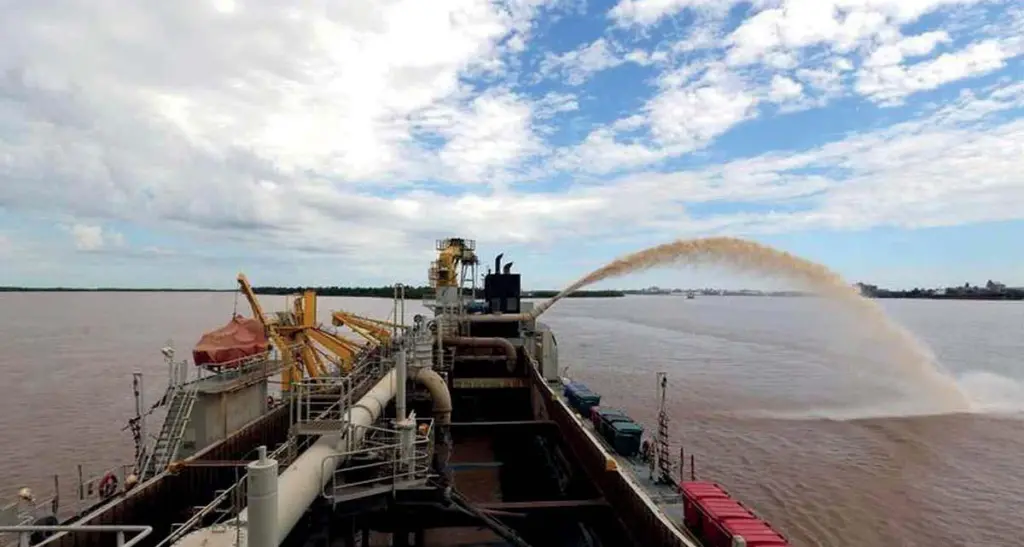
Today’s front rank international dredging contractors have a lot more tools in their armouries when it comes to securing projects and in key markets are seeing the opening up of new areas of business opportunity.
Step by step, there is growing interest in deploying equity investment, use of tolls and other innovative approaches as a path to securing projects, sometimes supplemented in part by the conventional contract-payment relationship. There is more flexibility when it comes to agreeing payment arrangements – the equity option, potentially at least, also offers the prospect of what can loosely be termed a project bonus via the process of adding value and then at the appropriate moment exiting the project. The toll system of payment – based on fees collected from vessel operators – has also matured progressively since its introduction in the early 1990s, in conjunction with a concession for the dredging and development of the waterway between Punta Indio on the River Plate and Santa Fe on the Parana River. Elements in such concession agreements like a greater focus on dredging performance and the resulting accountability of the contractor have been introduced and refined with significant benefits to waterway users.
The volume of dredging work continues to flow from traditional sources with a catalyst, where major projects are concerned, provided by the new model funding arrangements. It is true to say that they make some projects viable which were not previously regarded as being ‘doable.’ There are also positives in sight from a diversification of activity, notably with a number of dredging contractors gearing up to undertake specialist work in the offshore wind sector. The war in Ukraine has accelerated the need for energy diversification, especially when combined with a drive for clean fuels. It all adds up to growing opportunities for dredging contractors.
PARANA-PARAGUAY OPPORTUNITY
Now in the pipeline are new dredging opportunities which embody non-conventional funding arrangements – the concession agreement is one flagship vehicle in this respect. A good example of this is the 3400km-long Paraná–Paraguay waterway that links the Paraguay, Paraná and La Plata rivers, across Paraguay and northern Argentina to the Atlantic Ocean. The importance of this waterway to Argentina, in supporting the largest agri-food production area in the Mercosur trading bloc, can be traced back to 1995 when permission for dredging was given to deepen the water depth for larger vessels as part of a concession secured by Belgium’s Jan de Nul and Argentine partner, Emepe. As a result, exports of grains, oils and related products increased from 29 million tonnes to 100 million tonnes annually on the basis of ships carrying around 47,000 tonnes per sailing, but larger ships could carry between 65,000 and 70,000 tonnes per vessel.
However, for greater economies of scale in export shipments to be achieved a new concession needs to be arranged because the existing one expired in 2021, resulting in the government placing the matter into the hands of its own General Administration of Ports (AGP) until a new bidding process is completed.
The need for the investment to deepen this waterway is confirmed by Gustavo Idigoras, President, Chamber of the Oil Industry of the Argentine Republic and Cereal Export Centre (CIARA-CEC): “Deepening of the waterway through dredging will allow ships of greater draught to enter, which would reduce costs and will imply giving access to the sea to producers from Argentine regions that today do not have access to it due to economic reasons.”
Additionally, Alexis Guerrera, Transport Minister, Argentina, recently noted that the state is: “obliged to update the waterway” directly.” As a result, the management of the waterway, and the responsibility to meet the necessary dredging costs, remains with the General Administration of Ports (AGP), but as the organisation does not have the capacity to undertake the service, it must continue to subcontract it out to specialist companies.
In the short term, the solution is to maintain the status quo, with AGP extending the current arrangement with Jan de Nul until the bidding process is completed. In Q4 2022, the government confirmed the following: “Regarding the dredging, a short-term contract will be made for Jan de Nul to continue for a while, as the tender will be launched at the same time. It is already agreed that it will continue with Jan de Nul.”
The value of the next concession contract is put at in excess of US$3.7 billion. It is expected to be hotly contested with bidders in consortia, operating with local partners and possibly solo originating from Europe, Asia, Latin America etc. There are issues surrounding the collection of tolls. One is will this function be retained by AGP, who took it over at the end of the last concession or will it be passed to the successful bidder? Equally, there are now diplomatic issues to resolve concerning toll collection with at the beginning of January Paraguay calling for Argentina to cease collecting a new toll that had been applied to the Parana-Paraguay Waterway. It remains to be seen how Paraguay’s call for free navigability will be resolved.
The outsourcing of dredging works is also an aspect that raises issues. Idigoras states concerns about what the future holds: “It is imperative that the State offer guarantees to maintain the dredging.” It is a valid point, of course, – previous arrangements on these waterways have seen contributions from government alongside toll fees and this option may well also come under consideration.
Concerns are also expressed by exporters about the potential uplift per ton-based toll fees. In short, there are lot of issues circulating around the proposition of a new concession.
MAGDALENA RIVER
There is a similar choice to be made in Colombia, with the government assessing its options regarding the US$480 million project to improve navigability on the Magdalena River which runs over 1500km from the Andes to the Cartagena area and thus the Caribbean Sea. Cartagena is, of course, a major containerport location and as such there is an inevitable logic to using the river for container transport as well as for other commodities. The river offers the potential to establish key inland hubs serving as major regional distribution points.
Constantza García, Deputy Infrastructure Minister, confirms that the government will continue to invest in keeping the river navigable and elaborates on the government’s stance: “We are evaluating whether it is a public work or if we return to a public-private partnership. Today we’re leaning more towards a public work to carry out the civil works that are required, to dredge the river and the channel.”
The 2023 governmental budget offers some support, with 183 billion pesos (US$37 million) allocated towards dredging in the country, of which almost 90 per cent will go towards the Mompós area, some 120km upriver from open water. This is despite the waterway itself totalling 1500km in length.
This is a small figure, especially when the majority of the funding is expected to be spent in one specific area. With the pre-bidding documents to support the contracting process for the Magdalena River navigability including ‘revenues from the collection of fees for the use of the canal,’ there is an appealing mechanism open to candidate contractors.
There is also a bigger pool of experience to draw on nowadays including in Ecuador. Jan De Nul Group has the concession contract for the deepening and maintenance dredging of the 95km access channel to the port of Guayaquil in Ecuador. The company operates and maintains the channel under a 25-year performance-based concession contract. The deepening and maintenance of the channel system is financed by Jan De Nul Group and recuperated by tolls.
THE EQUITY OPTION
The concept of taking an equity stake or making financing available is an established one for China Harbour Engineering Company (CHEC), with this company already investing in Laem Chabang Port Phase 3, terminal F with a 30 per cent equity stake in the new US$1 billion project and a US$221 million contribution as majority shareholder involving Lekki Port in Nigeria. That said, the company has not been without its controversies, with its involvement in the Port of Hambantota in Sri Lanka, resulting in it being debarred by the Word Bank for bribery, according to several reports in the international press.
There may also be new additions to the global dredging business. State-owned Dredging Corporation of India (DCI) has announced a move into global activities, following a dredging contract in Mongla Port in Bangladesh, a port accessed via a long river system which will require ongoing dredging maintenance. The port is situated at the confluence of the Pashur River and the Mongla River and lies about 100km north of the Bay of Bengal
WIND OF CHANGE
Evolving strategies relating to accessing dredging projects is not the only area where dredging contractors are seeing interesting developments. More opportunities are now coming to the fore in the offshore wind industry representing a healthy area of business diversification. Indeed, during 2022 a number of projects in this sector have been confirmed or seen considerable progress made.
In November 2022, Van Oord confirmed it had been selected as preferred contractor to construct the Baltic Power offshore wind farm, located 23km off the coast of Poland. Here Van Oord will transport and install more than 70 foundations, consisting of a monopile fitted with a transition piece. Construction of the farm is planned to start in 2024, with commissioning from 2026, whereupon renewable energy will be supplied to 1.5 million homes in Poland.
Additionally, during Q3 2022, Van Oord and Subsea 7 secured a contract from ExxonMobil affiliate Esso Exploration and Production Guyana Limited (EEPGL) for the Gas to Energy project, offshore Guyana. The consortium’s scope includes project management, engineering, and installation of approximately 190 km of natural gas pipeline in water depths up to 1400m, running from the Liza field in Guyana’s offshore Stabroek Oil and Gas Block to an onshore natural gas fired powerplant west of the Demerara River, along the coast of Guyana. Operations are scheduled to commence in mid-2023.
DEME and Jan de Nul also report significant offshore wind projects and with diverse catalysts now encouraging further similar projects. The prospects overall look good.
Related Articles
 SOUTH AMERICA
 PORT & TERMINAL NEWS
 PORT & TERMINAL NEWS