



Paita’s agri-product play
The northern Peruvian port of Paita is making its mark in the agri-products export business and there are expectations of even better things to come. Rob Ward reports
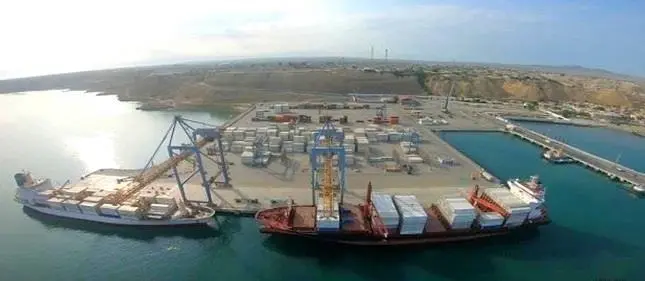
Until a few decades ago the main claims to fame for the north Peruvian town of Paita were that it was the birthplace of both John Wayne’s wife, Pilar, and Manuela Saenz, the lover of Peruvian national hero Simon Bolivar.
But now Paita is developing a more long-lasting claim to fame; it is rapidly becoming one of the main South American export ports for fruit and veg.
Ever since a number of rivers were diverted to run away from the Amazon Basin towards Peru’s Pacific coast, agricultural exports out of the South American country have been rising.
Fruits and vegetables such as asparagus, artichokes, avocados, grapes, peppers, quinoa, organic coffee and blueberries have all thrived with the improved irrigation into northern Peru and this has been a major boon for the port of Paita.
Paita handled 332,554TEU (all containers) in 2021, slightly down from 335,000TEU in 2020, but up from 2019 (the last ‘normal’ year) when it handled 303,278TEU, according to the United Nations Economic Commission for Latin America and the Caribbean (ECLAC acronym in English, or CEPAL in Spanish).
Of those 161,060TEU were (full) exports in 2021, up from 141,000TEU in 2020 and on the full imports front, it was 16,887TEU in 2021, down from 23,951TEU the previous year. Over the past 10 years volumes have grown almost threefold.
TPE-PAITA INVESTMENT
Terminales Portuarios Euroandinos – Paita SA (or TPE-Paita) runs the container terminal in Paita, under a 30-year concession that commenced in 2009.
TPE-Paita is a consortium made up of 50 per cent Cosmos Agencia Maritima (part of DP World) and 50 per cent Tertir – Terminais de Portugal SA (owned by Yilport Holding, the Turkey-based terminal operator). Between them they have a gentleman’s agreement that one company has the overall control for one year and then the other company the next.
During the 30-year concession, TPE has committed to invest a total of US$432 million to modernise its infrastructure. Part of the concession agreement stipulates that TPE should pay for an extra US$130m of improvements once it passed the 300,000 TEU per annum barrier which it did in 2020: this includes dredging down to 14m and more reefer plugs.
TPE currently deploys two Super Post Panamax Ship to Shore Gantry cranes (65 mt capacity each), two Mobile Harbour Cranes, four RTGs, and three Reach Stackers. In view of its concentration on frozen and chilled exports, the Paita operator also has 1900 reefer plugs.
Oscar Galvez is a director with the B&M shipping agency which represents Seatrade, a Dutch company that deploys reefer vessels with space for 5000 pallets (equivalent to 250FEU) in the hold and another 150 containers (FEU) on deck, and he is a big fan of Paita.
“We operate a boutique, very fast service to north Europe, last call Paita, then Dover followed by Vlissingen, mostly fruit and this is a growing business for sure,” he told Port Strategy. “This current season for blueberries there has been a Tsunami of the fruit which starts exporting in September.
“And yet 10 years ago most of Northern Peru was desert, but then a reservoir and dam were built to re-direct fresh water to the region and now it is abundant with fruit for export.”
In the future, Paita is lined up to benefit from a Bi-Oceanic corridor that will connect Brazil and Bolivia with northern Peru (probably via the port of Ilo). This will benefit Paita too because extra vessels will be calling in the region to tranship cargoes to Asia and West Coast North America (WCNA) where markets such as Los Angeles and San Francisco are keen on Peruvian fruit.
Among the carriers currently calling at Paita for its fruit cargoes, apart from Seatrade, are: Hapag Lloyd, Maersk, MSC, Sealand, CMA CGM, Yang Ming, ONE, Cosco, Hamburg Sud, BBC Chartering and Delmonte.
And Hapag-Lloyd has certainly shown its full commitment to the north Peruvian port, launching a new Mediterranean to WCSA service (via Caribbean and Central America), called the MSW, in May of this year. This calls only at Posorja and Paita in Peru and adds only Buenaventura (Colombia) in terms of WCSA.
Hamburg Sud (part of Maersk Group) also has direct connections to north Europe with Chile as well as Peru.
Related Articles
 SOUTH AMERICA
 PORT & TERMINAL NEWS
 PORT & TERMINAL NEWS