




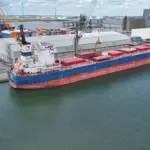

Red Sea crisis underlines need for data
Quality data is key to ensuring shipping lines remain resilient, but challenges with transparency remain, says the boss of supply chain solution specialist, Pole Star Global.

Companies have quickly evolved beyond the immediate response to the crisis in the Red Sea, says Captain Steve Bomgardner, vice president – shipping & offshore, Pole Star Global, showing the benefit of data to help firms quickly calculate the implications, both financial and human, of rerouting decisions.
“The speed with which shipping companies have responded to the crisis in the Red Sea underlines the growth of digitisation and utilisation of diverse data resources to support complex decision making,” said Bomgardner.
“But data issues, from ownership to a lack of open integration, remain a challenge,” he warned.
Despite the additional cost and delay associated with rerouting via the Cape of Good Hope, data from Pole Start shows numbers travelling through the Red Sea dropped almost a quarter in the last few months, from 830 in October 2023 to 626 in February 2024.
The experience in March 2021 when the Ever Given container ship blocked the Suez Canal causing an unprecedented shipping backlog, also provided vital insight to support rerouting decisions.
The additional time required for the Cape of Good Hope route, as well as issues of fuel consumption and emissions, were already understood. This information, says Bomgardner, is now firmly embedded in emergency response plans, enabling rapid, vessel-by-vessel decision making.
However, the benefits of rapid digitalisation are being hampered by a lack of open data and transparent ownership, he warns.
“Shipping companies need instant visibility of an array of data from multiple sources, and without open Application Programming Interfaces, integrating these diverse data resources is incredibly challenging,” he said.
“The slow, painstaking integration process is adding significant time and cost to digitisation projects, and delaying access to the consolidated information resources and analytics that have the power to transform the speed and power of decision making.
“Furthermore, as companies increasingly look to add sensors across their vessels to provide vital information to improve efficiency and safety and support preventative maintenance, uncertainties over data ownership are arising.
“The shipping company may own the sensor – but the ownership of the valuable data recorded by that sensor, the temperature, fuel consumption or engine emission reading – often turns out to have been retained by the OEM.”
Related Articles
 EQUIPMENT
 EQUIPMENT