Russia’s aggression in Ukraine is providing added impetus to generating clean energy from offshore wind in the Baltic. A J Keyes reviews the pace of development and allied port opportunities
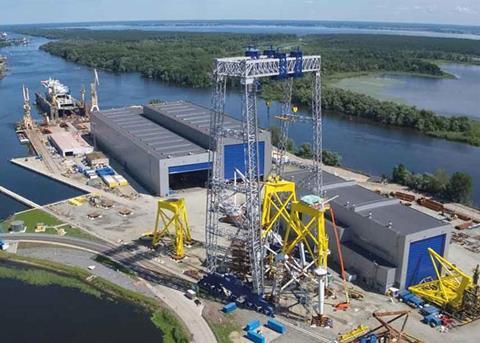
Cleaner sources of energy are gaining ground. Cheap electricity from renewable sources could provide 65 per cent of the world’s total electricity supply by 2030.
For the port industry, renewables represent growing markets to serve, and they have a crucial role to play because the demand for decarbonisation is growing at pace.
The Baltic region is certainly approaching this subject with gusto, with this recently being ramped-up by the Russian aggression in Ukraine.
With Russia halting or significantly reducing the supply of gas to its European neighbours, a total of eight countries that border the Baltic Sea, namely Denmark, Estonia, Finland, Germany, Latvia, Lithuania, Poland, and Sweden, have collectively agreed to raise offshore wind power generation capacity, in order to significantly lower their dependency on energy supplied by Russia.
Mette Frederiksen, Prime Minister, Denmark, notes: “We have agreed to increase offshore wind in the Baltic Sea seven-fold by 2030. In this war Putin is using energy as a weapon and has put Europe, as we all know, on the brink of an energy crisis with skyrocketing energy prices.”
Frederiksen further explains that the Baltic Sea currently has 2.8 gigawatts (GW) of offshore wind capacity in place, with much in Danish and German waters. Adding 20 GW will be enough to supply electricity to two million households and will take advantage of the “great potential for offshore wind,” she added, before confirming, “Putin’s attempt to blackmail us with fossil fuels is failing. We’re accelerating the green transition. We are getting rid of the dependency on Russian fossil fuels”.
MOMENTUM BUILDS
This latest news is part of a longer-term 2050 aim of Baltic Sea wind energy capacity reaching up to 93 GW, but in the short-term a reduction of over 65 per cent for dependency on Russian gas is targeted for completion by 2030. This will be achieved in conjunction with the renewables energy share increasing to 45 per cent.
This, in turn, builds on the wider EU commitment to the sector announced in late 2021. On 11 December all 27 Member States adopted Council conclusions on “fostering European cooperation in offshore and other renewable energies”. The Council welcomed the European Commission’s Offshore Renewable Energy Strategy and recognised the need for further integration of the internal energy market, asking the Commission to work on an ‘enabling framework’ for cross-border and hybrid offshore projects. Furthermore, in an allied development at the same time the council adopted separate conclusions on building a hydrogen market for Europe, supporting the Commission’s EU Hydrogen Strategy of July 2020. These conclusions stress that renewable hydrogen, produced from renewables such as wind and solar, should be given priority over other forms of hydrogen.
At an individual country level, there is also a growing commitment to the offshore renewables sector, with Denmark and Germany at the forefront.
Denmark is a recognised pioneer in the energy renewables sector and continues with its ambitious plans to reduce greenhouse gas emissions by 70 per cent from its 1990 levels by 2030, with 100 per cent of electricity from renewables by the end of this decade. This is on the back of solar and wind energy already supplying half of national electrical demand, representing the highest wind production per capita of any OECD country. Currently, there are 19 different wind-related projects planned by the government within the next five years, representing a total investment of around US$10bn.
Germany is one of the world’s leading offshore wind energy providers, with 7.7 GW of capacity, but there are confirmed, if somewhat ambitious, plans to increase this by almost 300 per cent to 30 GW by 2030 and then keep increasing to 70 GW by 2045. This means a target of 80 per cent renewable energy for its electricity consumption in 2030. To help meet the targets, recent governmental plans include a strong rise in its offshore wind ambitions with over 10 GW of new wind energy annually after 2025.
However, this may actually be a conservative estimate. The Fraunhofer IWES research institute has published a new study that explains how up to 82GW of offshore wind could be realised in the German North and Baltic Seas, through various scenarios including harnessing the benefits of new power technologies.
Regardless of the exact amount that could be realised, there is no doubt that the Russian invasion of Ukraine has accelerated plans in the sector, with Christian Lindner, Finance Minister, German Government, describing renewables as “freedom energies.”
While the majority of existing renewables facilities are in the German North Sea, where there are also a high number of known projects under further consideration, according to the Centre for Strategic and International Studies (CSIS) in Washington DC, the Baltic coast is the future focus. The CSIS says that offshore wind activities can “help revitalise coastal communities that host construction, operations, and maintenance activities.”
This is certainly true at Mukran Port in northeast Germany. The newly built Offshore Terminal South is supporting offshore wind farms, “EnBW Baltic 2” and “Wikinger” while the “Arkona Beckon” operation is underway by energy supplier, EON. The port confirmed that it has constructed a new port area solely for this industry and is targeting 25-year support services.
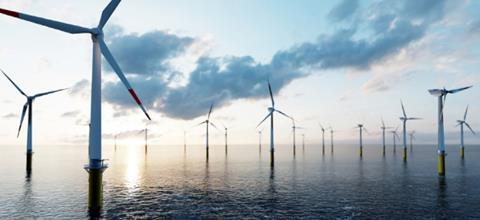
Poland also has a prominent position in the sector, with over 90 different projects. The Polish State National Energy Policy (PEP2040) assumes offshore wind energy capacity in the Polish Exclusive Economic Zone of the Baltic Sea growing to 5.9 GW by 2030 and 11 GW by 2040.
According to the National Reconstruction Plan released in Poland in 2021, Ustka and Łeba are the two ports on the central coast to offer facilities for offshore wind farms being built on the Słupsk shoal, approximately 30 nautical miles out to sea.
Eventually more than 300 turbines will be built here, but initially 100 units over 200m high will be supported via Łeba, providing power to around two million homes. The use of this port has been confirmed by Equinor, which has acquired a site here to serve as the operations and maintenance (O&M) base for the Polish Baltic Sea offshore wind projects. Together with joint venture partner Polenergia, a new base is being constructed to support the Bałtyk offshore wind projects.
Another project gaining traction is the Baltic II development. It was originally developed by Baltic Trade & Invest (BTI), before it was acquired by RWE Renewables in 2018. Construction is slated to commence in 2024, with commissioning during 2026. A service station for the operation and maintenance of this wind farm is being developed at the Port of Ustka, with a 25-year lease signed in 2021, with the aim of making sure the service station is ready by 2025.
WIDESPREAD PORT SUPPORT
The Port of Gdańsk recently launched a new tender to lease an area within its Outer Port boundaries related to the construction of an installation terminal to support an offshore wind operation that had originally been earmarked for the Port of Gdynia.
The move follows the Polish government choosing to switch the location between its two leading ports. The Port of Gdańsk expects the facility to be operational in 2025.
The Baltic Container Terminal in Gdynia has, however, already established its expertise at handling wind turbine components and has an active presence in the sector. It has achieved the status of the main hub for handling components for inland wind farm projects and is already engaged in discussions regarding offshore farm projects.
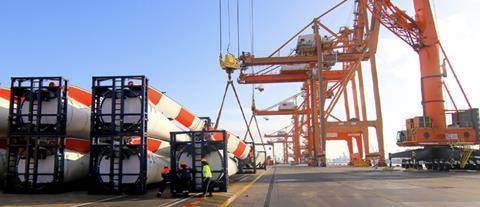
The port of Szczecin/Swinoujscie is also getting involved. The Baltic Power offshore wind farm project has prompted the development of a new terminal platform in Swinoujscie plus Vestas is setting up a new turbine factory in Szczecin. The 20ha terminal, with two quays, is expected to be operational in 2025. The quays will facilitate the pre-assembly of wind turbine towers over 100m high and weighing around 1000 tonnes each.
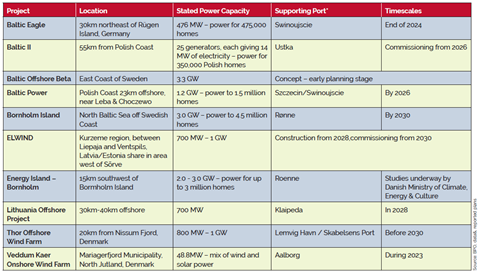
To help put the development of energy renewables into perspective, Table 1 highlights a select number of new or confirmed, largescale plans for the Baltic Sea area.
For ports in the region there are further opportunities to support a growing industry, a view endorsed by the Baltic Ports Organisation (BPO) in October 2022.
There are other projects across the region and ports will play an integral role. Latvia’s National Energy and Climate Plan is raising its current total onshore and offshore wind capacity from 70 MW to 800 MW by 2030. In September 2022, the Latvian Government stated that the Investment and Development Agency of Latvia (LIAA) will take charge of its involvement in the 1 GW “Elwind” project, an offshore cross-country development with Estonia. Latvia has in the past made some moves regarding the development of offshore wind farms but none have come to fruition – there are, however, now clear signs momentum will build.
This initiative ties in with the Port of Tallinn in Estonia spending US$56 million on a new 310m quay, with a 10ha yard area in Paldiski South Harbour to offer capacity to receive high-draft special-purpose vessels for the construction of offshore wind farms and the transport of wind turbine components, before subsequent loading to ship. Tallinn is also expected to develop maintenance facilities to support the offshore wind industry by 2028.
It is clear that the ongoing Russian aggression in Ukraine is prompting Baltic Sea countries to accelerate and expand renewable energy plans. This, combined with the other sector drivers, is presenting the region’s ports with some interesting new business opportunities.