






Terminal upgrades to facilitate LNG
The Spanish engineering consultant Ayesa will redesign the mooring jetty for the Enagás regasification plant at the Port of Huelva.
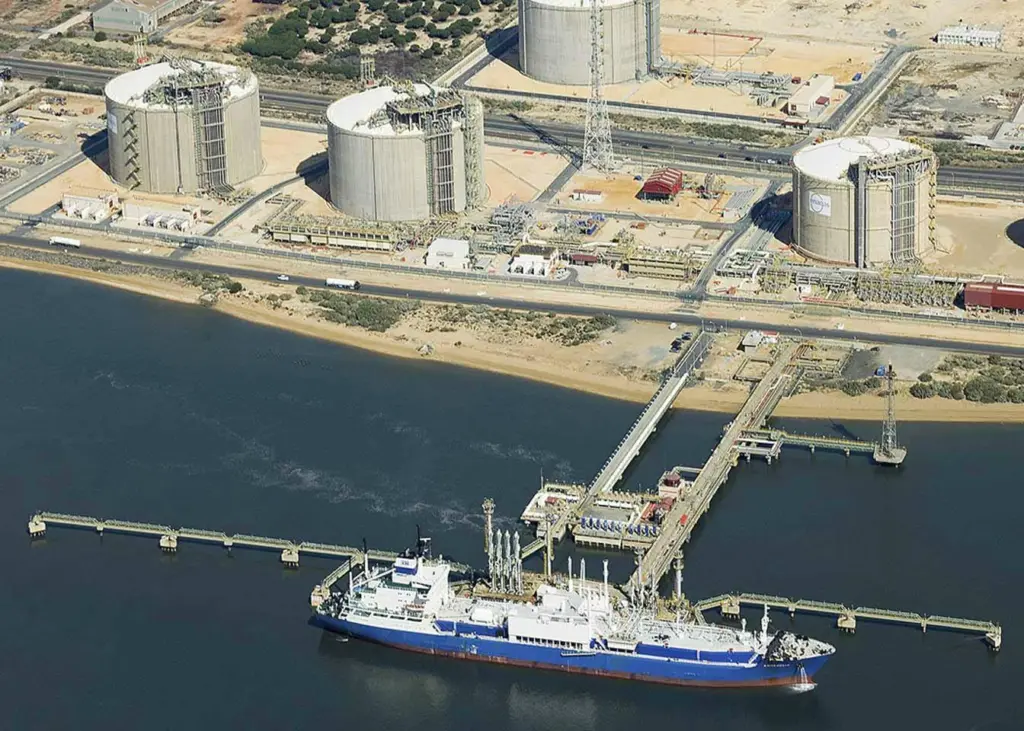
This will allow small-scale vessels to be refuelled and vessels to be loaded with LNG for subsequent ship-to-ship bunkering.
Stefan Pardo, Head of Oil & Gas at Ayesa, said that the company will be responsible for drafting the detailed engineering project, as well as the specifications for materials and equipment.
LNG ready
The mooring jetty in Huelva will be the third designed by Ayesa, following similar ones it has upgarded in Barcelona and Cartagena.
When the project is complete, methane tankers transporting LNG will be able to unload fuel at the port at a very low temperature (-161 ºC).
Enagás will then store it in a liquid state in total containment cryogenic tanks with outer concrete walls, before it is distributed in tanker lorries or regasified to be transported via pipelines.
The project comes under the auspices of the CORE LNGas hive project, which is an initiative co-financed by the European Commission.
Focused on promoting LNG as fuel, primarily for marine use, throughout the Iberian Peninsula, the CORE LNGas hive scheme is co-ordinated by Enagás and led by Puertos del Estado, the manager of Spain’s state-owned ports.
The port of Huelva already has its own LNG bunker vessel. Oizmendi was originally a 3,200-dwt pollution control vessel but has been converted to a multipurpose oil/LNG bunkering station.
Oizmendi carried out Spain’s first LNG ship-to-ship (STS) fuelling operation in the port of Bilbao in February 2018 when it transferred 40 tonnes of LNG to the dual-fuel cement carrier Ireland.
Related Articles
 ALTERNATIVE FUELS GREENPORT
 ALTERNATIVE FUELS GREENPORT
 ALTERNATIVE FUELS GREENPORT