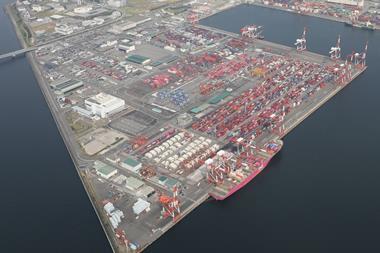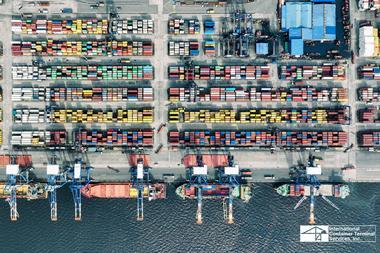

Halfway through building Busan New Port - with some 18 of the planned 30 berths already working - Busan Port Authority is moving swiftly toward its goal of redefining the port.
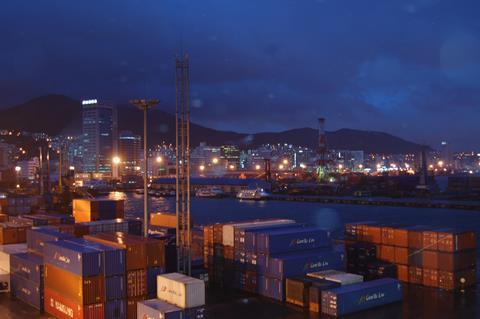
The high-tech New Port is located some 25km west of the existing harbour and has a mighty goal to clear downtown Busan of shipment traffic by moving over 70% of the ports container traffic.
To illustrate the scale of the task, in January this year Busan Port moved 1.23m teu. Last year, Busan Port handled 14.2m teu, an 18.4% increase on 2009’s 11.98m teu.
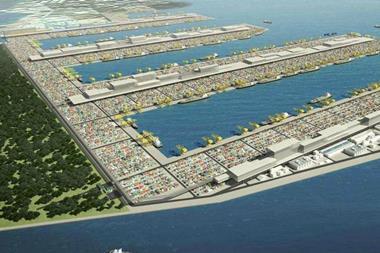
And with an expected construction period of eighteen years and a price tag of $9.2bn, the New Port promises something that Busan has never been able to offer before: space for activities other than cargo handling.
“At the heart of Busan New Port’s value-added approach is its new 6.7m sq m solar powered three complex distripark,” says Mr Park Ho-Chul, marketing director of Busan Port Authority, to Port Strategy. “With each complex able to accommodate a variety of logistical activity – from assembly and package, to storage and manufacture – the distripark will go some way in contributing toward the (revenues the new port is expected to generate)."
Also under physical construction is a hinterland railway network. This new railway, made up of an already built single rail track and a double track, purposely connects the New Port with South Korea’s national railway network. Connectivity, an issue which bedevils other countries, is being addressed from the beginning.
Currently tenancy applications for the ‘Ungdong Complex’ – a huge section of the distripark that allows for manufacturing – have just opened. Four more berths of Phase 3 of the New Port are expected to be finished and operational by the end of this year with the remaining three phases to be completed by 2020.
“The Ungdong complex is split into two phases, with the first phase also being split into three smaller components,” says Busan Port’s Mr Park. “Tenancy applications for the first component of Phase 1 were finalised at the end of December last year, with sixteen tenants selected. Bidding for sections two and three is due to take place in September this year. Dates for Phase 2 are yet to be decided.”
However, Busan's aim to be the Northeast Asian Hub and one of the top five ports in the world does not rest solely on impressive infrastructure; it is also dependent on the environment in which it operates.
As part of this, Busan Port Authority is busy building relationships with smaller and medium-sized ports in China and Japan. New service routes are in the process of being formed to widen the number of options available for smaller vessels carrying transhipped cargo from Busan New Port on to ports throughout Northeast Asia.
Busan Port’s focal strategy according to Mr Park is “one of increasing its handled transhipment cargo, with the ultimate aim of becoming the transhipment hub of Northeast Asia.
The port is currently working on building its relationship with all the ports in the region with the Port Authority regarding it as “vital that Busan Port builds first and foremost upon its Northeast Asian feeder network".
To that end, incentives - both financial and otherwise - are being offered. There are annual meetings with shippers to iron out problems that can blight a working relationship and incentives to reward those who use Busan Port for transhipment.
“We also offer an incentive to carriers using both out our North Port and New Port consecutively, in which all port dues are subsequently lifted," says Mr Park.