



The Solution Provider
Byron Hock is director of Trade Development for the Georgia Ports Authority. In speaking with him Nick Elliott discovers what makes for a successful marketing strategy.
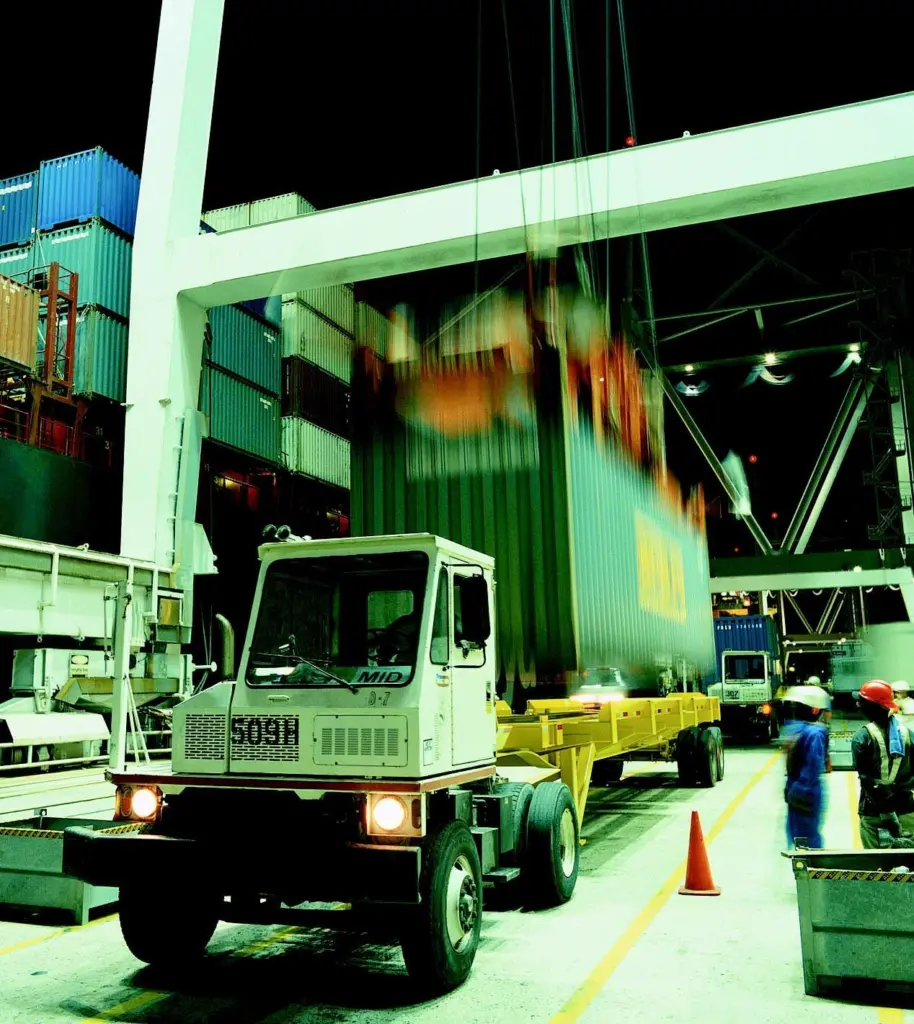
In case you thought that in these times of port congestion and capacity shortfalls the job of marketing could somehow be put on the backburner, think again. At Georgia’s deepwater ports in Savannah and Brunswick, Byron Hock says today’s market more than ever demands ‘port solution providers’, a function that dovetails with his task of marketing Georgia’s ports and developing trade.
Looking specifically at container operations in Savannah, Hock is confident that the “Savannah Model” is the right one: “In most cases if a port had the opportunity to rethink its mode of operations today, I’m confident our type of operation is what they would choose, ” he believes. “As an owner/operator, we direct and manage all the activity within the terminal as opposed to landlord operations. Ports over the years have moved towards landlord or lease operations, but this eliminates a lot of opportunities, as well as control. We are fortunate in that we can deal with a multitude of different customers. Right now we have over 22 global operators. And our strategy is to gain customer trust through performance and customer-driven initiatives, not just from the ocean carrier’s standpoint, but from the shipper’s too. Our success is really driven by operating and thinking outside of the box and providing service options not typically found in the traditional port environment.”
Hock refers to the GPA’s relationship with high-volume retail import distribution centres run by mega-retailers such as The Home Depot, Lowes, Pier I Imports, K-Mart, and Wal-Mart.
“The big difference between now and years ago is that carriers used to come to us and say ‘I’m thinking about this or that port. What’s your best rate?’ They would try to leverage one port against the other. Today that’s not the case.
Today, specifically in the Asian market, the shipper has direct influence on port selection.
We’ve elected to market Georgia’s ports with strategies that parallel that of the ocean carrier. We aggressively target with equal emphasis the BCO (Beneficial Cargo Owner) and the ocean carrier.”
Hock says the growing trend in the US is towards importers taking full control of routing rather than allowing an NVOCC, consolidator, or supplier to do so. “Retailers are changing their terms of sale in the purchasing process to gain control of the cargo. This allows them to pool the volume and leverage service contracts with the carriers.”
He continues: “We’re probably the only port in North America that is totally self-contained with everything – equipment, personnel and technology – located in one ‘super terminal’. For example, every portuser is linked 24/7 to our yard and gate management system. Through our web portal, customers are afforded real-time access to cargo status, as well as cargo history, via any internet-capable device in any location around the globe. This system provides a wealth of information;
it even provides real-time notifications if the customer so desires. With regard to our two-stage gate system, every entry and exit in and out of the terminal is linked to that one system. If gate flow is good, it shows; if it’s bad, it’s in the open for everyone to see. However, Savannah’s gates average between 5,200 and 5,500 transactions a day. That kind of productivity isn’t found in many US ports.
DOING IT DIFFERENTLY “Regarding our marketing strategy there are things we do differently from our competition that account for our success. For example, we have a marketing department of seven professionals trained in market research, economics and mass communication. This group analyses numerous geographic markets, as well as specific commodity groups, and feeds critical sales leads to our inside and outside sales groups. The team also analyses sales force productivity to make sure we’re continuously focusing our efforts in the most productive manner. Our most recent expansion of this group includes the addition of a focus on emerging markets. In addition to our established markets, we’re concentrating more energy and manpower on markets such as Turkey, India, Vietnam, and so on.
“We’ve also instituted a Client Relations Centre (CRC). This group deals directly with the customer: the ocean carrier, the shipper and the intermodal service provider. If someone wants to know the order of boxes loaded onto the ship, was it loaded last night, has it cleared through Customs, the CRC has the answers. It’s basically a onestop issue resolution centre that to date has not been duplicated in the North American port industry.” Hock says he’s proud of the impact this seasoned team has had on port productivity and customer services over the past three years of operation. “I believe you’ll see this department’s role continue to evolve and grow over the next few years.”
An inside sales group has been added recently too. “Previously we had two people calling all the importers and exporters in the US.
Consider the sheer numbers. Our research shows there are 10,000plus customers that fall within our ‘least-cost market advantage area’ and that number is conservative. So obviously you can’t handle that number of customers effectively with that limited level of staffing. The purpose of the inside sales group is to develop a dialogue with those customers who have not received our attention in the past. They were probably moving cargo at tariff rate. Now we’re able to look at the marketplace as a least-cost matrix. So we call those customers and say: ‘I understand you’re moving this volume and this commodity, by this line, via this port. Let me show you how we can save you money?’
Hock adds: “So it’s a very proactive sales approach directed at the customer. Since none of us are millionaires I think we can understand that if, as a customer, you are paid attention to and someone recognises your value, your natural reaction is to support it. So that’s something we’ve been doing over the past two or three months. Like the CRC, we’ve got high hopes for this newest department. We’ve staffed it with personnel with proven expertise in the areas of sales, operations and marketing. This team has grown up at the GPA and they know what is expected of them and most of all, they know the business. Their performance has been exceptional.”
Hock picks up again on the CRC’s work: “We did an analysis of our customer service enquiries. We were receiving on average 450 calls a day. There are two major problems with that. First, the customer would speak to someone in the operation whose primary role was not customer service. He/she may have been in container operations but had to stop what they were doing and attend to customer service issues which wasn’t efficient. Second, in most cases we were resolving the same issues over and over again. What we’re able to do now is to pool that information and say we’ve noticed that this is a frequent area of customer service breakdown, then implement a best practice to provide a solution. So it gave us some identification of what was going on. Again, it’s all about being proactive and making sure the customer’s needs are always at the forefront. The accolades from customers directed at this team have been overwhelming.”
Another example of a job function now undertaken by the CRC team is the frequent request for tours and orientations. “Previously we would have to break away from our day to handle any number of tours, ” says Hock. “Now we have the CRC group that handles the majority of these and that’s proven invaluable.”
Hock says the GPA changed its approach to the market because it needed a better focus. “Over the past 10 years we quadrupled our volumes and our customer base has changed. We realised we had to step outside of the box and think back into it – to start from scratch.
Who are our customers? What are our market sectors? What are our business sectors? How do we best focus on that? Then develop this functional strategy from the bottom up, not the top down. Then reorganize the team, so we could optimise the new strategy.
Previously one person did this and one person did that. Now we have a global accounts executive who takes the top five commodities – import and export – and focuses on that, for example. So we changed our approach. Of course the results still need to be tabulated but the early returns suggest this is the best way to go.
EVOLUTION RATHER THAN REORGANISATION “I don’t look at it so much as a reorganisation, but rather as an evolution. The business has changed, the market has changed, our customer base has changed and we have to continue to change with it. So far, I think we’re making great strides in anticipating change and staying in front of the challenges. I firmly believe that ‘today’s market advantage’ is ‘tomorrow’s standard service’. That’s why our group is so proactive and persistent about developing new and innovative sales and marketing techniques, as well as customer-driven initiatives, that is not easily duplicated by our competitors. I think you can see we take our jobs seriously. And, that philosophy transcends each of the Authority’s divisions and each employee.”
On pricing Hock is unequivocal: “Our attitude towards pricing is if you provide a good product and you serve the market well, then your customer is less likely to be just price motivated. I’m not saying we are priced above everyone else; we’re competitive. But port efficiency is probably one of our most important products, ” he stresses. “Now that in itself builds towards your reputation and your following. Price alone does not; to follow that road is a dead-end street.”
Related Articles
 PORT & TERMINAL NEWS
 PORT & TERMINAL NEWS
 OPERATIONS