


Uplifted by sea-air
Numerous bodies need to be on the same wavelength for sea-air shipping to function efficiently, writes Michael King
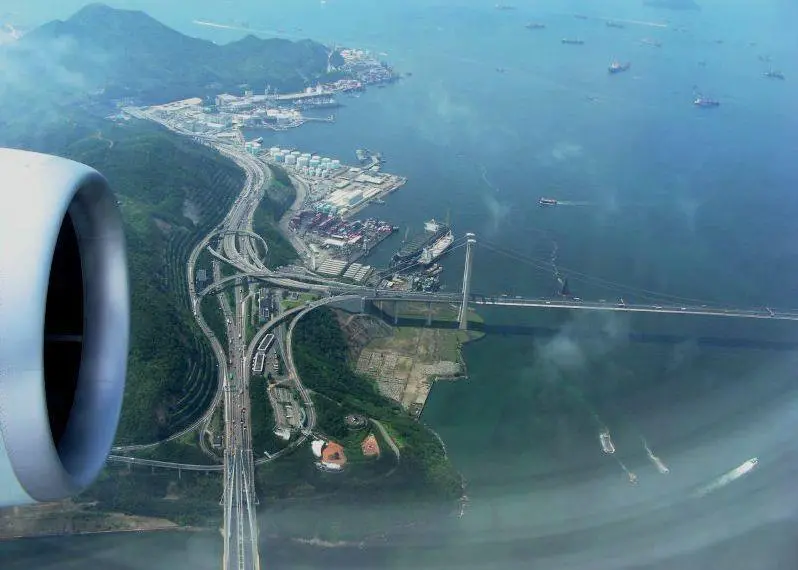
The shipment of cargo via sea then air has a simple logic: it offers a faster alternative than all-ocean services. But by moving cargo part of the way by ship, the air cargo premium is reduced.
Sea-air is primarily used as a means of shipment on the major ocean and air trade lanes – Asia-Europe and the transpacific. For example, in North Asia regular shipping services from China feed into the Korean ports of Busan and Incheon where forwarders can then plug into Korean Air’s substantial global network via its hub at Incheon International Airport.
In North America, Vancouver and Seattle are all used as distribution hubs for cargo arriving from Japan and South Korea, while for some South American-bound cargoes ocean services to Miami are utilised before cargo is uplifted from Miami International Airport.
“There are different categories of sea-air customers but they always have two principle benefits in mind – to save costs compared to pure airfreight and to be faster than pure ocean freight,” explains Raymond Lee, senior vice president for Freight Management, Asia Pacific, at third party logistics provider Ceva.
The key to the sea-air concept is ensuring the smooth flow of cargo between port and airport. For example, at Singapore – along with the Port Klang-Kuala Lumpur International Airport (KLIA) axis in Malaysia, the leading sea-air hub in South East Asia – this means bringing a whole range of operators and regulators together to make the concept competitive.
Albert Lim, vice president for Cargo & Logistics Development at airport operator Changi Airport Group, says airport and seaport managers work with various government bodies to ensure the sea-air solution works efficiently. “To promote Singapore as a global trade hub, Singapore Customs administers various schemes which facilitate the movement of cargo between the various Free Trade Zones (FTZ) in Singapore,” he says. “With only one permit required for transhipment, sea-air transhipment is a cost effective transport alternative for shipments that are less time-sensitive.”
Customers using Singapore can also benefit from a range of financial incentives. “The various Goods and Services Tax (GST) suspension schemes offered by Singapore Customs such as ‘Zero GST’, ‘Warehouse Scheme’, ‘Major Exporter Scheme’ and ‘Company Declarations Scheme’ help to alleviate the cash flow of shippers and logistics service providers as well as to ensure the ease of cargo flows between FTZs and customs territory,” adds Mr Lim.
However, despite the success of Singapore, Hong Kong and KLIA/Port Klang, over the last decade South East Asian hubs have lost ground in sea-air markets on the Europe-Asia mainline hauls to alternatives in the Middle East. The foremost centre for sea-air is now Dubai, which has leveraged its formidable position as a global hub for both air and ocean transhipment to get a march on its rivals.
“Dubai has established itself as one of the major multimodal hubs over the years due to its strategic location and excellent infrastructure,” says Mr Lee. “Jebel Ali port and Dubai World Central-Al Maktoum International Airport – which will eventually become the biggest airport in the world – are embedded in one customs free zone which means no customs bond is required for goods in transit arriving by ocean and departing by air.
“Obviously this is speeding up the cycle time significantly as well as reducing the cost impact.”
The Dubai version of the sea-air concept was conceived and developed in the 1990s around the success of Jebel Ali Port as a transhipment centre and Dubai International Airport as a leading global hub and home to one of the fastest growing airlines in the shape of Emirates. Leading forwarders were then invited to make best use of the facilities.
“Whilst there are other hubs that handle good volumes, including South Korea and Singapore, the volumes are much smaller in comparison to Dubai,” says Peter Orange, regional manager, Freight Sales at GAC.
“Dubai was one of the first countries to offer sea-air freight service from Asia to Europe. GAC was at the forefront at the time, and the authorities offered us a blank canvass to work on as they needed ideas on how to attract volumes.
“Cargos are directly transferred from port to airport under bond. GAC issues our own combined transport document (CTD), which is fully registered with all authorities and is insured through our own liability insurers. The CTD covers all sectors of the journey, making custom clearance faster and easier.
“Other paperwork needed includes packing list, commercial invoices and letters of credit, which are handled the same way as all shipping documents.
“The proximity of the ports in Dubai to the airports, the speedy discharge of containers and efficient palletising for air carriage, make it possible for the cargo to be ready for flight in as little as six hours from arrival at port.”
Last year, the sea-air concept at Dubai was strengthened with the opening of the Dubai Logistics Corridor (DLC) which now links Jebel Ali Port to Dubai World Central-Al Maktoum International Airport and also allows customers to benefit from single window e-clearance services including customs.
“DLC has created one of the largest sea-land-air hubs with a design capacity of over 12m tonnes of cargo a year, and with a single customs zone,” says a spokesperson for DP World, which operates Dubai’s ocean container terminals. “A supply chain operator importing cargo at Jebel Ali Port can now have it delivered to any part of the world within 24 to 48 hours using the Corridor.
“There is virtually no paper work involved because of the highly integrated e-services hosted by Dubai Trade which integrates the services of DP World, Jafza, Dubai Customs and Dubai Multi Commodities Centre.
“The customer is supported by a common Customs Bonded Area that is specifically designed for the seamless movement of goods.”
According to Robert Taylor, assistant general manager of Dubai sea-air specialist, Modern Freight Company (MFC), the success of the concept in the Middle East will continue because its location is perfectly suited to offering a third-way on the Asia-Europe trade.
“Sea-air over Dubai works well for shipments originating from Southern China where the ocean freight transit time to Dubai is approx 11-13 days, and for goods that are destined to inland destinations across Europe where the trucking from the port can add additional days to the overall transit time,” he says.
“During the peak seasons we can benefit the customer by savings of up to 50% when compared to shipping by air freight, in addition to a much faster transit time when compared to shipping by pure ocean freight only.”
Related Articles
 TERMINAL OPERATIONS
 CONTAINER & CARGO HANDLING
 NEWS
NEWS