The American Society of Civil Engineers’ (ASCE) graded America’s marine port infrastructure a C+ in the 2017 Infrastructure Report Card.
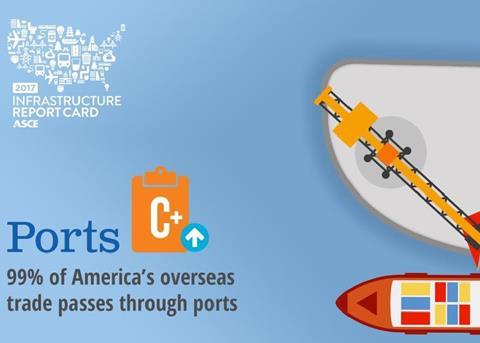
Although this is an improvement on four years ago when its infrastructure was given just a C grade, it demonstrates there is still a lot left to do.
Kurt Nagle, president and CEO of the American Association of Port Authorities (AAPA), said: “The rise to a C+ may be attributed to increased recognition among federal policymakers that the state of our nations ports, and the landside and waterway connections to them, drive our economy and stimulate jobs.”
He added: “ASCE’s report refers to the Transport Investment Generating Economic Recovery (TIGER) competitive grand programme that has the primary source of federal port investment into marine ports.”
The conditions of America’s port-related infrastructure, while better than it was four years ago, is still a long way from adequate.
Also referred to in the report was the Fixing America’s Surface Transportation (FAST) Act of 2015, this created a national freight programme with a new $4.5bn competitive grants programme.
“While a trickle of federal money has helped, the higher grade in this year’s report is also a reflection of the massive local port authority and private sector investments,” explained Mr Nagle.
He continued: “Furthermore, many ports, cities and states have advanced payment for all or a portion of the federal responsibility to improve freight access, such a deepening their federal navigation channels to accommodate today’s modern ships.”
Along with the report, also shared was the AAPA’s port infrastructure investment survey results from last year.
These showed that US port authorities and their private-sector partners plan to invest nearly $155bn in capital improvements throughout 2020.